Coming Home to Story

Notes from a journeyman writer, storyteller, and narrative consultant

  • About
  • Books
  • Writing
    • Book Launch
    • My PhD: Unlatching the Gate
    • Readers Say
    • Reviews
    • Selected Poems
    • Stories in Our Bones
    • System-world, Life-world
    • The People of the Sea
    • Drafts
  • Consulting
  • Storytelling
    • Testimonials
    • Island Nights
    • The Storyteller’s Tale
    • An Island Odyssey
  • Men and Storytelling
  • Links

And did those feet?

Posted by geoffmead on December 29, 2011
Posted in: Uncategorized. Leave a comment

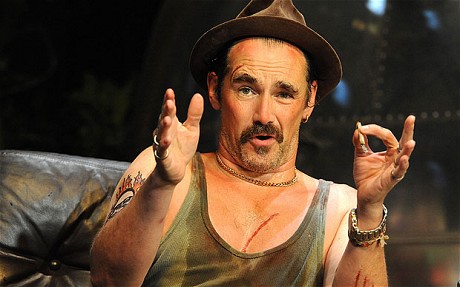
Last night I went back to see Jez Butterworth’s play Jerusalem for the second time. As before, Mark Rylance’s bravura performance as the atavistic Englishman Johnny “Rooster” Byron took my breath away but something else – much deeper – had drawn me back. The whole substance and tenor of the play challenged me to acknowledge my Englishness and to recognise my own complicity in too-readily surrendering the precious roots of that unique identity.

I found myself agreeing with Paul Kingsnorth (whose book Real England: The Battle Against the Bland influenced both Mark Rylance and Jez Butterworth) who wrote in his programme note: “The English, notoriously, have a blind spot when it comes to their myths, the legends of their past and their people, their folk tales and their origins.” It seems to me that for many of us in England, our memory and imagination have become detached from both our history and our land, thereby losing any real sense of where we have come from and where we belong.

I have no desire to be a Little Englander. Indeed, I pride myself on being a widely-travelled, well-informed person capable of embracing global issues and planetary concerns. But on reflection I wonder whether it is possible truly to be a citizen of the world unless one is first and foremost secure in a more local identity. It is hard to care for the planet in anything other than an abstract way if you are not rooted somewhere on the earth.

In the dim and distant past, some of my ancestors came to these islands as Viking invaders (I know this from a genetic quirk that affects the tendons in my hands). My surname Mead probably derives from the pre-7th century native word moed meaning meadow. There is no obvious trace of either Celtic or Norman hereditary in my family history.  It seems pretty certain that I came out of that Anglo-Saxon-Norse melting pot that we now call the English and I have to admit that I am sorely out of touch with my own oral tradition.

I greatly admire the work of storyteller Hugh Lupton (and others like Nick Hennessy) who are reclaiming and bringing new life to old English stories such as Wayland the Smith and Robin Hood, but I am still searching for the native stories that are particularly mine to tell. I ask myself what is distinctive about being an English storyteller and then it occurs to me that I should rather be addressing that question to the old pagan gods and goddesses of this once thickly-forested, magic-infused, and richly-storied landscape: those same gods and goddesses to whom Johnny “Rooster” Byron turns for succour in the closing scenes of Jerusalem.

Share this:

  • Share on X (Opens in new window) X
  • Share on Facebook (Opens in new window) Facebook
  • Share on LinkedIn (Opens in new window) LinkedIn
Like Loading...

So you want to change the world

Posted by geoffmead on December 14, 2011
Posted in: Uncategorized. Tagged: alternative futures, international storytelling. Leave a comment

A few weeks ago I was in Edinburgh, having a cup of coffee with a fellow-performer at the Scottish International Storytelling Festival, when she asked me a familiar question:

“You mean you actually earn a living as an organisational storyteller?”

I nodded, waiting for what usually comes next. I wasn’t disappointed.

“Why on earth would people in business be interested in storytelling?”

I would like to pretend that I quelled her evident puzzlement with a convincing, well-reasoned answer but the truth is that my mind was already elsewhere, anticipating our performance of the Odyssey later that evening. Instead, I mumbled something perfunctory about stories being the primary way that people make sense of their worlds and that smart leaders know that nothing really changes unless the stories that give meaning and significance to our lives also change.

That was the best I could come up with in two minutes but having spent a decade as both a storytelling performer and as a consultant working with story and narrative in all sorts of organisations, I really should have remembered that the best answer would have been a story.

I could have told her about the time a colleague of mine used a traditional African story with the board of a global energy company to help them consider the long-term impact of a potential oil and gas exploration project. After several days of discussions informed by the story, they decided that the social and environmental risks were too high and the project did not proceed.

Stories can open up the moral dimensions of business decisions. They can help us imagine the wider and longer term consequences of our actions. Good stories offer rich glimpses of alternative futures so that we can make more generative and sustainable choices today.

Or perhaps I could have told her about the time I coached a former “captain of industry” whose new departmental colleagues in Whitehall were finding it difficult to understand the reasons for this late career change and were somewhat distrustful of his motives. It turned out that the roots of his decision went all the way back to his childhood memories of the deprivation that surrounded him in post-war London. The day after he told this simple heart-felt story to guests at a Guildhall dinner, people across the whole department were repeating it with a dawning realisation of why he had joined them and what he stood for.

Telling authentic personal stories (not self-aggrandising myths) can help us get in touch with what really matters to us. These stories tap into the values of our “bigger selves”. They demand that we act from a more human and humane view of the world and they support us in doing so.

I could have told her any number of stories about the difference it makes when people in business really pay attention to the stories they tell and the stories they listen to. I call such conscious meaning-making through stories, Narrative Leadership. It demands both courage and vulnerability: a willingness to be seen for who we really are and to risk being changed by what others tell us.

Storytelling is the oldest and most natural form of human communication. We can all do it – in fact we spend most of our waking hours telling anecdotes and stories to each other whether or not we are aware of it. Why? Perhaps because at some level we know that exchanging information and argument will only engage our critical faculties. Whereas a good story also has the capacity to stimulate our imaginations and stir our hearts.

So, rather than try to offer you any more reasons why storytelling is essential for anyone – in business or not – who wants to change the world, here is a wee story that I find helpful to tell myself regularly. You might want to share it wherever you think it is most needed.

I once heard that the best way to catch monkeys is by putting a morsel of food under a hollowed out half-coconut shell staked to the ground. A small hole is made in the shell, just large enough for the monkey to reach through and grab the bait underneath. The monkey clenches its fist round the food and, overcome by greed, cannot remove its hand. If it refuses to release its prize, the monkey will be caught.

Mmmmm. Ring any bells?

[Re-posted from The Guardian Sustainable Business Blog 6th December 2011]

Share this:

  • Share on X (Opens in new window) X
  • Share on Facebook (Opens in new window) Facebook
  • Share on LinkedIn (Opens in new window) LinkedIn
Like Loading...

The Art of Storytelling

Posted by geoffmead on December 4, 2011
Posted in: Uncategorized. Leave a comment

It is a truism amongst storytellers that the stories they tell only come to life (or not) in the hearts and imaginations of the audience. The storyteller’s job is to tell their tales with such conviction, feeling, and detail that their listeners experience them as real. But how can we know what is going on inside another person?

Usually the clues are subtle and we look for them in the expressions on the faces of the audience, the way they are holding their bodies, and the quality of their attention. Sometimes we get more direct feedback after a performance, when people tell us about the emotions they felt or describe the images that came up for them during a particular story.

The image at the top of this post comes from one of those very rare occasions when we get something more. It is a sketch made by artist Maxine Relton as she listened to a performance of The Storyteller’s Tale that I gave a couple of weeks ago at the Rabley Drawing Gallery in aid of a charity supporting members of the Indian Puppet Maker’s Guild.

It is a romantic tale full of action, drama and powerful imagery. My friend Shanee Taylor accompanied me on the Tampura and sang several songs she had composed based on Indian ragas. It was a magical evening: the story took off and seemed to transport us all – teller and listeners alike – back to 18th century India.

Maxine’s sketch amalgamates phrases and images from the story with details of the instruments and dress of the storyteller and musician. It is a visual artist’s response to both the story and to the art of storytelling: a combination of the inner and outer worlds of the performance that goes far beyond mere illustration.

How satisfying it is when one art form enters into dialogue with another!

Share this:

  • Share on X (Opens in new window) X
  • Share on Facebook (Opens in new window) Facebook
  • Share on LinkedIn (Opens in new window) LinkedIn
Like Loading...

Better to light a candle

Posted by geoffmead on November 24, 2011
Posted in: Uncategorized. Leave a comment


I’ve been musing recently on what it’s all about. I mean, what is the point of running around giving performances, writing books and articles, injecting a bit of storytelling into various leadership programmes? What difference does any of it make?  The world is going to hell in a handcart and I spend my time trying to persuade people that they should spend more time telling and listening to stories!

But in the midst of this despair and self-pity, I recall that two men who have inspired me in different ways have both died within the past few weeks. My personal acquaintance with each was slight. The first was archetypal psychologist James Hillman; the second was singer-songwriter Jackie Leven. Both men poured their lives into their work. They too may have wondered occasionally what it was all about but that didn’t stop them writing or making music.

I met James a decade ago when he hosted an intimate conversation about Shakespeare’s Tempest. His opening remark still rings in my ears: “Let us consider what constitutes right conduct when the ship is going down?” I no longer recall the detail of what followed but I do remember his passionate energy and iconoclastic questioning of our comfortable assumptions about the ways of the world. He was already in his mid-seventies and I still look to him as a role-model for male elderhood.

Jackie was a fellow participant in a Wild Dance event for men in the 1990s. It was my first exposure to any kind of “menswork” and I was frankly terrified. Jackie took me under his wing that day and listened appreciatively as I spoke about feeling that I had spent much of my life hiding the fire in my belly. He listened and he challenged me to stop hiding it; he was close behind me as I symbolically stood in front of the whole group and unveiled the light from a torch (a borrowed bicycle lamp as I remember) from under my clothing and claimed my place as a man among men.

So I have particular reasons to be grateful to both men who touched my life in ways that were highly significant for me but probably unknown to them. They were simply being themselves and doing their work. They left their mark in a myriad of unintended and unexpected ways. The world is richer for their lives and poorer for their passing. I salute them and give thanks.

In lighting a candle for each of them I am reminded of a saying of Confucius: “It is better to light a candle than to curse the darkness.”  Then I think back to where this post began and I realise that is what it’s all about.

Share this:

  • Share on X (Opens in new window) X
  • Share on Facebook (Opens in new window) Facebook
  • Share on LinkedIn (Opens in new window) LinkedIn
Like Loading...

Houston we have a problem

Posted by geoffmead on November 11, 2011
Posted in: Uncategorized. Leave a comment


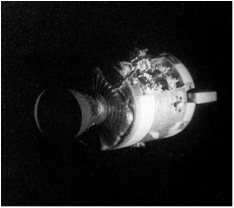
In 1970, when an oxygen tank exploded on board Apollo 13 and the spacecraft began to leak, Commander Jim Lovell had someone back on earth to turn to for help. Within hours, NASA had gathered together a “tiger team” of astronauts and scientists at Mission Control to come up with a solution for the problem. They succeeded and thanks to their efforts the crew of Apollo 13 returned home safely.

It is a great story of human ingenuity, endeavour and courage. Just the kind of story you might think we need to hear as we look forward to an uncertain future.  But I’m not so sure. Today the whole planet has a problem but there is no Houston, no Mission Control, no-one else to turn to who is not already on board. If we are going to find ways of creating a sustainable future then we have to do so ourselves.

Perhaps we need different kinds of stories to inspire us now.

Share this:

  • Share on X (Opens in new window) X
  • Share on Facebook (Opens in new window) Facebook
  • Share on LinkedIn (Opens in new window) LinkedIn
Like Loading...

It’s out there somewhere

Posted by geoffmead on November 7, 2011
Posted in: Uncategorized. Leave a comment

My first book Coming Home to Story: Storytelling Beyond Happily Ever After was published on 1st November by Vala Publishing and I’m still basking in the huge pleasure of launching it at parties in Bristol, Edinburgh and London. It was absolutely amazing to see so many friends and supporters – and good to practise my handwriting, signing books.

Here is a picture of it on the bookstand for the first time at the Scottish International Storytelling Festival in Edinburgh last month (it’s the grey and silver hardback in the middle of the picture). Click on the image for a gallery of photographs from the London launch.

I’m still getting used to the idea that people are actually reading my words. It took me three years to write the book and it seems to be taking people three days to read it. Is the 365:1 writing/reading ratio par for the course, I wonder?

What is the book about? I would say that it is about the journey towards being and becoming a storyteller. It is a personal story of finding and responding to a calling that came late in life but it also makes a case for the vital role of stories, storytelling and storytellers in the re-enchantment of the modern world. Of course, while I was writing it I could decide what I thought it was all about. Now that it is out there somewhere I have to get used to the fact that what really matters is what other people make of it.

The publisher’s blurb says:

Coming Home to Story tells of the magic of stories and storytelling, and their power to liberate the human spirit. Master Storyteller Geoff Mead takes the reader inside the experience of telling and listening to stories. He shows how stories and storytelling engage our imaginations, heal communities, and bring adventure and passion into our lives.

Master Storyteller, eh? Now there’s something to try to live up to.

If you would like to read more about the book or buy a copy click on the Vala logo below.


Share this:

  • Share on X (Opens in new window) X
  • Share on Facebook (Opens in new window) Facebook
  • Share on LinkedIn (Opens in new window) LinkedIn
Like Loading...

Posts navigation

Newer Entries →
  • Recent Posts

    • Do Radio
    • Storytelling to touch the Soul
    • Ship of Fools
    • The Compleat Angler
    • Coming Home to Roost
  • Enter your email address to follow this blog and receive notifications of new posts by email.

Blog at WordPress.com.
  • Subscribe Subscribed
    • Coming Home to Story
    • Join 135 other subscribers
    • Already have a WordPress.com account? Log in now.
    • Coming Home to Story
    • Subscribe Subscribed
    • Sign up
    • Log in
    • Report this content
    • View site in Reader
    • Manage subscriptions
    • Collapse this bar
 

Loading Comments...
 

    %d