Coming Home to Story

Notes from a journeyman writer, storyteller, and narrative consultant

  • About
  • Books
  • Writing
    • Book Launch
    • My PhD: Unlatching the Gate
    • Readers Say
    • Reviews
    • Selected Poems
    • Stories in Our Bones
    • System-world, Life-world
    • The People of the Sea
    • Drafts
  • Consulting
  • Storytelling
    • Testimonials
    • Island Nights
    • The Storyteller’s Tale
    • An Island Odyssey
  • Men and Storytelling
  • Links

As good as gold

Posted by geoffmead on April 10, 2012
Posted in: Uncategorized. 2 Comments

Arthur Frank (author of The Wounded Storyteller) writes about the times in our lives when the stories through which we constitute our identity no longer make sense. Illness, bereavement, divorce, redundancy, relocation, falling in love, marriage, parenthood and other major life events can cause us to question the familiar stories we tell ourselves (and others) about who we are. In extreme circumstances we may face what he calls narrative wreckage.

Many of us experience something like this at some point in our lives (I write about my own in Coming Home to Story). At such times our identities are particularly malleable and open to change. The art of storytelling can aid our subsequent healing by helping us find new narratives that enable us to reclaim authorship of our lives and make sense of who we are becoming.

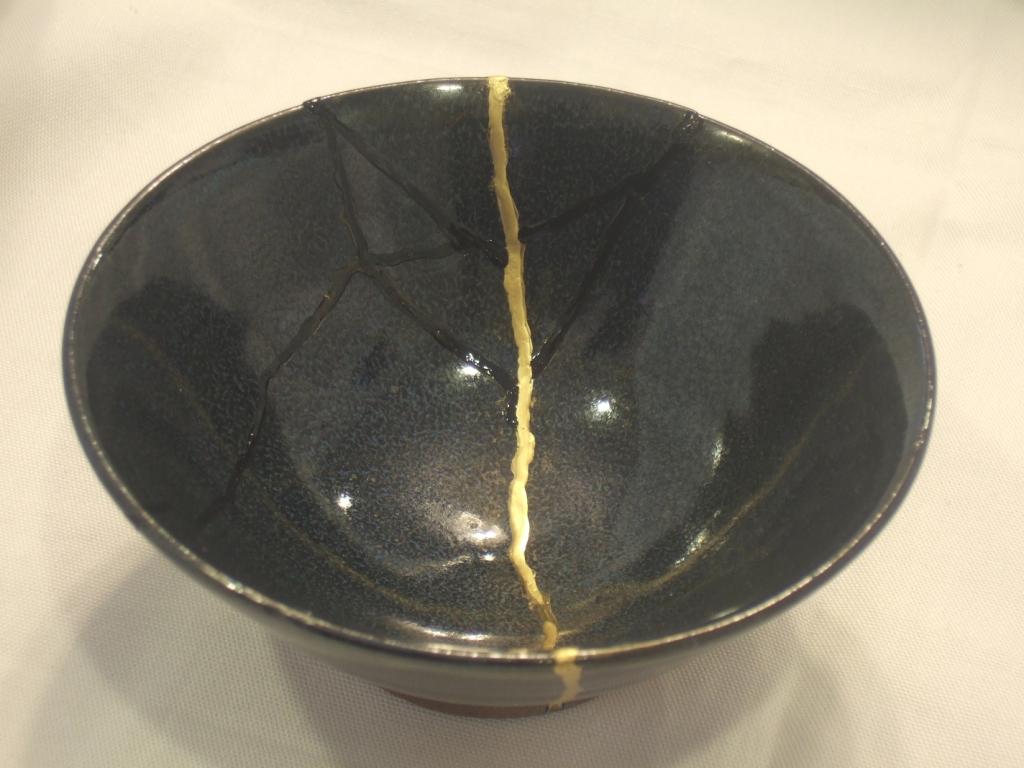
Recently my partner Chris Seeley told me that 500 years ago, the Japanese invented the art of Kintsugi: mending rare and precious porcelain with a special resin mixed with powdered gold so that the repair itself added beauty to the original object. Broken hearts, broken dreams, and broken lives cannot be unbroken but perhaps they can become whole again – and even more beautiful than before.

Share this:

  • Share on X (Opens in new window) X
  • Share on Facebook (Opens in new window) Facebook
  • Share on LinkedIn (Opens in new window) LinkedIn
Like Loading...

Don’t get me started

Posted by geoffmead on April 2, 2012
Posted in: Uncategorized. 2 Comments

No, really. Don’t get me started.

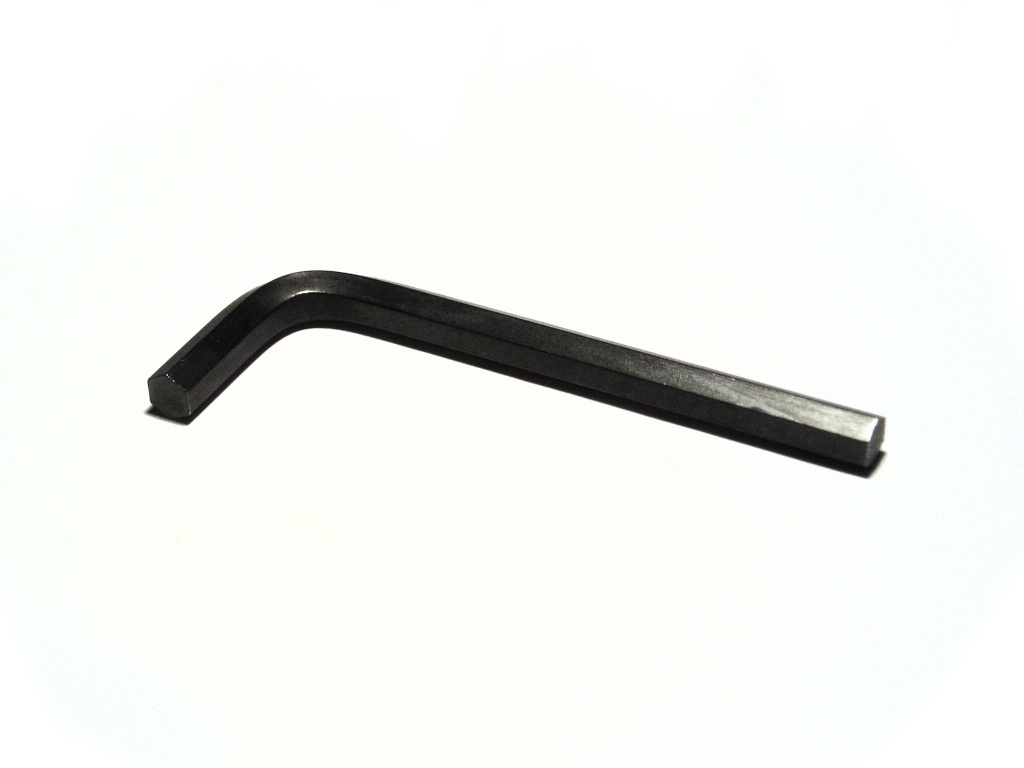
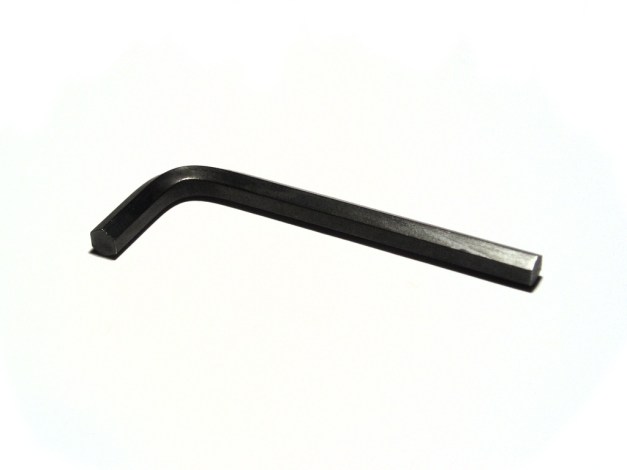
What’s the picture?

Well OK, you asked for it.

It’s an allen key (not a crowbar, in case you were wondering about the scale of the image). It is about 4cm long and until very recently – about an hour ago in fact – it lived in a small compartment in my roll-along briefcase. Occasionally it would come out of hiding to tighten the wheel bearings on the briefcase and then return to its familiar home. It is a modest and retiring creature, completely unaware that it is in fact a dangerous weapon.

Fortunately for me and my fellow passengers now flying at 35,000 feet above the earth on a BmiBaby flight from Birmingham to Malaga, its lethal nature was recognised in seconds by the eagle-eyed security operative on the X-Ray machine in Departures.

“It’s a tool, sir. You can’t take tools onto the plane.”

“Really,” I replied. “In what way does this particular tool constitute a danger?”

“It’s a tool. No tools.”

“But this useful little implement has lived in my briefcase for years. It has been on many aeroplanes. It has travelled the globe. Without incident so far as I am aware.”

“No tools.”

It was hopeless. My pleas not to be separated from my little friend fell on deaf ears.  But as I took my seat on the aeroplane, I consoled myself with the grateful realisation that the security operative had saved me from my baser nature. I had forgotten that the allen key was in the bag, but once I knew it was lurking there, he was of course quite right to remove it from my possession.

When you come to think of it, I might easily, in a murderous rage at having to pay £2.50 for paper cup half full of a luke warm liquid that could not even pass for tea in a coffee competition, have forced open the window, reached out and unscrewed the wing.

I might have placed it in the aisle as a barricade and taken a member of the cabin crew hostage behind it. I might have placed it in my open palm and terrified the passengers by showing them that I was armed. I might have hurled it across the cabin, thus creating a severe imbalance in the loading of the plane and caused it to veer into a mountain. Oh yes, its potential for causing death and destruction was nearly limitless.

But what’s this? As I write these very words, there is an announcement over the public address sytem: the pilot’s prosthetic limbs have loosened and fallen off in the recent turbulence; he cannot fly the plane; does anyone have an allen key with them with which to screw the limbs back on and save the day?

I summon the cabin attendant. “I did have one,” I say. “But an eager and efficient security operative confiscated it at the airport on the grounds of safety.”

The attendant laughs wryly. “How ironic.”

“Yes. Isn’t it?” I reply as we plummet towards the ground. “Once the black box has been recovered and they listen to the cockpit recording asking for an allen key the poor man will be writing reports for days. But I expect he will quite enjoy that.”

Under the circumstances, I am surprised that my final thoughts are so benign. Of course he would enjoy writing the reports. That sort of half-assed, pettifogging, literal-minded, dim-witted, jobsworth generally does.
Share this:

  • Share on X (Opens in new window) X
  • Share on Facebook (Opens in new window) Facebook
  • Share on LinkedIn (Opens in new window) LinkedIn
Like Loading...

Milan Noir

Posted by geoffmead on March 30, 2012
Posted in: Uncategorized. 2 Comments

Yesterday I was in Switzerland high in the Jura mountains with the participants of One Planet Leaders, a joint initiative of WWF (World Wildlife Fund) and IMD (Institute for Management Development). One of the course leaders, Carolina Moeller, had asked me to run a session on Narrative Leadership because she liked something I had written for the Guardian Newspaper’s Sustainable Business blog a few months ago.

We went from Lausanne by coach then walked for an hour or so in groups to our base-camp – a comfortable restaurant in the middle of nowhere. The snow has melted early this year, leaving only thin grey patches in shaded hollows. We were in no rush to get anywhere; our object was not to push ourselves towards a goal but to slow down enough to meet and be met by the landscape. Several times en route, Virginie – our irrepressible guide – dropped to her knees to show us fresh roe deer tracks; to trace the runnels created by burrowing voles; and to exclaim over a “crime scene” (a smear of rabbit fur: the tell-tale remains of a fox’s feast).

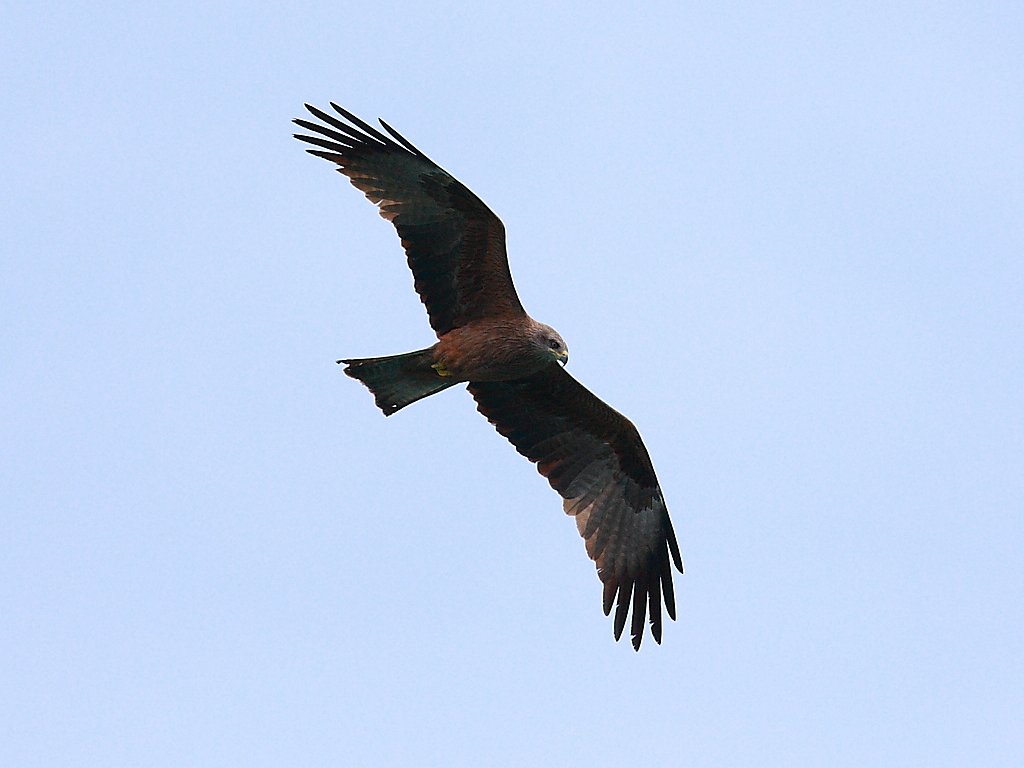
As we drank our coffee at the restaurant, Virginie pointed out a group of six or seven large birds across the valley, riding thermals above the ridge, effortlessly soaring skywards. She handed me her binoculars. “Milan Noir,” she said. “Black Kite.” I peered through the eyepieces, squinting against the bright sunlight, my eyes streaming. I could only hold them in focus for a few seconds at a time. As I watched, a sailplane suddenly slipped through a nearby cloud and joined the circling birds.

Later, around a fire in a clearing among Silver Firs and Norwegian Pines, we
exchanged stories of how we had come to find our work in the world; we delved into the power of stories to create meaning from our experience; and we considered the kind of language that might help to reframe sustainability narratives into ones that the corporate world can understand and start to live.

I came away with a sense of being hugely privileged to have met such a fascinating and diverse group of people and to have contributed to such a significant and worthwhile programme. I shall remember for a long time the image of the sailplane soaring with the kites as a symbol of the possibility of joyful participation with our fellow creatures in this extraordinary and magical world.

Share this:

  • Share on X (Opens in new window) X
  • Share on Facebook (Opens in new window) Facebook
  • Share on LinkedIn (Opens in new window) LinkedIn
Like Loading...

I can’t fly but my stories can

Posted by geoffmead on March 19, 2012
Posted in: Uncategorized. Leave a comment

A few days ago I went back to the International School of Storytelling at Emerson College to give a performance of The Storyteller’s Tale with my friend, singer and musician, Shanee Taylor. It was a good evening: an enthusiastic audience (mainly students at the School and friends from Forest Row) and about £175 raised for Baale Mane, a home for girls rescued from the streets of Bangalore.

I have adapted the story (with permission) from the novella of the same name by Omair Ahmad. It is a stirring tale of banditry, betrayal, unlikely friendship , storytelling and dangerous love set in 18th century India and I love to tell it. But it is long and complex with a large cast of characters and several interwoven stories, and telling it is always a challenge.

As well as remembering the action and the dialogue, I have to reach into my imagination to describe the sights, sounds, scents and textures of the landscape. At the same time, I must try to recreate the unique features of each character: bandit chief, begum, emir, prince, wood-cutter’s son, magistrate, seductress, servant, and the storyteller himself.

Each time I tell the story I learn a little more about the world these characters inhabit; each time I learn something more about my own capacities and limitations as a storyteller. No telling is perfect (indeed to seek perfection would ossify the performance) but each time there are moments – and sometimes more than moments – when my imagination soars.

At such times, both I and the audience are transported to places we can only ever visit in flights of fancy. I am reminded of some lines from a wonderful song: King of Rome written by Dave Sudbury.

In the West End of Derby lives a working man
He says “I can’t fly but my pigeons can
And when I set them free
It’s just like part of me
Gets lifted up on shining wings”

The song moves me to tears every time I hear it. Maybe because, as a storyteller, I sometimes feel the same way: I can’t fly but my stories can. Here is my favourite version, sung by June Tabor (allow a few seconds for the audio to begin).

Share this:

  • Share on X (Opens in new window) X
  • Share on Facebook (Opens in new window) Facebook
  • Share on LinkedIn (Opens in new window) LinkedIn
Like Loading...

Not the light of any evening

Posted by geoffmead on March 18, 2012
Posted in: Uncategorized. 1 Comment

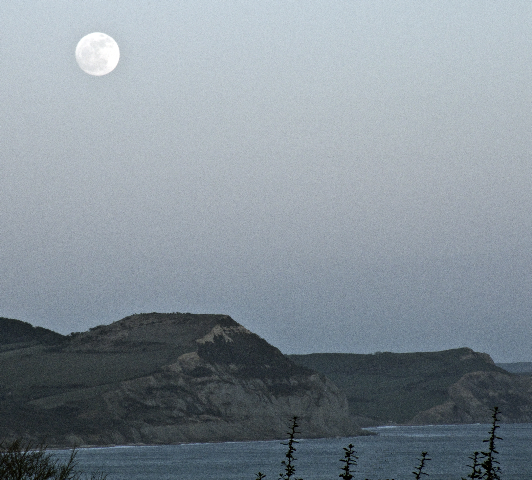
My friend Gary Baxter took this picture of the moon over Golden Cap from the back garden of my flat in Lyme Regis earlier this month. It was effortless for him – skilled as he is –  to flick the dials of his digital SLR camera to exactly the right settings to capture the light cast by the full moon that particular evening.

The dance of light and shadow on the sea and the fragile blue lias of the crumbling cliff-faces of Lyme Bay is always changing and endlessly fascinating. This is “coast” not “sea-side” and the image reminds me of why I chose to live where earth, sea and sky meet.

In this liminal place of seagulls and songbirds, I open the french windows and my small flat feels infinitely large; I sit at the kitchen table to write and immediately feel myself connected to a much bigger world. Then my everyday home becomes a kind of sacred space dedicated to the expression of creativity, where ideas come and words flow.

Stephen Nachmanovitch (whose brilliant book Free Play: Improvisation in Life and Art every artist and writer should read) likens such spaces to the ancient Greek idea of the temenos: a place set aside in which to honour the gods. There we can more readily encounter our unconscious (the deep wellspring of imagination) and more fittingly entertain the muse should she pay us a visit.

The lure of paid work as an organisational consultant takes me far and wide. It is good work and I am privileged to be able travel around the globe but I have been too long on the road and my writer’s soul aches for home.

Share this:

  • Share on X (Opens in new window) X
  • Share on Facebook (Opens in new window) Facebook
  • Share on LinkedIn (Opens in new window) LinkedIn
Like Loading...

Discerning Daedalus

Posted by geoffmead on March 8, 2012
Posted in: Uncategorized. Leave a comment

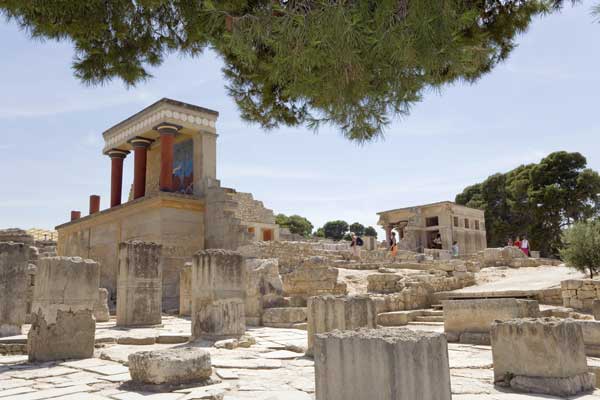
Perhaps, undiscovered beneath the Cretan palace of Knossos, there still lies the labyrinth created by the legendary Daedalus to house the fearsome Minotaur. The myth is well-known: Theseus, Prince of Athens contrives to join the seven youths (and seven maidens) sent as tribute to King Minos to be sacrificed to the bull-man; Ariadne falls in love with Theseus and helps him to retrace his steps out of the labyrinth once he has slain her monstrous brother by unwinding a skein of flax as he descends into the depths.

There is a powerful metaphor here for the kind of inner-work that we are called upon to undertake in our own hero-journeys through life. It is also precisely what we ask of participants on the Top Management Programme: to acknowledge and own crucial aspects of themselves (both functional and dysfunctional) that have been hidden or repressed. The archetypal image of the monster lurking within our psyche is still active in the modern imagination and turning towards it requires real courage. Yet, as Joseph Campbell says:

We [do not] risk the adventure alone; for the heroes of all time have gone before us; the labyrinth is thoroughly known; we have only to follow the thread of the hero-path. And where we had thought to find abomination, we shall find a god; where we had thought to slay another, we shall slay ourselves; where we had thought to travel outwards, we shall come to the centre of our own existence; where we had thought to be alone, we shall be with all the world.

So, I celebrate the heroes and heroines of the Top Management Programme: the participants I have known during the three years I have been a member of the faculty. I salute their willingness to enter the labyrinth in their determination to become the best leaders they can be. I remind them to hoist the white sails when they return home and I look forward to hearing of their future exploits.

And what of the faculty? How should we understand and celebrate our role? The same myth provides a clue, for it is the inventive artist-scientist Daedalus who gives Ariadne the skein of flax needed by the hero to find his way back out into the world; flax that Daedalus … has gathered from the fields of the human imagination. Centuries of husbandry, decades of diligent culling, the work of numerous hearts and hands, have gone into the hackling, sorting and spinning of this tightly twisted yarn.

Let us therefore aspire to be dedicated (like the Daedalus Campbell describes) to the morals not of our time but of our art; to be heroes of the way of thought – singlehearted, courageous, and full of faith that the truth, as we find it, shall make us free.

Share this:

  • Share on X (Opens in new window) X
  • Share on Facebook (Opens in new window) Facebook
  • Share on LinkedIn (Opens in new window) LinkedIn
Like Loading...

Making a living

Posted by geoffmead on February 26, 2012
Posted in: Uncategorized. Leave a comment

People quite often ask me what I do for a living. “I’m a writer,” I say. “A writer, storyteller, consultant, developer, facilitator, and educator.” By this time, most of my questioners are sorry they have asked and more-or-less-politely turn away. A few smile in recognition because they too spin a living seemingly out of nothing.

Peter Koenig, author of the excellent 30 Lies About Money, says something like this (I paraphrase): The idea that you should spend your life earning money in order to obtain the resources to pay for the lifestyle you want, is one of the great myths. You are not here to earn a living – you are here to live. That means doing what you dream of and bringing your whole self to what you do. There is no guarantee that this will make you rich. Indeed, you may not have everything that you want, but you will have everything that you need.

Over the past ten years, I have been learning the truth behind these words. There is no substitute for following your bliss and no excuse the soul will accept for refusing the call. As Joseph Campbell says in The Hero With A Thousand Faces, “It is only those who know neither an inner call, nor an outer doctrine whose plight is truly desperate…”

I used to have a job (and a job-title) that labelled me more neatly: policeman. Of course, it didn’t adequately describe how I filled my waking hours but it did seem easier for most people to understand. In recent years, however, I’ve become a dilettante: I do what I love. In return, the world somehow offers me enough paid work to cover the rent and enough unpaid work to fill several lifetimes.

And if this talk of love, bliss and soul all sounds a bit romantic or new-agey, if you are inclined to dismiss the idea that you are entitled to make such a life-choice, then you might like to think about a different question: “Whose life are you living?”

Share this:

  • Share on X (Opens in new window) X
  • Share on Facebook (Opens in new window) Facebook
  • Share on LinkedIn (Opens in new window) LinkedIn
Like Loading...

Rain Stops Play

Posted by geoffmead on February 24, 2012
Posted in: Uncategorized. 1 Comment

Today a small piece of history will go largely unremarked by rest of the world.

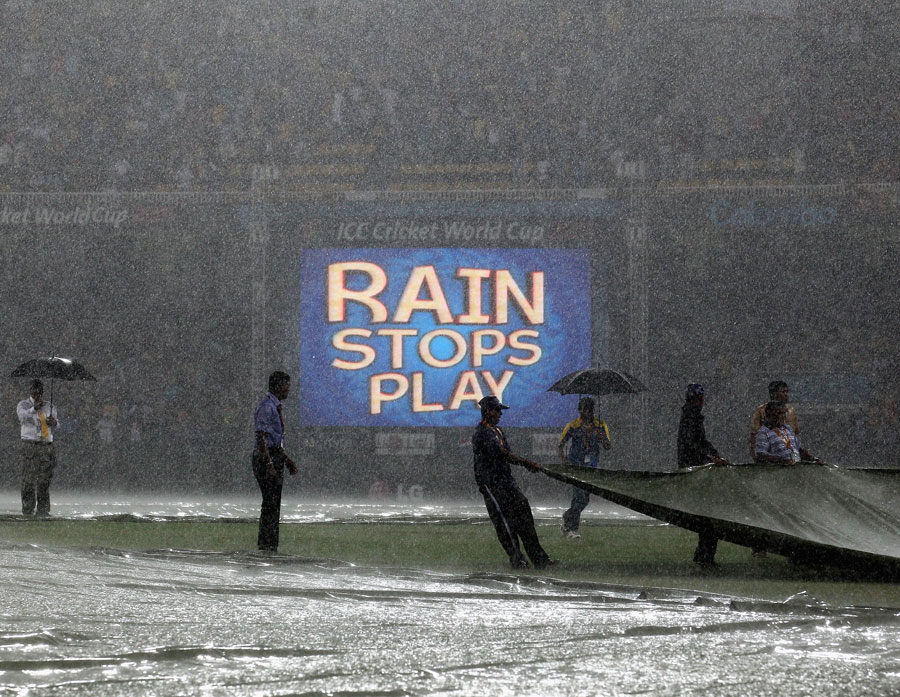
The National School of Government at Sunningdale Park (once the Civil Service Staff College) is preparing to close its doors by the end of March and, consequently, the Top Management Programme is also about to end. It is ironic that this flagship programme, which the majority of this country’s most senior civil servants have attended, is being wound up under a Tory Prime Minister as it was Cameron’s predecessor, the Iron Lady herself, who insisted on its creation in the 1980’s in order to expose public servants to the supposedly superior wisdom of the private sector.

Much has changed since then. Yet the same political dogma that established it (public sector bad, private sector good) has led to its demise. A significant national programme that has developed over the years, latterly under the inspired direction of David Wright, into a rigorous and demanding learning experience, will cease today. The participants of TMP 99 – the ninety-ninth cohort – will walk out of the doors of Northcote House at 1.00pm, climb into their cars and make their way home, knowing that they will be the last of their colleagues to have this privilege.

Of course, as a member of the TMP faculty for the past three years, I am not a disinterested party.  I shall probably lose some income (though there are many other areas of work to which I can turn my hand) and I shall miss working alongside a group of talented and committed colleagues who have become dear friends. More than this though, I mourn the passing of that rare thing: a leadership programme that delivers what the participants actually need rather than what others think they might want. I say this with some confidence based on the personal comments of participants and the long term qualitative evaluation of the last ten cohorts.

Nothing lasts forever and it may be that its successor programme (if indeed there is one) will be equally good. I hope so but I wonder if the commercial procurement of top leadership development motivated, ultimately, by profit rather than by considerations of quality and value-for-money, can create an environment in which suppliers are able and willing to provide such a powerful and challenging experience. The temptation will be to please the customer, to brandish top-box ticks on “happy sheets” as proof of quality, to attend to the hygiene factors at the expense of the learning experience.

It would have been nice to have reached 100: a century of TMPs. But 99 is still a good score and I console myself with the thought that this team might have gone on to a record innings had rain not stopped play.

Share this:

  • Share on X (Opens in new window) X
  • Share on Facebook (Opens in new window) Facebook
  • Share on LinkedIn (Opens in new window) LinkedIn
Like Loading...

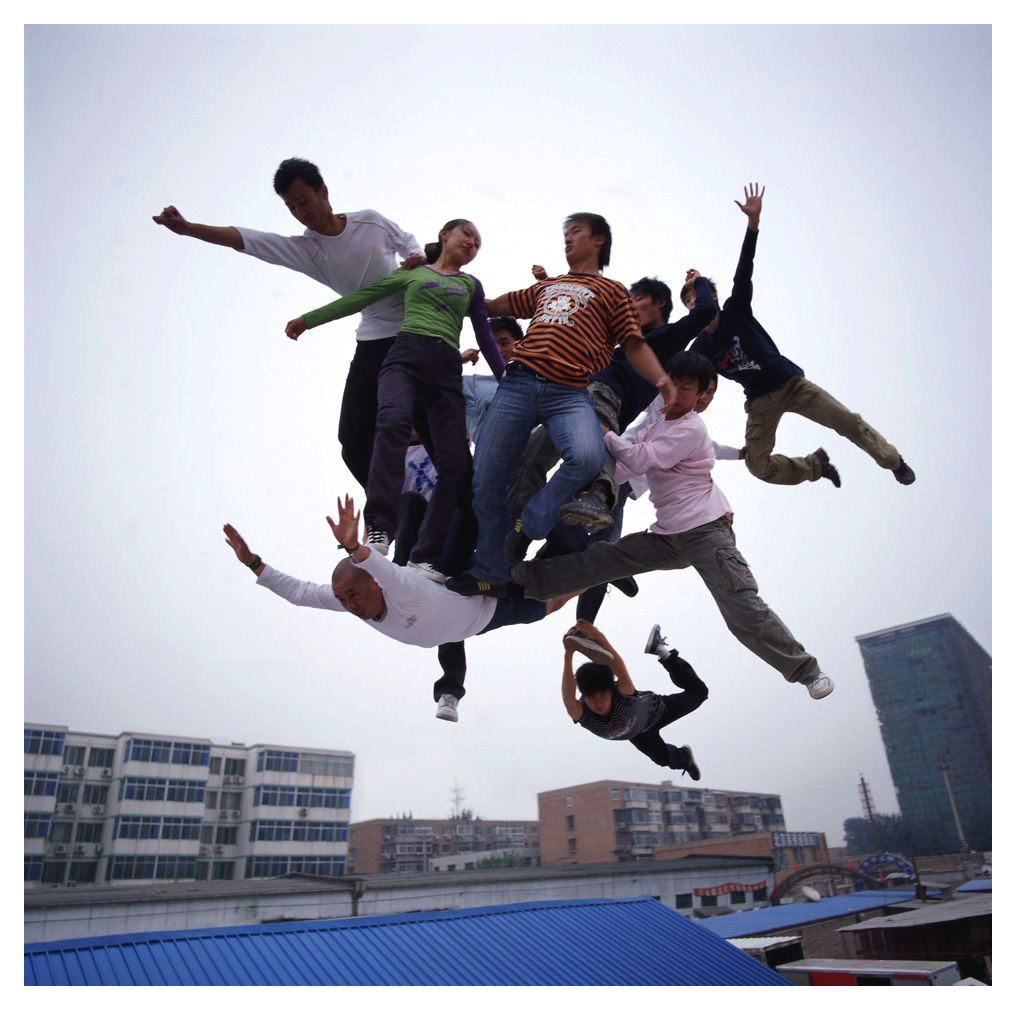
Don’t save me, I’m falling

Posted by geoffmead on February 10, 2012
Posted in: Uncategorized. Leave a comment

I’m writing these words in Garn Isaf, West Wales. I’m here for a couple of days of rest, relaxation, and rediscovery, after a short but incredibly intense Freefall Writing workshop with Barbara Turner-Vesselago (www.freefallwriting.com).

There is something about her method that enables me (and a multitude of other writers over the years) to get out of our own way when we sit down to face the blank page. The carping voice of the editor/critic that we all carry inside, recedes into the background long enough for our innate creative energy to flow unhindered.

Instead of trying to craft a narrative, wrestling words to fit our intentions, images and scenes emerge from memory and imagination. They demand to be told; they draw words out of us. The language is fresh and unclichèd; the action moves ahead at just the right pace; adjectives and metaphors are exact and evocative; all of our senses are engaged in the process. We are freefalling towards the source – the well-spring – of writing. ‘Go fearwards,’ says Barbara. ‘Find what has energy and follow wherever it leads. Write without a parachute.’

The results are extraordinary. In three days, 12 writers produce a book and a half’s worth of stories and memoirs. We listen, enraptured, as Barbara reads aloud the fruits of our work. We learn from each other and we imbibe our teacher’s wisdom. The intimacy of the group provides encouragement and support to each member. Trust and mutual respect grow as we (anonymously) share our talents and our lives with each other. We leave reluctantly when the workshop finishes, having grown as writers and as human beings.

Thank you Barbara – and all my fellow freefallers.

Share this:

  • Share on X (Opens in new window) X
  • Share on Facebook (Opens in new window) Facebook
  • Share on LinkedIn (Opens in new window) LinkedIn
Like Loading...

Unlatching the gate

Posted by geoffmead on January 26, 2012
Posted in: Uncategorized. 1 Comment

I’ve been looking at the diary for 2012. It is already filling up with the usual miscellany of consulting work, performances, workshops, travel, holidays and courses. It seems to happen like this every year. I want to live my life in a less fragmented way, with a greater sense that I am putting my time and life-energy into what really matters, but I find it hard to change the unconscious reflexes that trigger my responses to the world and shape what I actually end up doing.

So before it gets too late this year, I am going to move the goalposts. Instead of starting by asking myself what I want do in the months ahead, I have decided to go back to basics and ask a different – and more fundamental – question: What have I come here for?

Bill Plotkin (wilderness quest leader and author of Soulcraft) speaks of this as finding our soul-purpose. The soul already knows the answer if we can but listen, he says. But there are a couple of not-insignificant problems. First, if we pay attention to what the soul knows it may well turn our lives upside-down. Second, when answers come to us they do so in the form of images that are mysterious and cryptic. When they arise, we know they are significant but our rational minds find them difficult to decode.

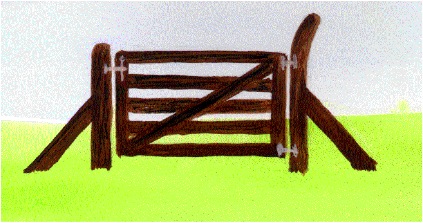
I have been living with just such an image for a decade or more. It slipped into my mind during a guided-meditation during a workshop called Stepping into Leadership with Henry V, run by my friend Richard Olivier. The focus of the meditation was our sense of purpose and we were invited to notice the images that arose. What stayed with me afterwards was a faint glimpse I caught in my mind’s eye of a five-bar gate, standing closed but unlocked in the middle of a sunlit field.

I had no idea what it signified but it seemed to be important and when I got back from the workshop I painted the image over and over again until it became clear enough to speak to me. The gate is latched but not locked; it has no fence to either side. At first glance it seems to serve no purpose, but walking around a gate is not the same as going through. At the time, I wrote in my journal:

My purpose seems to be about unlatching and opening this gate so that I (and others) may pass through. In doing so we pass between worlds. Each time the gate opens we somehow subtly redefine our position in the world. We are renewed and the world changes. In Gestalt terms, they are “aha” moments that unlock old patterns of understanding and behaviour and open up new meanings and thus new possibilities for choice and action.

Reminding myself of this insight twelve years later renews my sense of soul-purpose. I am an educator and the kind of learning I value is that which is life enhancing, increasing the possibilities for being and doing in the world and which also leads to a fuller expression of loving relationships. How I enact this purpose has changed over the years. I used to run leadership courses for police officers and civil servants; then I supervised PhD students; now I write, run workshops and tell stories.

Now I have remembered what I came here for, planning what to do with my “one wild and precious life” this year suddenly seems both clearer and more demanding.

Ah well – back to the diary.

Share this:

  • Share on X (Opens in new window) X
  • Share on Facebook (Opens in new window) Facebook
  • Share on LinkedIn (Opens in new window) LinkedIn
Like Loading...

Posts navigation

← Older Entries
Newer Entries →
  • Recent Posts

    • Do Radio
    • Storytelling to touch the Soul
    • Ship of Fools
    • The Compleat Angler
    • Coming Home to Roost
  • Enter your email address to follow this blog and receive notifications of new posts by email.

Blog at WordPress.com.
Coming Home to Story
Blog at WordPress.com.
  • Subscribe Subscribed
    • Coming Home to Story
    • Join 135 other subscribers
    • Already have a WordPress.com account? Log in now.
    • Coming Home to Story
    • Subscribe Subscribed
    • Sign up
    • Log in
    • Report this content
    • View site in Reader
    • Manage subscriptions
    • Collapse this bar
 

Loading Comments...
 

    %d