Coming Home to Story

Notes from a journeyman writer, storyteller, and narrative consultant

  • About
  • Books
  • Writing
    • Book Launch
    • My PhD: Unlatching the Gate
    • Readers Say
    • Reviews
    • Selected Poems
    • Stories in Our Bones
    • System-world, Life-world
    • The People of the Sea
    • Drafts
  • Consulting
  • Storytelling
    • Testimonials
    • Island Nights
    • The Storyteller’s Tale
    • An Island Odyssey
  • Men and Storytelling
  • Links

Love and Fear (Part 1)

Posted by geoffmead on July 27, 2012
Posted in: Uncategorized. Tagged: Centre for Narrative Leadership, love and fear, Robert Sardello, shame. 1 Comment

“What is love?”
“Love is the total absence of fear,” said the Master.
“What is it we fear?”
“Love,” said the Master.
(Anthony de Mello)

Earlier this month, the Centre for Narrative Leadership held a summer gathering entitled Love and Fear at Hawkwood College, Stroud. 24 of us spent two days exploring how these phenomena manifest in our lives and work as storytellers.

The idea for the event came from a conversation with my partner Chris Seeley who had previously met and worked with professional mediator, Michael Jacobs whose MA dissertation had looked at some of the ways that we are entrapped by the stories we tell ourselves.

The more I thought about the theme in the run up to the event, the more I realised that love and fear are inseparable: a polarity of opposites. Fear contracts and diminishes our capacity to love (ourselves, other people, and the planet) whilst love is what it takes to dissolve fear.

On the first day of the gathering, Chris and Michael facilitated a session in which we discussed our personal relationship to the theme. Small groups were then asked to make some kind of image to represent their individual and collective understanding of love and fear – not as abstract entities but as concrete declarations of who and what they loved and of the fears that sometimes got in the way of manifesting or enacting their love. Here are a few examples from the image we made:

Joy – I don’t deserve this/ it won’t last
Brilliance – know your place
Art – I am too small to have a voice
Body – self-loathing/ it hurts
Friends – why would anyone like me?
Dancing – everyone will look at me and think I’m stupid
Stories – no-one will want to listen
Singing/music – I’m tone deaf

It was a simple (though not easy) exercise but it evoked a significant insight for me: whilst much of what we loved was shared and some of what we loved was almost universal, the fears we identified were quite particular. Behind every fear lay a story: a fragment of our personal history; an experience of being shamed that had somehow diminished our capacity for living and loving.

Holding on to such stories stops us living in the present moment: the embodied memories I have of being shamed as a child (for example, as I wrote about in the previous post, of being told that I was tone deaf) relinquish their grip when I begin to see them as stories from the past. The choice is stark: either we have our stories or they have us.

As Robert Sardello says in his excellent book Freeing the Soul from Fear, our task is not to abolish fear but to find the inner resources to face our fears. If we can do that then we can also develop our ability to distinguish between fantastical fears and genuine threats (such as climate change) about which we should indeed be concerned.

These few words have just scratched the surface of love and fear. I shall continue inquiring into the relationship between these two existential states in future posts. If you would like to contribute your views and ideas to the inquiry as it develops then please comment below.


Share this:

  • Share on X (Opens in new window) X
  • Share on Facebook (Opens in new window) Facebook
  • Share on LinkedIn (Opens in new window) LinkedIn
Like Loading...

Choir of the Damned

Posted by geoffmead on July 16, 2012
Posted in: Uncategorized. Tagged: choir of the damned, non-singers. Leave a comment

There is a Zimbabwean proverb: “If you can talk you can sing.” It’s usually told to non-singers by those whose mellifluous voices burst confidently into song at the slightest excuse. Those of us for whom hell is a karaoke machine, know that the proverb is simply a lie uttered to make us feel even worse about our lack of vocal talent. I cringe with embarrassment, self-loathing and impotent rage every time I hear it – and I am not alone.

Last week at a seminar in the Netherlands, I told the story of how Miss Pendlebury – my music teacher at preparatory school – would prowl up and down the ranks of us small boys listening to our efforts with a critical ear:

All things bright and beautiful,
All creatures great and small,
All things wise and wonderful:
The Lord God made them all.

My seven year old heart swelled with pride as she came closer to where I stood singing lustily in the back row. I took in an extra large lungful of air so I could belt out the verse.

Each little flower that opens,
Each little bird that sings,
He made their glowing colours,
He made their tiny wings.

She stopped in front of me. A word of praise, perhaps, poised on her lips: recognition for my natural ability to harmonize with the pure treble voices on either side of me? Maybe some token of encouragement for the enthusiastic volume of my descant? My moment had come.

“Mead. You are tone deaf. Go to the front row.”

The front row was reserved for boys with attention deficit disorder, a tendency towards random violence, and/or speech impediments. In the front row, you were given a triangle to hold silently while the middle row shook their tambourines and the privileged prima donnas of the back row fired off salvos of sound on drums and cymbals. The front row was where you learned for life that you could not and should not sing.

After I had told my story, I asked the audience how many of them had also learned as children that they could not sing. About half of them held up their hands and in that moment the seed of an idea was sown. There was to be an end-of-course cabaret the following evening: a chance for all us non-singers to roll back the frontiers of shame; to take revenge on the Miss Pendleburys of this world; to stick it to the smug bastards who spout Zimbabwean proverbs.

And so the Choir of the Damned was born.

In the picture above, members of the choir (apologies to those not in the frame) can be seen performing the “Little Green Frog” with unrepentant gusto to the astonishment and delight of the other members of the course. Our audience burst into frenzied applause and we took several curtain calls to spontaneous cries of “Bravissimo!” “More! More!” and “Time for a beer!”

Shame is a cruel and effective teacher but, as the Choir of the Damned proved decisively, nothing that cannot be overcome (albeit 55 years later) by a stubborn refusal to be silenced and a bold disregard for conventional harmony. It was indeed, a night to remember.

And it is in this spirit that I invite you now to watch this short video of a young girl doing her bit at the school nativity play. Never, never tell her that she cannot sing.

Share this:

  • Share on X (Opens in new window) X
  • Share on Facebook (Opens in new window) Facebook
  • Share on LinkedIn (Opens in new window) LinkedIn
Like Loading...

Ask me. Go on, ask me.

Posted by geoffmead on July 11, 2012
Posted in: Uncategorized. Leave a comment

Ha! I knew you wouldn’t be able to resist.

I was passing through Bristol airport again this week; how I love that place (see blog Don’t Get Me Started, 4 April 2012). This time the Jobsworths stopped me carrying 100ml of fresh air on to the aeroplane. Our exchange went something like this:

“You can’t take that on board. We’ll have to confiscate it.”

“It” was a half-empty 200ml glass medicine bottle containing rather less than 100ml of Honey and Lemon Throat Balm. “Why not?” I asked. “It’s medicine. I’m a performer and I need it for my throat.”

“I can see what it is,” replied Junior Jobsworth. “Do you have a prescription for it?”

“It doesn’t come on prescription. You buy it over the counter.”

“No prescription, no medicine.”

“But it’s less than 100ml. And it’s in a polythene bag of the correct dimensions. I measured it. Am I not allowed 100ml of bottled and bagged fluid?”

“It’s not the fluid that’s the problem. It’s the bottle. It’s a 200ml bottle.”

“Yes, I know. That’s why I made a point of having it less than half full.”

“You can’t take it on the plane.”

“This is ludicrous. What difference can it possibly make if it’s in a 100ml or a 200ml bottle. The difference is approximately 100ml of air. I would like to speak with your supervisor please.”

Actually, I didn’t use those precise words. What I said was: “This is f***ing ridiculous. Give me the bottle and I’ll drink the medicine right now.”

At this, Junior Jobsworth, still clutching my bottle of medicine, marched off to consult Senior Jobsworth. I saw them conferring earnestly for a minute or two before Senior Jobsworth came over to me, bottle in hand: “You can’t take this on board. It’s 200ml.”

“No,” I said. “As you can see, it’s less than half full. It’s not even 100ml. If you really won’t let me take it on board then let me drink the medicine now.”

“You can go back outside the security area and drink it.”

“What! What conceivable difference does it make where I drink it?”

“That’s the rule.”

“Then the rule is ridiculous.”

He walked off with my bottle of medicine which I presume found its way into a waste bin. “Imbecile,” I muttered sotto voce, with just enough self-control not to get arrested for breach of the peace. I picked up my laptop, repacked my bag, put my belt back on, and made my way grumpily towards the departure lounge.

What is it about the word “Security” that engenders such rigidity and lack of discretion? Somebody please tell me how either employing morons who cannot think for themselves or (equally bad) employing intelligent people who are obliged to act like morons, makes any of us one jot safer. The Jobsworths were not impolite (though, admittedly, I was). They were merely stolidly intransigent and lacking in any sense of complicity with me in the face of arbitrary regulation.

I didn’t want them to break the rules. I didn’t even mind very much about the loss of my half bottle of throat balm. I would have been happy if they had just said something human, something  like: “Yes, I know it’s ridiculous but we don’t have any discretion at all. Sorry about that.” I don’t think that’s too much to ask.

Here’s how it’s done: later the same day, at Schiphol Railway Station I went to buy a train ticket and asked if I could have the advertised senior’s discount. The Dutch woman behind the counter smiled and shrugged. “Sure,” she said. “The discount is only 50 cents though. It’s so small it’s crazy but what can we do?” I smiled back at her, enlivened by our brief contact and delighted with the – albeit miniscule – saving I had just made.

There are good airports elsewhere in the world, even some great airports. Munich, for example is a veritable cathedral of understated, friendly, efficient service. But UK airports seem determined to inflict all manner of pettifogging restrictions on travelers whilst trying to fleece them at every opportunity: an almost unique combination of institutional stupidity and corporate greed.

Thus, at Bristol Airport (which my partner continues to insist is convenient whilst I maintain it is merely close to home) once through Security, there is only one way to the departure lounge: running the gauntlet of the obscenely consumerist Duty Free Zone where one is urged to purchase large quantities of what appear to me to be dangerous flammable liquids in the guise of perfumes and spirits which, ironically, one is quite free to take on board the aeroplane of one’s choice.

“I wonder what would have happened,” I thought, fighting off the semi-hypnotic urge to shovel assorted travel goods into a basket, “If the Jobsworths had paid for pints of beer in a pub and had been given half pints in pint-sized glasses. Would they have accepted the argument that it’s the size of the container that counts? I don’t think so.”

Share this:

  • Share on X (Opens in new window) X
  • Share on Facebook (Opens in new window) Facebook
  • Share on LinkedIn (Opens in new window) LinkedIn
Like Loading...

Raising the Bar

Posted by geoffmead on July 6, 2012
Posted in: Uncategorized. Tagged: Beyond the Border, risking the heart, storytelling. 2 Comments

This is a picture of Swiss couple, Martin and Nicole. They are – believe it or not – storytellers, albeit storytellers who bring an extraordinary range of acrobatic, clown, and mime skills to their storytelling. I had the great pleasure of seeing them perform The Handless Maiden and The Fisherman and His Wife last weekend at the Welsh International Storytelling Festival: Beyond the Border at St Donat’s Castle in the Vale of Glamorgan.

Judging by the standing ovations they received at every performance and the length of the queues to get in to see them, I was not alone in the delight and wonder I felt at their unique brand of storytelling magic. There was much to enjoy during the festival: two and a half day’s of storytelling with somewhere in the region of 50 performers and 120 performances spread over 8 venues.

It was an amazingly rich and varied feast of stories with some of the most talented professional storytellers from around the world. There was nothing I saw that was not worth seeing, nothing that was not well-rehearsed and technically proficient, but not everything touched me and I fell to wondering what makes the difference between good storytelling and great storytelling?

I think it has something to do with the extent to which storytellers allow themselves to become vulnerable. Miracles of composition, masterfully told, are not to be sneezed at but neither do they guarantee the kind of peak experience that we crave.

Unless storytellers are willing to join us in the worlds of the stories they are telling then they are – in a sense – telling their stories at us. When they find the stories in themselves (and themselves in the stories) as, for example, Cat Weatherill did with her magnificent How To Be Glorious and Dan Yashinky did with Talking You In, then we are truly blessed.

As storytellers, we do not need to risk life and limb (as do Martin and Nicole) but we do need to risk the heart. At its highest level, storytelling requires courage and generosity of spirit as well as technical accomplishment. It is a lot to ask, particularly of professional tellers who perform night after night, but I believe that really great performances leave neither listener nor teller unscathed.

Share this:

  • Share on X (Opens in new window) X
  • Share on Facebook (Opens in new window) Facebook
  • Share on LinkedIn (Opens in new window) LinkedIn
Like Loading...

Why Baba Yaga lives in the forest

Posted by geoffmead on June 19, 2012
Posted in: Uncategorized. Tagged: Baba Yaga, coaching, ritual, transformation. 2 Comments

This picture of Baba Yaga’s house is by Thomas Denmark, a graphic artist with a talent for fantastical imagery. For anyone not familiar with Baba Yaga, she is the hag-witch who features in many Russian wonder tales. Her house lies deep in the forest; it stands on chicken legs so it can turn around to see anyone who approaches; the fence is made of human skulls that glow in the dark.

Her magic is not for everyone but if she is met with compassion rather than dismissal; with courage rather than timidity; with an open mind rather than disbelief, then she is willing to help. And her help can make the difference between life and death (or between a fulfilled life and a living death). Maybe we should adopt her as the patron saint of all those who work outside organisations in order to bring transformative experiences to those who work within them.

I recently spent several days as one of a group of external coaches working on a bespoke leadership programme for senior leaders of a FTSE 100 company. It was deep work – potentially transformative – concerned with fundamental questions of identity and purpose: who am I and what do I serve? It involved intensive coaching in small groups, dialogue, systemic constellations, storytelling, and symbolic (ritual) work, all of a kind and at a depth of which Baba Yaga herself would have been proud. It went well: as people left the retreat, they spoke of ‘a life changing process’ and ‘a new sense of who I am.’

Afterwards, we coaches/facilitators/ritual-holders spoke about our experience of the event and wondered aloud how to make the case for this kind of work more widely in corporate settings. We asked if it was possible to legitimate it by conventional research methodologies and thereby bring it more into the mainstream of leadership development.

At face value this is quite an attractive idea. I would certainly like to do more of this kind of work and be well paid for doing so. And yet… and yet I question how far we should go in this direction. Intellectually, I know that research finds it difficult (usually impossible) to cross epistemological divides. Are there quantitative measures of the soul’s journey? Can purpose be weighed and measured? Can compassion and self-esteem be counted?

Practically, I know that the ability to do this work well has required a long sojourn ‘deep in the forest’ outside of conventional organisational life and I suspect that a substantial cause of its efficacy is the very difference we bring. Baba Yaga (and practically every other witch, mage, and shaman in history and in story) lived outside the village for just this reason.

Her magic – and our magic – works because people leave behind what is familiar and come onto ‘faery ground’ where different logics and different rules apply. So let us not be too hasty to package neatly what we do to fit corporate expectations and corporate language.

What we need (and this role should be valued much more highly than it generally is) are go-betweens: mediators who have access to  both worlds. They can draw on their reputation and credibility in the corporate world to build relationships of trust with client organisations. They also know the forest and the world of modern day Baba Yagas.

They are the unsung heroes of this work, the guides to the liminal space between everyday experience and transformative practice. Because of them, Baba Yaga (and all who follow in her footsteps) can stay in the forest where their power lies and do good work with the folk who come to visit.

Share this:

  • Share on X (Opens in new window) X
  • Share on Facebook (Opens in new window) Facebook
  • Share on LinkedIn (Opens in new window) LinkedIn
Like Loading...

My Brother’s Keeper

Posted by geoffmead on June 18, 2012
Posted in: Uncategorized. Leave a comment

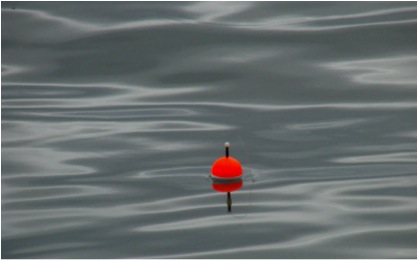
Later this week, I’m off to Shropshire to spend a few days fishing with my older brother Pete. We used to fish together as boys – those times are amongst the very best of my childhood memories. He has lived in Canada for the past 45 years and comes back to England for a few weeks each summer to enjoy the kind of fishing he has missed ever since he emigrated.  We’ll use float rods with light tackle to catch roach, chub, bream and – best of all – carp.

I’m looking forward to it. Well, I think I’m looking forward to it. Mostly I’m looking backward to what happened at the end of our first day’s fishing last year:

“One more cast,” I said. “I want you to see me catch a fish.”

“OK mate. Take your time,” said Pete, standing behind me on the jetty.

He lit a Benson and Hedges as I flipped the line out and waited for the float to settle. After a couple of minutes a fish began to nibble the bait and the float trembled and bobbed. Then came the bite. The float slid away under the water. I lifted the rod and struck. I felt the tug of the fish as it pulled against the line. It wasn’t a big fish – about an 8 ounce carp – and I reeled it in easily. As it came to the bank, I slipped the landing net underneath and lifted it clear of the water.

Pete came forward and peered into the net. “Not bad little brother,” he said as I took the hook out of the fish’s mouth and released it back into the water. “Not bad for a youngster.” Then he pointed beyond my rod tip; “Your float has come off.”

I followed his gaze and sure enough there was my float, no longer attached to my line, floating freely in the water. “Damn. That’s a good float. It cost me £2.99. I’ve been catching fish on that all day. The clip must have come undone.” It was only a couple of feet beyond my rod tip. I stood up and leaned forward as far as I dared, to hook it with the rod tip and bring it back to the bank. It was just too far for me to reach. I flicked out some line to lasso the thing instead but it didn’t want to be caught.

Pete soon tired of my incompetence. “I’ll do it,” he said in an older-brother sort of voice, taking my place on the edge of the jetty. “I’ll use the landing net.”

“That’s no good,” I said. “It’s even shorter than the rod. You won’t reach.”

“I’ve got long arms,” said Pete as he flailed the net in the general direction of the errant float. Not long enough, I thought as the net fell at least two feet short.

I voiced my doubts: “That’s never going to work.”

“I know what I’m doing,” said Pete. “If I drag the net back towards me it will create a current and bring the float closer in.”  He leaned forward, extending the landing net as far as he could, dropped it into the water and dragged it back. The float moved obediently shoreward – about an inch shoreward.

“It’s working,” said Pete. “I just need to create a stronger current.” He repeated the movement several times. Pete is neither a small man nor is he in the first flush of youth (both of which statements – in fairness – could also be made about me). I was feeling grateful for his efforts to retrieve my float but at the same time I had an indefinable premonition of imminent catastrophe.

“I’ll steady you,” I said as Pete thrashed the water with increasing violence, apparently in the hope of creating a friendly tsunami that would wash the float ashore. I grasped the belt of his shorts firmly in my left hand and planted my feet wide apart on the jetty behind him. “O.K. I’ve got you.”

Pete seemed to take these words as an opportunity to test the laws of physics. He lunged forward in a manner reminiscent of a geriatric (and considerably overweight) Superman launching himself from the top of the Empire State Building. Sadly, I could not contain his super-hero powers and the belt wrenched free from my grasp as he did a swallow-dive into the water.

Fortunately it was only three feet deep and he quickly stood up. He turned back towards me, his water-logged hat drooping like elephant’s ears around his face. A sodden cigarette dangled lifeless from his lips. “You stupid bastard,’” he declared in a rather sharp (and, I thought, unnecessarily accusatory) tone.

But I had held on to Pete’s belt a fraction too long and the forward momentum that had catapulted him into the water had also dragged me to the very edge of the jetty, where I now teetered, windmilling my arms in an effort to shift my centre of gravity back over dry land.

I should not have laughed. I really should not have laughed. It was unkind of me. More importantly, hysterical laughter is not conducive to self-preservation. I lost the battle to maintain my balance. Soon, I discovered that I too was unable to fly and in seconds I was standing beside Pete, waist-deep in the lake. He handed me the float. “Here you are. I told you I could reach it.”

We waded to the jetty and heaved ourselves out of the water. I was laughing so much that I could hardly stand up. I couldn’t stop laughing. I laughed so hard that  it made me cry and hurt my chest. Eventually I caught my breath long enough to speak.

“Thanks for saving my float, Pete. Are you OK?”

“Yeah, I’m alright. But my wallet was in my pocket and everything is soaked: credit cards and all my money.”

“The money will dry out,” I said. “I’m pretty sure of that.”

I tried to recall what I had in my pockets. Some coins, a credit card (they would be OK, I thought) and my pocket watch. I pulled the watch out. It was dripping wet but still keeping time.  Somehow I had got away without any damaging anything.

“Look at us Pete. We should have a picture of this.” I reached for my iPhone, my hand instinctively remembering where it was: in the zipped pocket of my shorts. The cost of retrieving my float had just gone up by £173.

Some things are priceless.

Share this:

  • Share on X (Opens in new window) X
  • Share on Facebook (Opens in new window) Facebook
  • Share on LinkedIn (Opens in new window) LinkedIn
Like Loading...

Staring at the Sun

Posted by geoffmead on May 25, 2012
Posted in: Uncategorized. Tagged: fear of death, Irvin Yalom, Staring at the Sun, storytelling. 2 Comments

I have just finished reading Staring at the Sun by Irvin Yalom, a remarkable book about facing and overcoming our fear of death. Not the most promising of subjects, you might think, for a light-hearted read but I found it hugely inspiring and life-affirming.

Yalom urges us to defy la Rochefoucauld’s maxim: Le soleil ni la mort ne se peuvent regarder en face (You cannot stare straight into the face of the sun, or death). Staring at the sun will blind you but looking death in the eye can help you live a more joyful and fulfilled life, he argues.

Drawing on poetry, philosophy, literature, therapeutic case studies and his own long experience (he was 75 when the book was published) Yalom shows us how our existential fear of non-being can rob us of our vitality and willingness to live fully and he quotes a colleague of Freud, Otto Rank: Some refuse the loan of life to avoid the debt of death.

Yalom is a secularist. He does not offer the comfort of belief in reincarnation or life after death to soften the blow. Instead he urges us to use the awareness of death to help us become who we are; to savour our lives: The way to value life, the way to feel compassion for others, the way to love anything with the greatest depth is to be aware that these experiences are destined to be lost.

There is an old Zen story that I sometimes tell to myself when I want to remember this. It begins with a man walking alone across a field:

As he walked he heard a roar behind him. He looked round and saw a tiger bounding towards him. He ran way as fast as he could, the tiger at his heels. Suddenly he came to the edge of a cliff. With nowhere else to run, he grabbed hold of a vine and swung himself over the edge. Hanging there he looked up to see the tiger drooling above him. Terrified, he looked down, only to see another tiger waiting for him below. Two mice – one white and one black – started gnawing at the vine that was holding him. In that moment, the man saw a wild strawberry growing out of the cliff face nearby. Holding on to the vine with one hand he reached out and plucked it. How sweet the strawberry tasted!

As for changing how we live – seizing our ‘one wild and precious life’ – Yalom leaves us with a heartening message: It’s never too late. You’re never too old.

Share this:

  • Share on X (Opens in new window) X
  • Share on Facebook (Opens in new window) Facebook
  • Share on LinkedIn (Opens in new window) LinkedIn
Like Loading...

Elderflowering

Posted by geoffmead on May 22, 2012
Posted in: Uncategorized. Tagged: elders, eldership. Leave a comment

Last weekend a small group of men and women gathered at Gaunts House in Wimborne, Dorset to inquire together into the notion of eldership. The youngest member of the group was in her late-forties, the oldest in his mid-sixties; we were not young but neither were we very old. What we had in common was a determination to live richly and fully into old age and to discover for ourselves something about the particular challenges and opportunities that entering our ‘third age’ might offer.

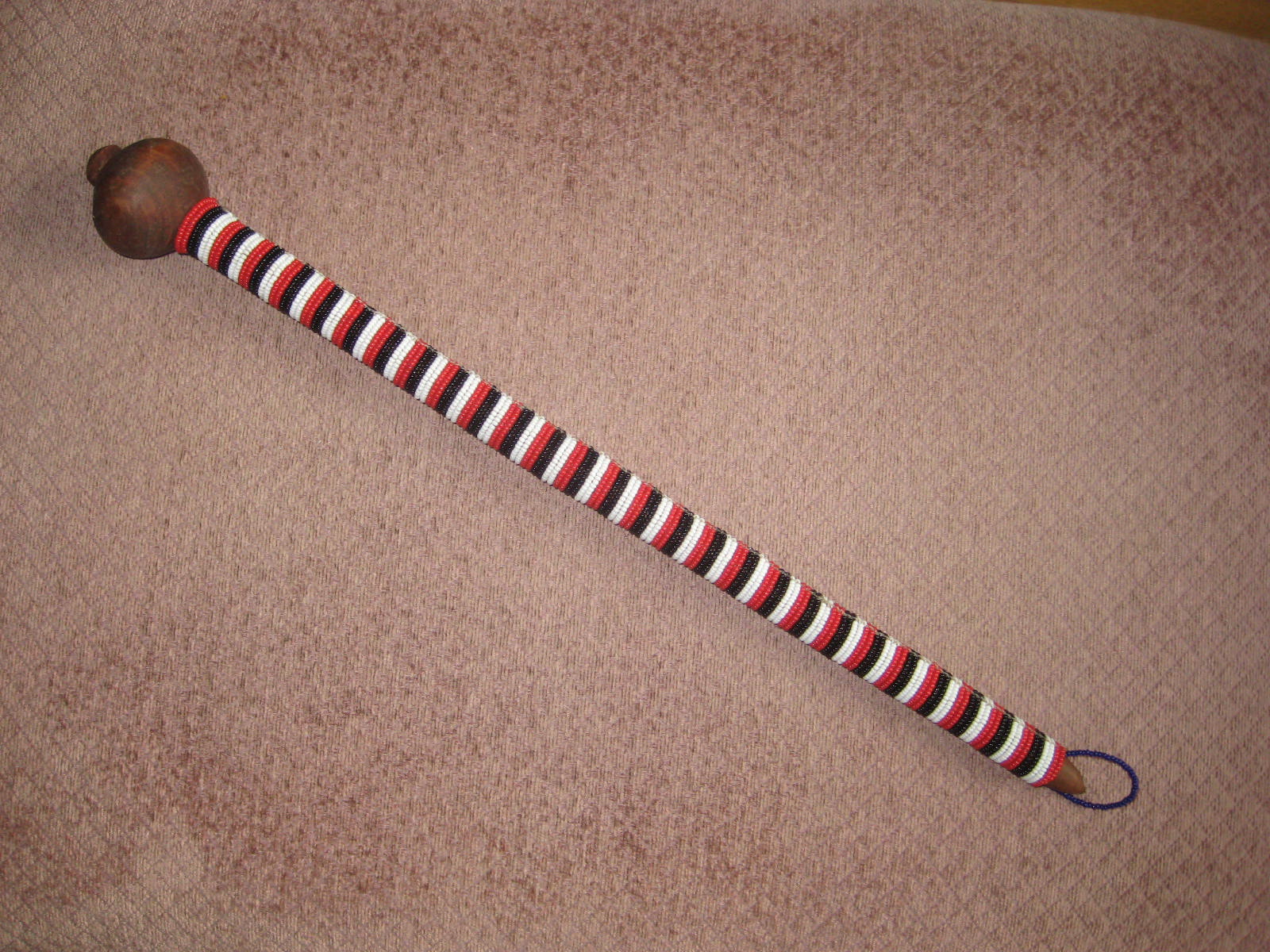
In many traditional and indigenous societies there is an important role for elders in maintaining the folk-memory and offering the wisdom of experience to the young. The image above is of a rungu: a Masai ‘talking stick’ that tribal elders pass around to signify who holds the floor during ritual conclaves. One member of the group had been given a rungu by Masai elders many years ago when he worked in Kenya. For those of us gathered at Gaunts House, its presence provoked a lively debate: what does it take in our so-called developed societies to earn the right to carry the badge of eldership?

As you might expect, we came to no definitive conclusions (indeed celebrating difference rather than trying to enforce homogeneity was a feature of our emerging understanding of the stance of eldership). Nevertheless, I shall venture some of the personal insights I came away with.

•    Elders carry an awareness of their place in the great chain of being which impels them not merely to look back nostalgically at what has gone before, but to take greater responsibility for what is to come. Native American elders were said to consider the impact of a possible course of action on the next seven generations before making a decision.

•    Elders have a responsibility to protect the birthright of our children and of the more-than-human world. If elders do not speak out against the commodification of the commons and the destruction of our planet and its inhabitants, who will?

•    Eldership is both an individual achievement – a way of being – and a critical role in re-building healthier and more inclusive communities congruent with more humane values and behaviours than are generally apparent in our individualistic and nuclear-family oriented society.

•    Aspiring elders honour their own elders. In that spirit, I would like to name three inspirational role models: environmental activist Joanna Macy (83), iconoclastic archetypal psychologist James Hillman (who died last year at 85), and Robert Bly (85) founder of the mythopoetic men’s movement.

•    Elders offer the fruits of their life experiences and contribute their energy, skills, and knowledge to the communities in which they live and work. They earn their place at the fire and are respected for the way they live and not merely for being old.

For the first time, there are more people in the United Kingdom over 65 than under 16. By 2025 it is estimated that more than one third of the population will be over 55 and that there will be more people over 60 than under 25. It is obvious that we simply cannot sit back and expect the next generation to take care of us all.

Instead, we have the opportunity as we age, to become engaged and inquiring elders who play an active part in the future of our society and our planet. There really is no excuse for becoming passive and complaining ‘grumpy old men’ and ‘grumpy old women’.

The invitation to attend the weekend workshop included the words of an old Swedish proverb: The afternoon knows what the morning never suspected. It presupposes that eldership brings a degree of wisdom.

Let us hope for all our sakes that the proverb is true.

Share this:

  • Share on X (Opens in new window) X
  • Share on Facebook (Opens in new window) Facebook
  • Share on LinkedIn (Opens in new window) LinkedIn
Like Loading...

The Philosopher’s Stone

Posted by geoffmead on May 9, 2012
Posted in: Uncategorized. 1 Comment

I came across this picture of Holland House Library the other day. It was taken a day or two after it was bombed in a German air raid on 22 October 1940. I don’t know the identities of the three splendidly be-hatted men but if I had been around at the time I suspect that I too would not have been able to resist clambering over the wreckage to see what books had survived.

When I showed her this image, my friend Sue Hollingsworth from the International School of Storytelling reminded me of a story that she once told me and which we now both tell: The Philosophers Stone, which begins with the destruction of the ancient library at Alexandria in 48 BCE. In the story, a single fragment of papyrus survives the flames. On it is written the arcane secret of the philosopher’s stone that turns base metals to gold.

“What do you see when you look at the picture?” she asked me.

“Lots of things,” I replied. “The casual damage of war; the miraculous survival of the books; the curious detachment of the three men. It makes me think of my mother’s stories of living in London during the blitz. It reminds me that the fate of each of us hangs by a thread. What do you see?”

“It’s more what I don’t see,” said Sue. “There is no relationship between the men: they have no interest in each other, just the books. And there are no women in the picture. I wonder where they are? Clearing up the mess, probably.”

She was right, of course.

But I cannot help being fascinated by the books themselves. I like to think that books have lives of their own. They are conceived in the author’s imagination, are mid-wifed by the publisher and brought into the world by the printer. Some become hugely popular. Many sit on shelves unread. A precious few become companions for our whole lives. I still have a well-thumbed copy of E.B. White’s Stuart Little, given to me by my mother when I was 7 years old.

The image of Stuart Little, heading north in his car, not knowing if he would ever find his love Margalo but travelling with hope, has encouraged and sustained me for as long as I can remember. It is the one book I would hope to pull from the wreckage.

It is in a very real sense my philosopher’s stone.

What is yours, I wonder?

Share this:

  • Share on X (Opens in new window) X
  • Share on Facebook (Opens in new window) Facebook
  • Share on LinkedIn (Opens in new window) LinkedIn
Like Loading...

Becoming Animal

Posted by geoffmead on April 12, 2012
Posted in: Uncategorized. Leave a comment

There is a well-known trust-building exercise in which a blindfolded person allows a sighted partner to lead them.  It can be a powerful experience to relinquish our visual sense and rely on someone else to take care of us. All too often however the exercise is done in a training room or in the course of a quick excursion into the grounds of a training venue.

Imagine how much more powerful it would be to do this exercise in a genuinely wild place, taking your time and with instructions to your sighted partner not just to lead you around but to bring you into delightful sensory contact with your environment. I was fortunate enough to have this experience (both of leading and being led) in a forest clearing in the Jura mountains a couple of weeks ago.

When blindfolded, I noticed how the temporary loss of my sight accentuated my chronically underused faculties of hearing, touch, taste and smell. Even now, I can clearly recall the pungent fragrance released by a small mushroom brushed by my fingers, the sound of chaffinches chirruping in the treetops, and the precise feel of grass, dry leaves, stones and pine cones under my feet. At the time I was acutely aware of the changing temperature on my skin as my partner led me in and out of the sunlight; I felt the breeze on my cheeks shifting direction as I turned; I developed a different sense of presence as I tried to stretch out my non-visual senses to anticipate proximity with rocks and trees.

Just before my blindfold was removed, I reached out and found myself touching someone’s hands. For a few moments I experienced them as the hands not of another human being but simply those of a fellow primate. Then suddenly I could see again. I looked into the face of the person whose hands I was now holding and laughter came out of our mouths: a sound that we two-leggeds sometimes make when we meet each other in the forest.

To become fully human, says David Abram (in the opening paragraph of his new book Becoming Animal) we must own up to being an animal, a creature of earth. And it is hard to do that with any conviction in the middle of a city – and almost impossible in a hermetically sealed office or hotel room.

Share this:

  • Share on X (Opens in new window) X
  • Share on Facebook (Opens in new window) Facebook
  • Share on LinkedIn (Opens in new window) LinkedIn
Like Loading...

Posts navigation

← Older Entries
Newer Entries →
  • Recent Posts

    • Do Radio
    • Storytelling to touch the Soul
    • Ship of Fools
    • The Compleat Angler
    • Coming Home to Roost
  • Enter your email address to follow this blog and receive notifications of new posts by email.

Blog at WordPress.com.
Coming Home to Story
Blog at WordPress.com.
  • Subscribe Subscribed
    • Coming Home to Story
    • Join 135 other subscribers
    • Already have a WordPress.com account? Log in now.
    • Coming Home to Story
    • Subscribe Subscribed
    • Sign up
    • Log in
    • Report this content
    • View site in Reader
    • Manage subscriptions
    • Collapse this bar
 

Loading Comments...
 

    %d