Coming Home to Story

Notes from a journeyman writer, storyteller, and narrative consultant

  • About
  • Books
  • Writing
    • Book Launch
    • My PhD: Unlatching the Gate
    • Readers Say
    • Reviews
    • Selected Poems
    • Stories in Our Bones
    • System-world, Life-world
    • The People of the Sea
    • Drafts
  • Consulting
  • Storytelling
    • Testimonials
    • Island Nights
    • The Storyteller’s Tale
    • An Island Odyssey
  • Men and Storytelling
  • Links

Mid-winter

Posted by geoffmead on May 20, 2016
Posted in: Uncategorized. 1 Comment

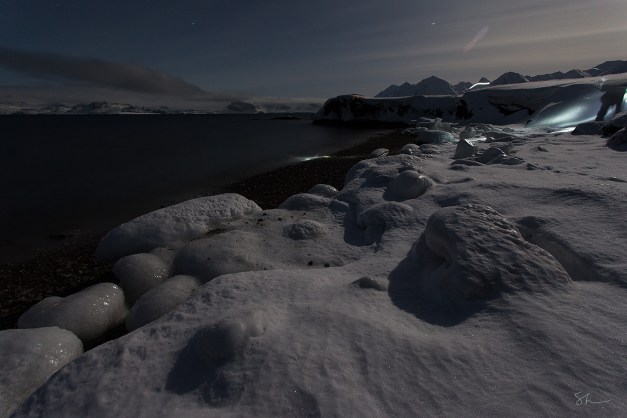
Arctic Night

At the turn of the year, I began to think that the darkest days of my bereavement were behind me. I was feeling good and looking forward to the next chapter in my life, whatever that would be. Since then, I’ve experienced symptoms of delayed shock from the trauma of Chris’s illness and death. My body is letting me know that far from being out of the woods, I’m still caught in a dense thicket of grief.

“It’s early days,” friends tell me. “What do you expect?”

They are right, of course. It’s scarcely 18 months since Chris died and I’m learning that however consciously and creatively one mourns a loss, it takes a long time to adjust at a molecular level. As my heart and soul struggle to re-arrange themselves, my body signals their distress with a variety of uncomfortable symptoms.

The precise meaning of the message is hard to read but it is clear that I need to slow down a bit, work less and rest more. In mid-July I’ll take up a two-week writing residency at Hawkwood College, Stroud. I’ve decided to use the time to see if I can shape the material from these blogs and other sources into some sort of book on bereavement. Maybe this process will help me slow down long enough to catch up with myself.

In the meantime, I need to remember that grief takes its own course and its own time. Perhaps it never ends, just changes character as the months and years pass. I’ve only been on this journey for a little over 500 days, and right now, much as I long for spring, I have to accept that figuratively speaking, I’m somewhere in the middle of a long, dark winter.

Half a thousand days
Since you left
My side.

Half a thousand days
Yearning for light
To return.

Arctic bears hibernate
In the deep drifts
Of my heart,

Calling out your name
Again and again
In the dark.

Half a thousand nights
Searching for you
In my dreams.

Half a thousand more
Before the dawn
Of a new sun.

Share this:

  • Share on X (Opens in new window) X
  • Share on Facebook (Opens in new window) Facebook
  • Share on LinkedIn (Opens in new window) LinkedIn
Like Loading...

Off the Map

Posted by geoffmead on May 13, 2016
Posted in: Uncategorized. 2 Comments

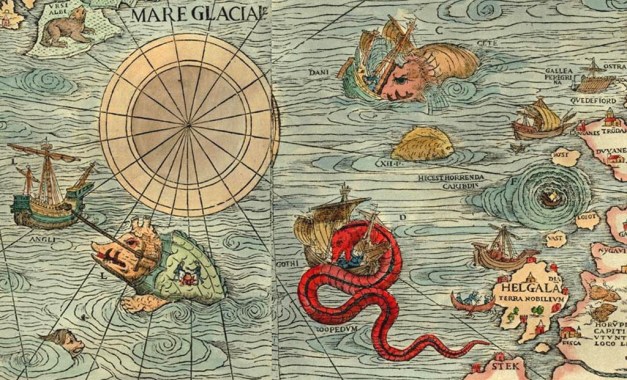
SerpentsandDragons

I was having a beer the other night with a friend in The Volunteer in Lyme Regis. He asked me what I was writing these days and I told him that I’d written a memoir about the last 18 months of Chris’s life, 100 or so blogs and a bunch of poems, all mostly about grief. He gave me a quizzical look and asked a pointed question: “You are getting over this thing, aren’t you?”

“I’m not trying to get over it,” I responded. “I’m trying to get through it.”

He took in my reply but said nothing.

“Writing seems to help,” I added.

“Really?” he said, and changed the subject.

It was a fair challenge, and not meant unkindly. I’ve been thinking about it, off and on, ever since. Why had I been so adamant about not wanting to get over Chris’s death? What had I meant when I said that I was trying to get through it? Does writing about all this actually help?

This morning I woke up with a realisation so blindingly obvious that it had hitherto escaped me. “Getting over it” was reminiscent of how my mother attempted to help me deal with my father’s death when I was a little boy. She loved him dearly and I know from conversations much later in life that she was heartbroken when he died. But she dealt with the situation by resolutely refusing to look back.

Whatever she was feeling herself, she acted in public as though Dad had never existed. I was not taken to his funeral and cannot recall him ever being spoken of in my presence. She remarried six years later and the few remaining photographs of my father disappeared from the walls. With the very best of intentions, she had denied me the chance to mourn his loss.

Consequently, it took me half a lifetime, some very challenging conversations, and many years of therapy, to “get over” his death. In the end we managed to rehabilitate him into our lives and I had the wonderful privilege when my mother died, of interring her ashes in his grave, as she had requested.

So, I have no intention of trying to “get over” Chris’s death. Instead, I try to “get through” my grief and sense of loss by performing conscious acts of mourning. I will take whatever time I need to say goodbye: at her funeral and later at the celebration of her life; by caring for her memorial stone; on my peregrination around the world with her ashes; and – yes – through my writing of memoir, stories, poetry, and these blogs.

This is my way of trying to navigate the terra incognita of grief. I am as lost and as determined to come through as my mother was. Nothing can prepare you for such a loss and no-one else can tell you how to survive it. We are strangers in a strange land, seeking our own unique ways to bear our sorrows.

It seems that the ancient cartographers were right: once we enter this unknown territory there are raging dragons waiting to pounce and hidden whirlpools eager to drown us in depression. But as I am beginning to discover, there are also islands of happiness; an ocean of memories; and always the prospect of love and new life on the horizon.

Share this:

  • Share on X (Opens in new window) X
  • Share on Facebook (Opens in new window) Facebook
  • Share on LinkedIn (Opens in new window) LinkedIn
Like Loading...

Doggerel

Posted by geoffmead on May 10, 2016
Posted in: Uncategorized. Leave a comment

IMG_3239

My human is a dog’s best friend.
I treat him like a God,
Although of course I know he’s just
An ordinary bod.

He calls me Ted or Teddifer
Or some invented name.
It matters not at all to me,
I love him just the same.

I love him when he’s fast asleep
And when he’s wide awake.
I sidle up and lick his chops,
I give my tail a shake

Sometimes I take him to the beach
So he can throw a ball.
I have to run and fetch it, or
There’d be no ball at all.

He’s not too bright at doggy stuff
And very hard to train;
I don’t believe it when he says
He has a bigger brain.

Yes, there are times when I despair
That he will ever learn
To pee on lampposts as he should
With blissful unconcern.

On rainy days I lie around
While he sits down and writes;
I mostly nap and often dream
Of rabbits and of fights.

But when he’s looking somewhere else
I pen a word or two.
Please keep it as our secret though!
He hasn’t got a clue –

That Captain Midnight writes a blog
More popular by miles
Than all the stuff that he knocks out
In antiquated styles.

The thought of Teddy writing verse
Would give him quite a fright.
That’s why I use a nom de plume
Every time I write.

He wouldn’t understand I fear,
Why fate selected me
To challenge the immortal bard
And him to make the tea.


© 2016 Captain Midnight

Share this:

  • Share on X (Opens in new window) X
  • Share on Facebook (Opens in new window) Facebook
  • Share on LinkedIn (Opens in new window) LinkedIn
Like Loading...

Volte-face

Posted by geoffmead on May 7, 2016
Posted in: Uncategorized. Leave a comment

Boaty McBoatface

Captain Midnight here.

Given the opportunity to suggest names for a new £200m polar research ship, the Great British Public voted overwhelmingly for Boaty McBoatface. Sadly, our po-faced government decided to ignore this imaginative offering in favour of RRS Sir David Attenborough.

Now, anyone who hugs gorillas is alright with me and I’m a huge fan of Sir David, but Himself says that he only came 4th in the popular vote. Apparently, the powers that be (Himself is not a great fan of the powers that be) thought it would be more dignified to name the vessel after the great naturalist than to accede to public opinion.

Himself made a big fuss about it. Called it a travesty and the beginning of the end of democracy. What a hypocrite! I don’t get to vote about anything in our house, even what flavour dog biscuit he buys me. Also, given the variety of names he calls me – Ted, Teddy, Tedster, Teddifer, The Teddificator, Mister T, etc. etc. – I don’t think much of his appellatory acumen either.

Anyway, I’ve had a word with the 90 year old Sir David (did you know that he commissioned Monty Python’s Flying Circus when he was BBC Director of Programmes) and I can reveal that I will have exclusive use of said vessel for my super-dog exploits whenever they require [eating] counting penguins or smashing my way through miles of pack ice. I can’t wait to give it a go.

Back soon with all the news that’s fit to print.

Doggy McDogface (aka Captain Midnight)


Share this:

  • Share on X (Opens in new window) X
  • Share on Facebook (Opens in new window) Facebook
  • Share on LinkedIn (Opens in new window) LinkedIn
Like Loading...

Love 3.0

Posted by geoffmead on May 5, 2016
Posted in: Uncategorized. 2 Comments

Leaf heart cropped

I’ve just spent a very enjoyable week with 20 students on the OSBS/HEC Coaching and Consulting for Change masters programme in Paris. It was the final module of the course, at which they presented and defended their theses. One of them used the term Web 3.0 as a metaphor to represent the new and emerging forms of organisation required in a V.U.C.A. world. [*] It caught my imagination and, tangentially, I began to think about love, specifically about what Love 3.0, Love 2.0, and Love 1.0 might be.

A lot has been written about Love 1.0 which, depending on whether we are straight or gay, we might also call first love, young love, or marriage and babies love. There’s an optimism and innocence about Love 1.0 that many of us experience at least once in our lives. It’s often powerfully sexual and it’s also the stuff of most love stories and rom-coms, bringing with it the romantic hope of “living happily ever after.” Sara and I married when we were 23 and had four children. We were together for nearly 25 years as we made our way in the world and raised a family.

But as many of us have learned the hard way, “happily ever after” doesn’t necessarily last forever. Sara and I divorced in 1998, and in my 50s I discovered Love 2.0. I don’t just mean a rehash of Love 1.0 with someone new, but a second and more conscious kind of love between two mature people who have “been around the block” and whose relationship holds the hope and intention of their mutual and individual growth. If the mantra of Love 1.0 is “to be completed by our other half” then the mantra of Love 2.0 is “to support each other in the journey to greater wholeness.”

Without a doubt, Chris and I enjoyed this kind of relationship, which was strong enough and deep enough to sustain us both, when she became ill and ultimately died. It’s a more knowing kind of love, passionate but less naive, more realistic and more able to tolerate, even to enjoy, our imperfections.

What of Love 3.0? The truth is I don’t have much idea about love in the third age. In the past, I thought it would involve growing old together; enjoying simpler pleasures; a comfortable intimacy; staying creative whilst reaping the rewards of past efforts; caring for and looking after each other; and spending more time with friends and family. All of which and much more, I could imagine when Chris was alive.

Some people are fortunate enough to experience fully all the ages and stages of love with the same partner, growing up, growing together and growing old side by side. I have friends who have been securely and happily married for 40 and more years. One of them said to me recently that when she looks at her husband she sees him at every age at the same time. How beautiful it must be to have your youth recognised by your partner in the lines etched into your ageing face.

That hasn’t been my fate. Chris was 17 years younger than me and only 48 when she died, leaving me on the threshold of elderhood. Newly-widowed, I contemplate what the future might hold and experience tidal surges of emotion: wild infatuations; impossible longings; lascivious imaginings; sudden depressions. If I try to anticipate the qualities of a new lover or shape of a new relationship, I realise that I crave intimacy and solitude; freedom and commitment; novelty and familiarity; intelligence and playfulness; a juicy playmate and a wise soul. Preferably all at once!

Mmmm. No change there then.

It looks like Love 3.0 is going to be every bit as complicated and confusing as any other kind of love. Of course, I know it’s ridiculously simplistic to talk about there being three versions of love. The technically minded among us will rightly demand a much more comprehensive and systematic taxonomy. I mean, how can we hope to understand Love 3.0 if we haven’t mastered Love 1.3.7 and Love 2.6.4?

But on reflection, I’m not sure how helpful it is to try to understand love at all, let alone divide it into categories like so many different versions of computer software. If you do find it helpful then maybe don’t mention it to your beloved (unless they are equally nerdy) otherwise you might quickly discover that he/she has decided that your operating systems are totally incompatible.

As for me, I’ve decided to let go of all attempts at categorisation and to embrace the mystery of love in all its infinite possibilities, as once expressed to me in three succinct words by that great philosopher, artful inquirer, and rambunctious lover of life, Chris Seeley:

“Flesh is flesh”


[*] A trendy acronym borrowed from the US Military, standing for Volatile, Uncertain, Complex, and Ambiguous.

Share this:

  • Share on X (Opens in new window) X
  • Share on Facebook (Opens in new window) Facebook
  • Share on LinkedIn (Opens in new window) LinkedIn
Like Loading...

Stigmata

Posted by geoffmead on May 1, 2016
Posted in: Uncategorized. 2 Comments

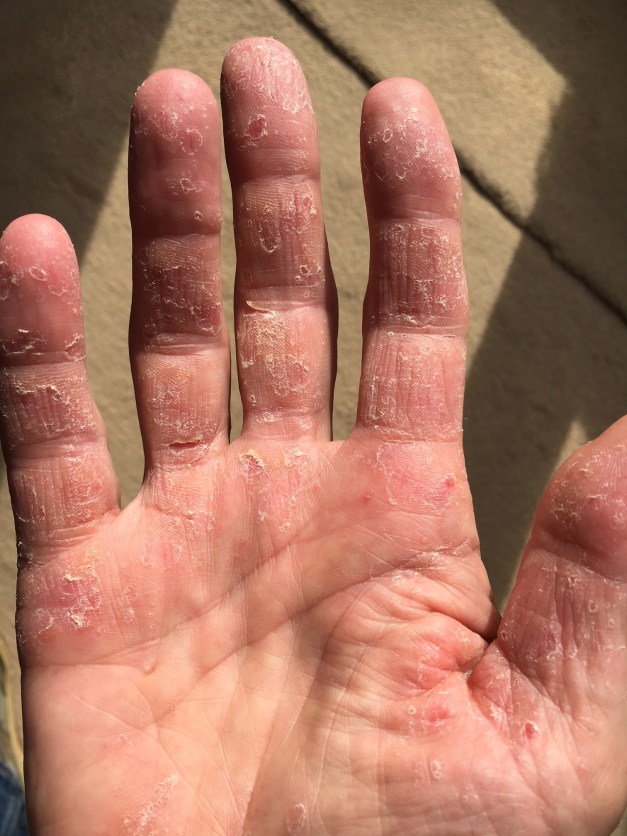
IMG_3854

stigmata \stig-ˈmä-tə\ plural of stigma \stig-mə\

1.    a scar left by a hot iron = brand (archaic)
2.    a mark of shame or discredit
3.    an identifying mark or characteristic
4.    a specific diagnostic sign of a disease

In February I wrote a blog called Sabbiatura, about limestone statues protecting themselves from further damage by developing a hard, unsightly layer of calcite. I likened it to the way we humans try to protect ourselves from further suffering when we have been hurt, and – in hindsight – rather smugly professed my intention not to allow this to happen because of my bereavement.

But in the past few weeks I’ve developed a condition called psoriasis which literally covers the skin with a hard, unsightly layer. It’s particularly affected my hands and feet with various lesions. Yesterday, my feet blistered for no reason while I was walking in Paris. I hobbled the last mile from the Metro to the hotel and revived myself with a beer at the bar.

According to my homeopath who is also a trained medical doctor, psoriasis is an auto-immune condition. In other words, you don’t catch it from anyone, your body does it to itself. Her explanation was that my adrenal system has been working overtime ever since Chris had her fit in Portugal two and a half years ago.

She told me that adrenaline and cortisol override the underlying immune system of the body under certain conditions. In the short term, they boost energy, reduce our capacity to feel pain, and suppress the symptoms of minor illnesses; they enable extraordinary feats of strength and endurance for our immediate protection. But if we can’t switch them off when they’ve done their job, they damage us.

“It’s a bit like living on coffee and cake instead of a balanced diet,” she said. “They  give you a quick boost but in the long run they don’t nourish you.”

Her explanation made perfect sense to me.

There is well-documented medical research [*] showing disproportionately high mortality among the recently widowed. People do actually die of grief it seems and I wondered if a prolonged stress reaction might be a contributory factor. The same statistics show that the mortality rates return to normal after 6-12 months.

Except, there is no normal anymore. Grief doesn’t seem to follow any rules, not even those stages popularised by Elizabeth Kubler-Ross, which help us understand the general phenomenon but not to predict the course of an individual’s journey after bereavement. As Joan Didion says in The Year of Magical Thinking:

Grief turns out to be a place none of us know until we reach it… Nor can we know ahead of the fact … the unending absence that follows, the void, the very opposite of meaning, the relentless succession of moments during which we will confront the experience of meaninglessness itself.

In the “unending absence” following Chris’s death, grief has chosen this moment to inscribe itself on my body like a brand or tattoo. These stigmata are signs of my suffering; they are uncomfortable and unsightly but they are neither punitive nor shameful. Other than that, it’s hard to know what if anything they signify.

Whatever else is going on, I think the psoriasis is a wake up call to look after myself properly: to allow grief to move through me; to change my diet and eat better; to exercise and get proper rest; and to focus my energy on what sparks joy and brings a glimmer of contentment.


[*] Parkes, C.M., Benjamin, B., Fitzgerald, R.G. ,1969, Broken Heart: A Statistical Study of Mortality Among Widowers, British Medical Journal, 1, 741-743

Share this:

  • Share on X (Opens in new window) X
  • Share on Facebook (Opens in new window) Facebook
  • Share on LinkedIn (Opens in new window) LinkedIn
Like Loading...

Outspan

Posted by geoffmead on April 27, 2016
Posted in: Uncategorized. Leave a comment

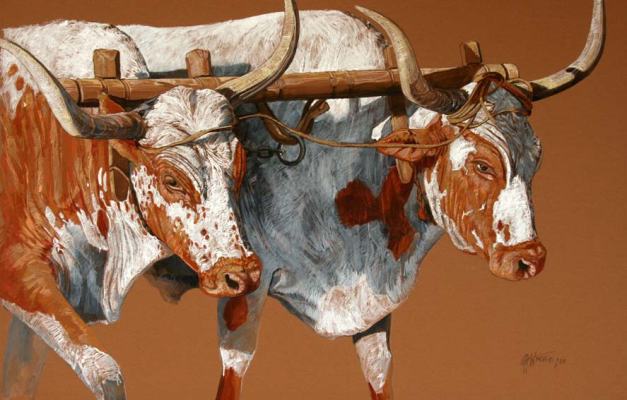
Inspanned Georgina Winch

Since returning from Kenya, as you’ll have noticed in recent blogs, I’ve been re-reading Karen Blixen’s memoir Out of Africa. It’s a book of its time and some of the references to “natives” don’t sit comfortably with a contemporary sensibility. That said, it’s full of poetic and wonderful tales of her adventures in a near-pristine wilderness.

The edition I’m reading has retained her delightfully idiosyncratic language (she was Danish but wrote the book in English). To my ear, it reads exactly as Meryl Streep spoke her words in the film… “I had a farm in Africa, at the foot of the Ngong Hills.”

Many of my favourite scenes in the film are already near word-perfect on the page, including Karen Blixen’s war-time Safari, ferrying supplies to Lord Delamere’s Scouts along the border with German East Africa.

She writes with great admiration and affection about her Kikuyu and Somali companions on the Safari and about the oxen they used to draw the waggons (16 oxen for each of the four waggons). Before dawn, the oxen were yoked or “inspanned.” They pulled all day apart from a short noontime break and were unyoked or “outspanned” and protected from lions inside a thorn boma at nightfall.

I can’t remember coming across the term “outspan” before, except as a trade name for South African oranges, and it caught my imagination. Chris and I both yoked ourselves closely to our work (indeed, I still do) and I was very moved by the thought that when she died she set aside her yoke and was free.

A friend wrote to me the other day to say that he was “winding down” by having 8 weeks away in France this summer. It sounded good and made me wonder why I still feel the need to hitch myself to the waggon quite so much.

Maybe I could outspan myself a bit more.


[Picture Credit: Georgina Winch]

Share this:

  • Share on X (Opens in new window) X
  • Share on Facebook (Opens in new window) Facebook
  • Share on LinkedIn (Opens in new window) LinkedIn
Like Loading...

Cross Country

Posted by geoffmead on April 25, 2016
Posted in: Uncategorized. Leave a comment

IMG_3753

Hello super-dog fans. Captain Midnight here.

Himself has been banging on to his friends (really, I’m surprised he’s still got any) about the joys of what he calls “real motoring.” He likes to pretend that the Morgan 3.0 litre V6 Roadster in the driveway is his!

Just for the record, it is of course my secret super-dog car (secret no more thanks to Himself) although I let him drive it because it has no power-steering which makes it a bit heavy to park when you don’t have opposable thumbs.

Not long after this photograph was taken, he took my place behind the wheel and we set off cross country for my bachelor pad in Lyme Regis. Apparently we had a “stonking drive” whatever that is. You’ll have to take his word for it as I slept all the way there, apart from one pit stop when Himself disappeared into the kiosk muttering darkly about the price of petrol and I had to keep an eye things.

IMG_3789

I did point out that it wasn’t very flattering to photograph me with lorries and a waste disposal skip in the background. He told me that they represented a sort of bleak, post-industrial, Mad Max chic. I said he was suffering from heroic delusions and that he drove more like Mr Toad than Mad Max.

It was meant to be a joke but it did rather hurt his feelings and he was a bit sulky for the next few miles. Since it’s my job to make him feel good, I jumped out of the passenger seat onto his lap when we got to the flat and gave his chops a good licking to show my general admiration and appreciation. It must have worked because he smiled and gave me a marrow bone.

Fortunately you don’t need thumbs to drive one of those.

Parp! Parp!

Share this:

  • Share on X (Opens in new window) X
  • Share on Facebook (Opens in new window) Facebook
  • Share on LinkedIn (Opens in new window) LinkedIn
Like Loading...

Speak like rain

Posted by geoffmead on April 16, 2016
Posted in: Uncategorized. 1 Comment

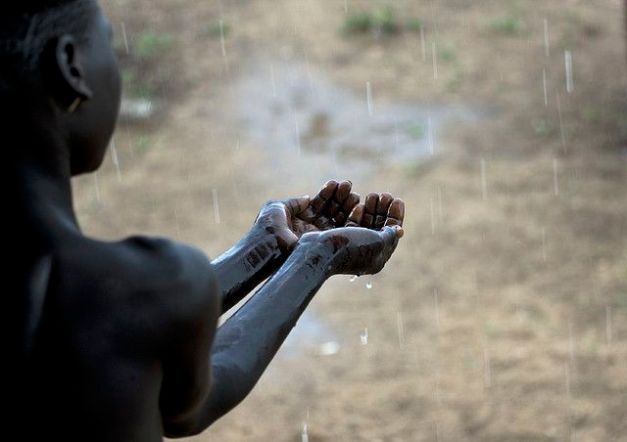
catching the rain

How we hunger for poetry, for words that speak of the truth and beauty of things. We all need to read and write poetry; to make poems and have them made for us. Our souls demand nothing less; our hearts shrivel in their absence. In Asphodel, That Greeny Flower, William Carlos Williams wrote:

It is difficult
to get the news from poems
yet men die miserably every day
for lack of what is
found there.

Going through Chris’s last notebooks and sketches recently, I saw that she had noted those particular lines several times. In extremis, she understood their literal truth. I think they helped inspired her to live artfully until the day she died.

In Out of Africa, Karen Blixen relates that when the Kikuyu workers on her farm wanted her to make up rhymes, they would say to her: “Speak again. Speak like rain.” Intuitively, they equated the heightened language of poetry with rainfall: that most precious and life-giving occurrence.

I found their spontaneous image so beautiful that I decided to play with it a little. So, with gratitude to Karen Blixen and to the generous spirit of Africa, I dedicate these verses to all who yearn for love and to all those for whose love we yearn.

Fill my heart to overflowing.
Inundate its dusty chambers
Like the coming of the monsoon
To a parched and waiting land.

Not the harsh unseasonal squall
Lashing against my window,
No, I’ll have no rain but yours,
No poems but those you make.

I will drink your sweet songs
As if I was dying from thirst.
Speak again. Speak like rain.
Drench me with your words.

Share this:

  • Share on X (Opens in new window) X
  • Share on Facebook (Opens in new window) Facebook
  • Share on LinkedIn (Opens in new window) LinkedIn
Like Loading...

Every bear that ever there was

Posted by geoffmead on April 8, 2016
Posted in: Uncategorized. 1 Comment

IMG_3709

There’s no denying that Chris loved bears: Black bears, Brown bears, Grizzly Bears, Polar bears… and Teddy bears. Given that she couldn’t keep live bears in the house, she had to make do most of the time with Teddy bears, which she collected throughout her life. Her father gave her Tedwink when she was born and they kept on coming.

Her fascination only increased as she got older. At 13 she won a national competition for writing a Paddington Bear story; at 22 she researched, wrote, and made an illustrated book called The Bear Facts: The Teddy Bear as an Industrial Product for her Graphic Design degree project; and when she began work she scrimped and saved to buy rare, antique bears.

Every bear was named, though I only learned a few, and each had its own personality and significance. There grew to be so many that Folly Cottage couldn’t contain them all and occasionally some had to be re-homed (I once used the word “culled” and Chris didn’t speak to me for a week).

Now she’s gone, I’ve had to decide their fate. Tedwink has gone back to Chris’s mum, together with Paddington and Aunt Lucy. Sophie Hannah and a small coterie of special bears have taken refuge on top of the wardrobe in the bedroom, but the others left Folly Cottage for good yesterday, after gathering on the sofa for a final group photograph.

They travelled in style on the back seat of the car to the Cotswold Hospice shop in Nailsworth. The lady behind the counter, seeing the haunted look on my face as I handed them over, was gently reassuring: “Don’t worry,” she said. “We’ll take very good care of them.” I thanked her and drove home, hoping that I’d done the right thing.

The bears were so much a part of Chris that it was very hard to let them go. It was part of her magic that despite her awesome intellect, she gave free rein to the spirited, playful child within. They represent an aspect of Chris that I deeply loved, though I can hear her voice, putting me straight.

“They don’t represent anything. They’re bears!”

Goodbye sweet girl.

Share this:

  • Share on X (Opens in new window) X
  • Share on Facebook (Opens in new window) Facebook
  • Share on LinkedIn (Opens in new window) LinkedIn
Like Loading...

Posts navigation

← Older Entries
Newer Entries →
  • Recent Posts

    • Storytelling to touch the Soul
    • Ship of Fools
    • The Compleat Angler
    • Coming Home to Roost
    • Pillow Talk
  • Bear Child £10.99

  • Gone in the Morning £12.99

  • Coming Home to Story £9.99

  • Enter your email address to follow this blog and receive notifications of new posts by email.

  • Archives

    • November 2022
    • July 2022
    • January 2022
    • January 2021
    • December 2020
    • November 2020
    • September 2020
    • August 2020
    • May 2020
    • April 2020
    • February 2020
    • January 2020
    • December 2019
    • November 2019
    • October 2019
    • September 2019
    • July 2019
    • June 2019
    • May 2019
    • April 2019
    • March 2019
    • February 2019
    • January 2019
    • December 2018
    • November 2018
    • October 2018
    • August 2018
    • July 2018
    • June 2018
    • May 2018
    • April 2018
    • March 2018
    • February 2018
    • January 2018
    • December 2017
    • November 2017
    • October 2017
    • August 2017
    • July 2017
    • June 2017
    • May 2017
    • April 2017
    • March 2017
    • February 2017
    • January 2017
    • December 2016
    • November 2016
    • October 2016
    • September 2016
    • August 2016
    • July 2016
    • June 2016
    • May 2016
    • April 2016
    • March 2016
    • February 2016
    • January 2016
    • December 2015
    • November 2015
    • October 2015
    • September 2015
    • August 2015
    • July 2015
    • June 2015
    • May 2015
    • April 2015
    • March 2015
    • February 2015
    • January 2015
    • December 2014
    • November 2014
    • October 2014
    • September 2014
    • August 2014
    • July 2014
    • June 2014
    • May 2014
    • April 2014
    • March 2014
    • February 2014
    • January 2014
    • December 2013
    • October 2013
    • September 2013
    • June 2013
    • May 2013
    • March 2013
    • February 2013
    • January 2013
    • December 2012
    • November 2012
    • September 2012
    • August 2012
    • July 2012
    • June 2012
    • May 2012
    • April 2012
    • March 2012
    • February 2012
    • January 2012
    • December 2011
    • November 2011
Blog at WordPress.com.
Coming Home to Story
Blog at WordPress.com.
  • Subscribe Subscribed
    • Coming Home to Story
    • Join 134 other subscribers
    • Already have a WordPress.com account? Log in now.
    • Coming Home to Story
    • Subscribe Subscribed
    • Sign up
    • Log in
    • Report this content
    • View site in Reader
    • Manage subscriptions
    • Collapse this bar
 

Loading Comments...
 

    %d