Coming Home to Story

Notes from a journeyman writer, storyteller, and narrative consultant

  • About
  • Books
  • Writing
    • Book Launch
    • My PhD: Unlatching the Gate
    • Readers Say
    • Reviews
    • Selected Poems
    • Stories in Our Bones
    • System-world, Life-world
    • The People of the Sea
    • Drafts
  • Consulting
  • Storytelling
    • Testimonials
    • Island Nights
    • The Storyteller’s Tale
    • An Island Odyssey
  • Men and Storytelling
  • Links

Amo, amas, amat

Posted by geoffmead on February 11, 2015
Posted in: Uncategorized. Tagged: Chris Seeley, corazon en llamas, Laurence Whistler, Leigh Hyam, Lupercalia, Orion Syrah, Valentine's Day. Leave a comment

Corazon

14 February, Valentine’s Day.

Chris always made me a Valentine card. Unknown to her I kept all the letters and cards she sent me, so this year I’ll recycle one. There’s one decorated with images of Tristan and Isolde, that I particularly love. I think she’d approve of that. I’ll know who it’s from (but then I always did).

Laurence Whistler in The English Festivals published in 1907, reports that the tradition of giving Valentine cards blossomed in Victorian times with the introduction in 1840 of the Universal Penny Post. In grandiloquent Edwardian prose, he describes the increasingly exuberant decoration of these cards as a “rutilant, anaglyptic and nostalgic filament of sensibility draw[ing] a veil, if only of forget-me-knots, over its deplorable ancestry.”

The deplorable ancestry in question is the alleged origin of St Valentine’s Day in the Roman festival of Lupercalia when “the names of willing young ladies were put in a box and shaken up well so that each young blood could draw one out at random; the girl thus won to remain his companion while the gaieties lasted.”

Well, who’d have thought it.

Since Lupercalia hasn’t been celebrated for a couple of millennia, Chris and I always tried to get home for Valentine’s Day instead, to exchange cards and share a bottle of wine over dinner. Once, memorably, it was a rare Californian Orion Syrah (you should try it at least once in your life) that we sipped appreciatively for hours.

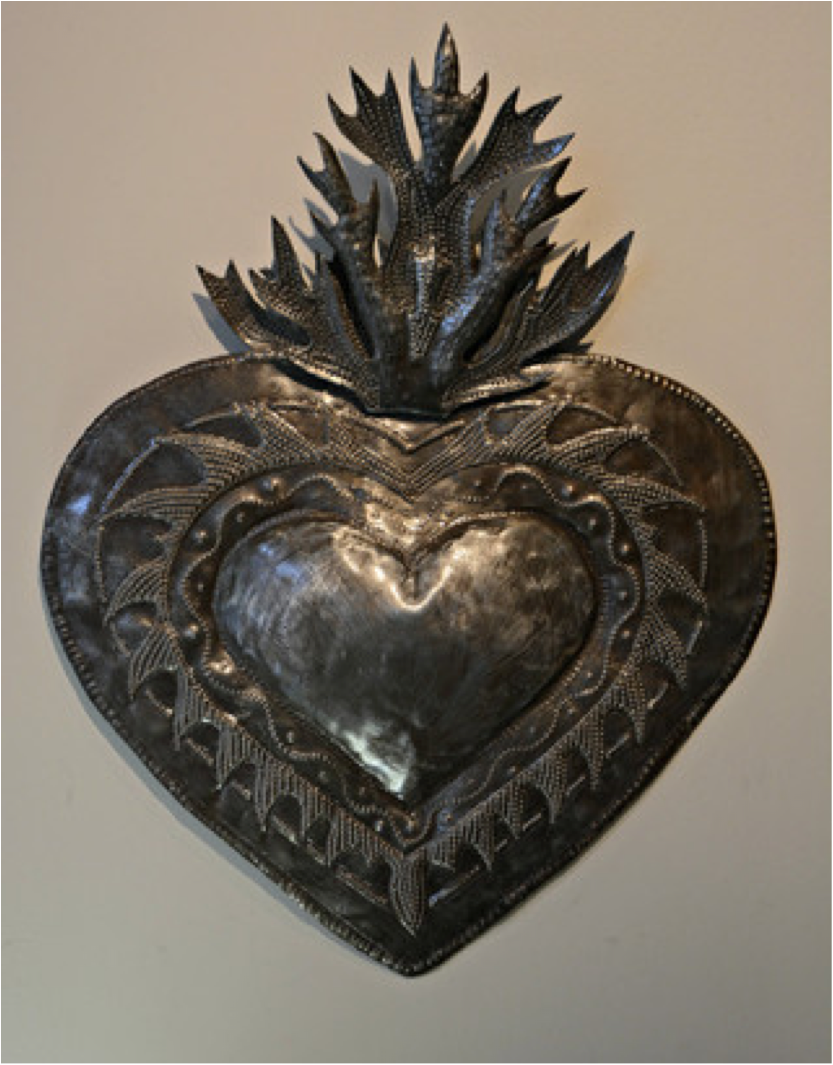
The flaming heart image is a Mexican corazon en llamas and I chose it to celebrate the idyllic month Chris and I spent together in 2009 at Leigh Hyam’s studio in San Miguel de Allende. Every morning Chris painted and I wrote; each afternoon we went to the internet café in town, did some window shopping, and scouted around until we found an interesting bar for an early evening marguerita.

Mmm. An early evening Marguerita. Now there’s an idea.

Share this:

  • Share on X (Opens in new window) X
  • Share on Facebook (Opens in new window) Facebook
  • Share on LinkedIn (Opens in new window) LinkedIn
Like Loading...

I’ll meet you there

Posted by geoffmead on February 7, 2015
Posted in: Uncategorized. Tagged: artful living, Chris Seeley, Family Systems Constellations, Rudolf Steiner, Rumi. 2 Comments

Field 1

That Chris lived and died artfully is both glorious and poignant. Glorious because of the way she continues to inspire me and many others to do likewise and poignant because I am surrounded everyday by the artifacts – the books, papers, journals, images, clothes, furniture, fabrics, trinkets, and decorations – through which she expressed herself.

I will tidy the house one day, maybe even change things round a bit, but right now I don’t want to do anything that might dilute or diminish the sense I have of being in her presence. In the meantime, I wonder how best to stay connected to the vibrant being that I so loved.

Hmmm. I notice that I used the past tense for love, maybe because despite all that I still love about her, I can no longer love her embodied womanly self. That physical aspect of her has gone from the world. But what else of her remains, I wonder? What am I speaking to when I light a candle and tell her how much I miss her?

I’m not religious and I have no prescribed answers to these questions. If I believe anything, it is that Chris lives on in us through our memories of her, the ways in which she challenged, changed, and delighted us, and something more elusive and enduring that we might call her essence or spirit.

To claim to know what this is with any certainty would somehow diminish the awesome mystery of life and death that I have experienced in the last few weeks and months. What I want is not to pretend to understand this mystery but to learn how to participate in it more fully. And I seek to do this through my writing and (my future commitment to Chris’s spirit) through sketching and image-making.

A friend lent me an anthroposophical book called Staying Connected: How to Continue Your Relationship With Those Who Have Died based on some of Rudolf Steiner’s talks and meditations. As usual, I find myself losing patience with the turgid and declaratory tone of Steiner’s prose (as full of certainty as a Papal Edict) though his poetry is more ambiguous and has a bit more heart.

May my love be for you
In the spirit-realm
May my seeking soul
Find your soul.
May my thinking of your being
Ease your cold
Ease your heat.
In this way we shall be united:
I with you,
You with me.

I have also experienced the powerful – and almost universally loving – presence of ancestors and departed loved ones during Family Systems Constellations. But when I really want to feel connected with Chris, it’s either through my own artful practice or else the poetry of someone like that great spiritual seeker Rumi, especially when it’s a poem that we found together and both loved.

Out beyond ideas of wrongdoing and rightdoing,
there is a field. I’ll meet you there.

When the soul lies down in that grass,
the world is too full to talk about.
Ideas, language, even the phrase each other
doesn’t make any sense.

Share this:

  • Share on X (Opens in new window) X
  • Share on Facebook (Opens in new window) Facebook
  • Share on LinkedIn (Opens in new window) LinkedIn
Like Loading...

If you go down to the woods today

Posted by geoffmead on January 31, 2015
Posted in: Uncategorized. Tagged: black bears, Chris Seeley, daemon, Holistic Science Journal, teddy bears. 2 Comments

Shylow

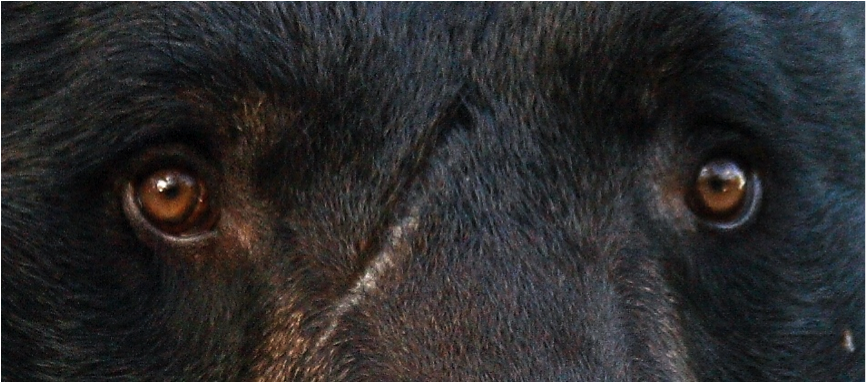
The characters in Philip Pullman’s wonderful trilogy His Dark Materials each had a daemon: an outward manifestation of their soul in the form of a companion animal. Chris’s daemon would undoubtedly have been a bear (and mine a hare, incidentally). She loved bears in all their manifestations: from Teddy Bears to Grizzlies; from Polar Bears to Paddington.

As a child she won a story competition to meet Michael Bond (the author who created Paddington Bear). Throughout her life, she collected a multitude of toy bears including the venerable centenarian “Sophie Hannah.” She even wrote a book about the Teddy Bear industry.

As she grew up, Chris yearned to commune with real bears. Her chance came in 2010 when she watched a TV programme called The Man Who Walks with Bears about an American scientist, Dr Lynn Rogers, who has studied black bears in their natural habitat for many years.

She did a quick search on the Internet; learned that he offered occasional courses at his Wildlife Research Centre in Minnesota, for people to come and study black bear behaviour; discovered that there was one place left and booked it on the spot. “I’m going,” she told me. “But I’ve found a place nearby where you can stay and write.”

It was a statement not a question and, knowing how much it meant to her, I was happy to go along with it. Luckily for me, a week before the course began, one of the other participants dropped out so I was able to go as well. It was an extraordinary experience and Chris later wrote about it for the Holistic Science Journal. Every word of her article is true except for the sentence in which she claims that she has “grown out of childhood teddy bears.”

I have incontrovertible evidence to the contrary. When Chris and I first got together, I introduced her to Douglas Bear my old Teddy. I produced him from behind my back one night as I was about to leave for home. “Douglas would like to stay,” I said. “Would you look after him please?”

It was my best ever chat up line.

Douglas stayed and so did I.

Share this:

  • Share on X (Opens in new window) X
  • Share on Facebook (Opens in new window) Facebook
  • Share on LinkedIn (Opens in new window) LinkedIn
Like Loading...

Stardust

Posted by geoffmead on January 29, 2015
Posted in: Uncategorized. Tagged: Chris Seeley, cosmic self, cosmology, stardust. 3 Comments

stars4

Chris wrote me an email last September from her hospital bed where, unable to sleep, she had been watching a BBC documentary Seven Ages of Starlight on iPlayer.

red giants are alchemists!
gold ejected into the cosmos
so we are stardust after all

In the last few months of her life, Chris became fascinated with cosmology. In her later writing and artful practice, she explored the idea of a “cosmic self” coming from and returning to something greater: a unity, a oneness, a universal whole.

She meant this both literally (the incarnation and disincarnation of our physical substance) and metaphorically (the re-framing of our place and purpose in the cosmos). She tried to give form to her thoughts in words and diagrams. Here’s a page that she wrote/drew at that time, trying to piece it all together:

Cosmic

It’s fascinating, complex stuff and I have several of her notebooks yet to read to delve under the surface, though I suspect that some of her insights will be beyond my current understanding.

What I love most about the page is the note she has added at the top: “welcome home stardust.” It comforts me to know that Chris faced her own death with a sense of homecoming.

Share this:

  • Share on X (Opens in new window) X
  • Share on Facebook (Opens in new window) Facebook
  • Share on LinkedIn (Opens in new window) LinkedIn
Like Loading...

Washed up

Posted by geoffmead on January 23, 2015
Posted in: Uncategorized. Tagged: Arthur Frank, Chris Seeley, narrative wreckage, Wounded Storyteller. 4 Comments

BEACHED-4f09f7d18ab71_hires

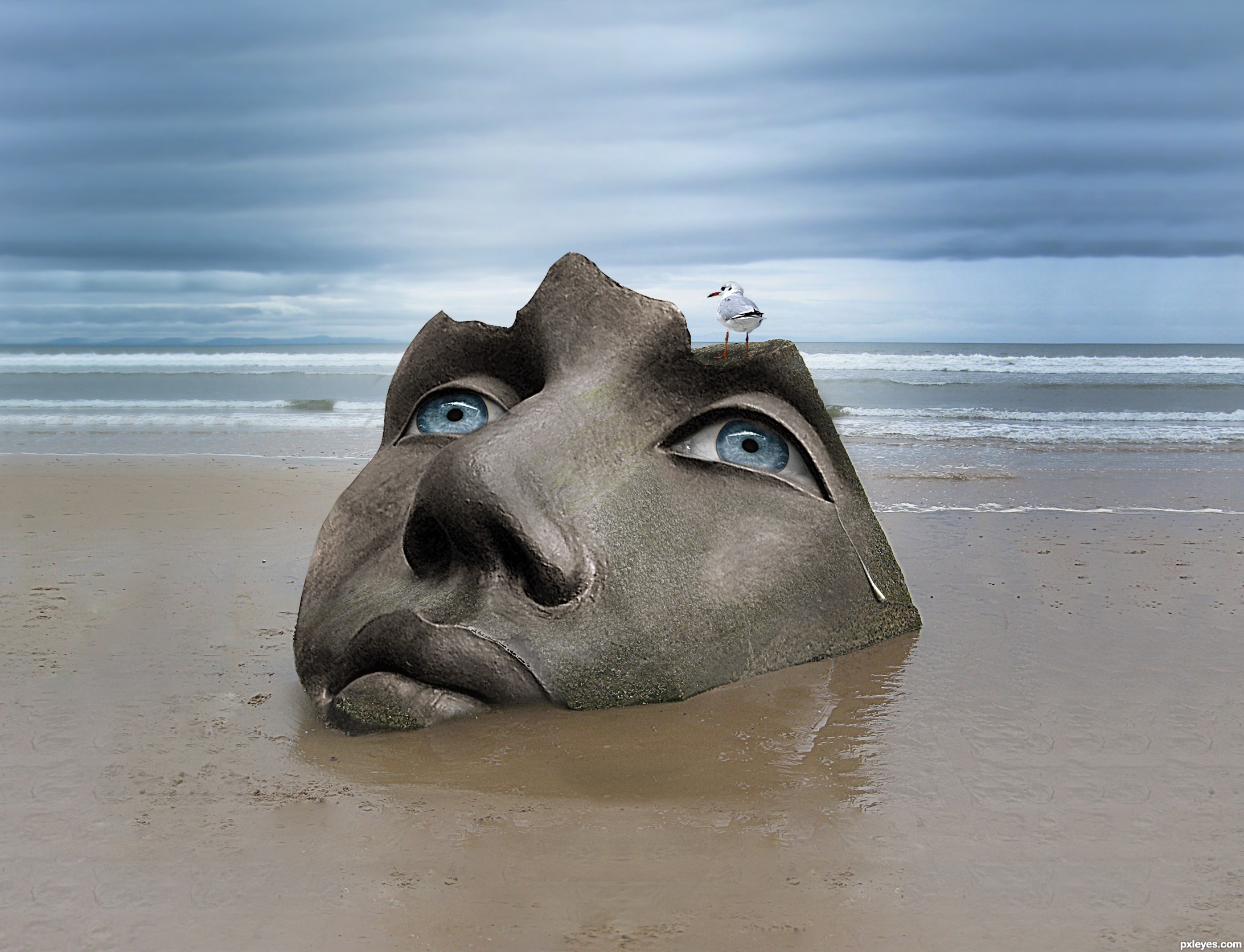
When Chris suddenly became ill in August 2013, one might say that her ship hit a reef. I say reef and not rocks because the danger was hidden and the collision unavoidable. What’s more, there was no lifeboat to come to the rescue; no possibility of removing the tumour deep in her brain. Suddenly, all that had seemed certain – life, work, home, love – was called into question.

Arthur Frank who wrote The Wounded Storyteller (a favourite book of ours) calls this condition – when the stories through which we constitute our sense of self lose coherence and meaning – “narrative wreckage.” In such circumstances, buffeted by forces beyond our control, our ability to reclaim authorship of our lives depends on how we respond to the catastrophe, in particular on the stories we tell about ourselves and the stories we try to live.

Frank identifies three possible narrative responses: chaos, restitution, and quest (or transformation). From the very beginning, Chris knew that there was no chance of a restitution narrative in which things would return to what they had once been. The inspirational choice she made to shun chaos, to live boldly and creatively, and to seek new purpose and transformation through living and dying artfully, humbled me and touched many people.

Both of us owned well-thumbed copies of Frank’s book but Chris had mislaid hers and bought a new copy whilst in hospital last October. That she re-read it is obvious from penciled notes and folded page corners. At the very end of the book, she marked the following passage:

Courage is being able to recognize the unexpected end of life as it was supposed to be without either wish fulfillment or despair. All wounded storytellers confront this problem. Their storytelling is an act of radical hope in which they gather a community of persons who share a sense of the significance of what is being told. Their stories then become resources that are diffused throughout this community, taken up in ways that cannot be anticipated, enhancing hope in varied circumstances.

Chris’s courage never faltered, though her mobility and cognition declined; her identity as a teacher and consultant evaporated; her physical horizons shrank; and her dreams of the future dissolved. Despite all of this, her passion for inquiry was unabated; she continued to offer her unique wisdom to the world; and her consciousness was ever more expansive. Her death was as extraordinary as her life. I am privileged to have witnessed both, and in both she was a beacon of radical hope.

When Chris’s ship hit the reef, I jumped overboard with her. I held her hand as we went under the water and as we miraculously resurfaced, bobbing along under blue skies for 10 months during which we got married, lived together, bought our campervan, got Teddy (our irresistible Cockerpoo), and relished each other anew.

Our fates were entwined but our destinies were different. The skies darkened and the gathering storm eventually broke. On December 3 2014, she slipped from my grasp and we went our separate ways. In the morning, Chris was gone, lost at sea and I awoke, as if from a dream, washed up alone on the shore.

[Picture credit: pxleyes]


Share this:

  • Share on X (Opens in new window) X
  • Share on Facebook (Opens in new window) Facebook
  • Share on LinkedIn (Opens in new window) LinkedIn
Like Loading...

All sorrows can be borne

Posted by geoffmead on January 22, 2015
Posted in: Uncategorized. Tagged: Eldridge Knight, Isak Dinesen, Out of Africa, Patrick O'Malley, stages of grief, story. Leave a comment

blixen

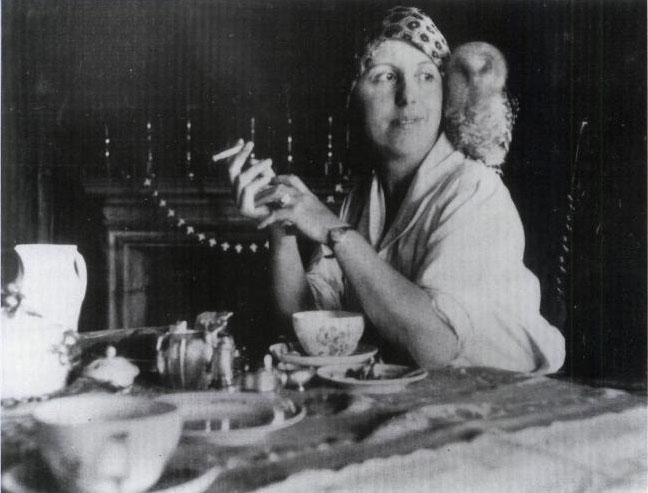
“All sorrows can be borne if you put them in a story or tell a story about them,” said Isak Dinesen who wrote Out of Africa. She knew a thing or two about sorrow, having lost her father to suicide, her husband to divorce, her health to syphilis, her lover to a flying accident, and her beloved Kenyan farm to bankruptcy.

Karen Karp, a longtime friend of Chris’s and mine, reminded me of the quotation the other day when she sent me a New York Times article called (ironically) Getting Grief Right by psychotherapist Patrick O’Malley. He points out that the so-called stages of grief (denial, anger, bargaining, depression, and acceptance) have become a dangerous kind of orthodoxy.

Trying to measure the progress of our grief against this yardstick creates a false expectation that it can be contained or managed. Rather, he says:

When loss is a story, there is no right or wrong way to grieve. There is no pressure to move on. There is no shame in intensity or duration. Sadness, regret, confusion, yearning and all the experiences of grief become part of the narrative of love for the one who died.

I am learning that things do change but also that the process of grief does not follow a predictable path. Though time heals, the heart is ruled by kairos not chronos. One day I notice the sunlight, the next all seems dark; one moment I laugh, the next cry; I curse and pray in the same breath. Like Dinesen, I write because the story is all I have and telling it is the only way I know to bear the sorrow.

There may eventually come a time of acceptance, but today it’s the heart cry of poet Eldridge Knight that echoes in my mind:

all i want now is my woman back
so my soul can sing

Share this:

  • Share on X (Opens in new window) X
  • Share on Facebook (Opens in new window) Facebook
  • Share on LinkedIn (Opens in new window) LinkedIn
Like Loading...

Bardo

Posted by geoffmead on January 19, 2015
Posted in: Uncategorized. Tagged: Bardo, Chris Seeley, Gate Gate Paragate, Nepal, Sanskrit, Wheel of Life. 2 Comments

wheeloflife

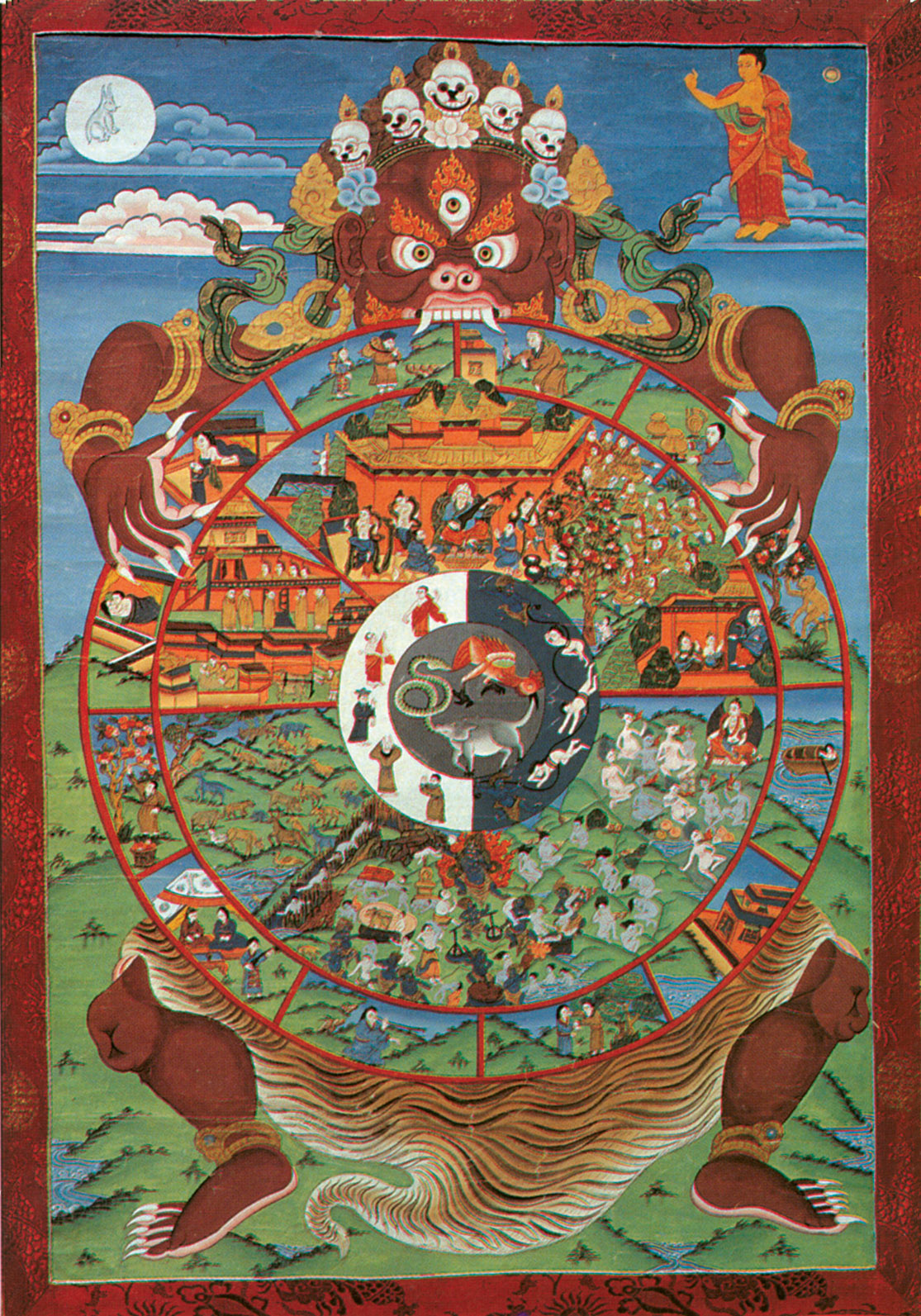
Our Buddhist friend Sarah Bird reminded me that Wednesday 21 January 2015 will be the 49th day since Chris Seeley died. In Tibetan Buddhism this marks the end of Bardo ­– the period between the death and rebirth of a human soul. Whatever our beliefs, it would seem to be a propitious day to light a candle, send Chris our love and wish her well for the next stage of her journey.

The picture above is a traditional representation of the Tibetan Wheel of Life. Chris had one hanging on her bedroom wall; it’s still there. Not a poster, but one she had bought from a family in Nepal who made their living by painting these exquisite images with natural pigments and gold leaf.

She had paid more than they asked and still felt guilty that they had asked so little for several weeks of highly skilled work. I remember her unfurling the delicate roll of paper when she got home and telling me that she had sat in their home and watched them apply the finishing touches to the image with the loving attention of true devotees.

I don’t think Chris believed in the type of literal reincarnation shown in the picture, though she loved the richness of Buddhist symbolism and was drawn to the practice of meditation. She especially enjoyed one particular chant from the Heart Sutra. Our friends Sarah and Julia chanted it with her in hospital in September when she had just been told by the oncologist that there were no further medical options for treatment.

She found it soothing then and perhaps it helped her spirit leave her body when a small group of us chanted it in her presence 24 hours after she died. The original Sanskrit words, believed to be about 1,400 years old, are:

GATÉ GATÉ PÃRAGATÉ

PÃRASAM GATÉ

BODHI SVÃHÃ

The words have been translated many times though some say they are untranslatable. Here’s a version that feels appropriate. Bon voyage, sweetheart.

GONE, GONE, GONE BEYOND

GONE UTTERLY BEYOND

OH WHAT AN AWAKENING


Share this:

  • Share on X (Opens in new window) X
  • Share on Facebook (Opens in new window) Facebook
  • Share on LinkedIn (Opens in new window) LinkedIn
Like Loading...

Tribal

Posted by geoffmead on January 17, 2015
Posted in: Uncategorized. Tagged: Chris Seeley, global citizen, modern indigeny, Wild Margins. 2 Comments

SantaCruz-CuevaManos-P2210651b

Chris Seeley was a global citizen. Her circle of belonging was wider and more various than anyone else I’ve ever met. She belonged to many self-chosen categories and communities: artists, intellectuals, clowns, dancers, yogis, runners, cooks, consultants, dog lovers, teachers, gardeners, ursophiles, tweeters, travellers, writers, teddy bear afficionados, knitters, homemakers, poets, and spouses – to name those that come immediately to mind.

What was extraordinary about her however, was not just the breadth and variety of her passions, but how she brought them together in a unique integration. Conventional boundaries dissolved as all aspects of her life came together in one creative flow. Her friendships were deep and constant and her friends too numerous to count; her tribe was manifold and I am proud to call myself a member of that continuing fellowship.

Twice we visited paleolithic sites (once in France and once in Spain) to look at cave paintings. The animals and hunting scenes were magnificent but it was the simple, domestic gesture of the handprints that delighted her most. “Look,” they seemed to say. “We all belong here, together.”

Chris longed for a modern form of indigeny, intimately connected to people, place, and planet. Shortly after we got married, she wrote a beautiful piece about this on her Wild Margins website, from which we read these inspired words at her funeral service:

Perhaps we yearn for an impossible dream, to belong here and now, to each other, to be the roots and the soil, to grow from place and tribe, to go out and perform as a troupe performs and return home to be greeted and fed and then to sleep…

My home is now, during my turn on the planet, passing through with this tribe – this troupe of wonderful creative, vital people alive at a time of astonishing loss.

[Image: Cueva de las Manos, Santa Cruz, Argentina]

Share this:

  • Share on X (Opens in new window) X
  • Share on Facebook (Opens in new window) Facebook
  • Share on LinkedIn (Opens in new window) LinkedIn
Like Loading...

Flayed

Posted by geoffmead on January 14, 2015
Posted in: Uncategorized. Tagged: Chris Seeley, grief, Lindworm, Marianne Williamson. 1 Comment

lindworm_full_by_dizzt-d4rgp7q

Hearing that Chris had died, a friend – knowing me to be a storyteller – recently asked if I was able to find comfort in any particular story. Immediately, though at the time I couldn’t put my finger on the reason why, a Scandinavian story came to mind: The Lindworm.

Later, as I thought about my response, I realised that I felt somehow “met” by the story because it named something important about my experience of loving and losing Chris. The more I thought about it, the more it seemed to speak an archetypal – perhaps even universal – truth about love and marriage.

The Lindworm (a two-legged, wingless, semi-human dragon) who has already devoured several naive and unsuspecting princess brides, is confronted in the marriage chamber by a shepherd’s daughter. On the advice of a wise old woman, she is wearing not one but seven hand-embroidered wedding shifts.

The Lindworm stares at her, burning with desire.

“Strip,” he says.

“I’ll take off one of my shifts if you take off one of your skins,” she says.

“No-one has ever asked me to that before,” says the Lindworm, crying out with pain as he tears a layer of scaly skin from his body.

The shepherd’s daughter takes off a shift.

“Strip,” says the Lindworm.

“I’ll take off another of my shifts if you take off another of your skins,” she says.

Seven times they remove skins and shifts until the Lindworm is a formless mass of flesh and the shepherd’s daughter is naked. Then she takes a brush dipped in lye and scrubs what remains of the Lindworm until it is red and raw.

Then, and only then, does she bathe it with milk, take it to bed, and hold it in her arms. When she wakes in the morning, lying beside her is the king’s son, a Lindworm no longer.

I have been flayed by love and loss, and grief is scrubbing me raw. Although it is often too painful to see it clearly, and there are times when all I want is not to feel, I know there is a profound gift to be found in this ordeal, and I am daily bathed by loving friends in the milk of human kindness.

Like the shepherd’s daughter, Chris had an uncanny ability to see our creative potential (often before we knew it ourselves) and she rejoiced in helping us realise it. She was a great teacher because playing small was anathema to her; she instinctively knew that, as Marianne Willamson said:

As we let our light shine, we unconsciously give other people permission to do the same. As we are liberated from our own fear, our presence actually liberates others.

Through the example of her own life and willingness to share her journey, Chris challenged us to let down our guard and meet the world afresh, in all its beauty, passion and pain.

I would give anything to wake up by her side once more.


[Picture: Daniel Decena http://tinyurl.com/lguz2fw%5D

Share this:

  • Share on X (Opens in new window) X
  • Share on Facebook (Opens in new window) Facebook
  • Share on LinkedIn (Opens in new window) LinkedIn
Like Loading...

Juicy Edge

Posted by geoffmead on January 10, 2015
Posted in: Uncategorized. Tagged: Chris Seely, cosmology, memento mori, mort Brod, St Magnus Cathedral. 4 Comments

Just five days before she died, Chris Nichols interviewed Chris about living artfully. The conversation was filmed and edited by Chris Nichols’ son Ric. I found it almost unbearably poignant to watch at first, but I’m sharing it because it’s a wonderful memorial to Chris’s indomitable spirit and creativity.

The diamond-shaped object shown in the film, on which Chris has, in her words, “sprinkled some glitter” – actually gold leaf – is a mort brod, an ancient form of memento mori inspired by one we saw hanging in St Magnus Cathedral in Kirkwall a few years ago.

Chris designed it and made it herself with the help of local artist Nicola Clarke whose extra pair of hands compensated for Chris’s increasing lack of dexterity. It hangs in a window by the front door of Folly Cottage, as a sign of mourning and as a daily reminder of the transience and preciousness of all our lives.

In the last few weeks of her life, Chris wrote about the idea of a cosmological self, and what it might mean to more fully acknowledge that we are intrinsically and unavoidably aspects of the infinite and terrible beauty of the universe. Artful as ever, she expressed this expansive sense of belonging – her “juicy edge” – in the images decorating the mort brod, as you can glimpse in the film.

Thank you Chris and Ric Nichols for making this film and allowing us to share it.

Share this:

  • Share on X (Opens in new window) X
  • Share on Facebook (Opens in new window) Facebook
  • Share on LinkedIn (Opens in new window) LinkedIn
Like Loading...

Posts navigation

← Older Entries
Newer Entries →
  • Recent Posts

    • Do Radio
    • Storytelling to touch the Soul
    • Ship of Fools
    • The Compleat Angler
    • Coming Home to Roost
  • Enter your email address to follow this blog and receive notifications of new posts by email.

Blog at WordPress.com.
Coming Home to Story
Blog at WordPress.com.
  • Subscribe Subscribed
    • Coming Home to Story
    • Join 135 other subscribers
    • Already have a WordPress.com account? Log in now.
    • Coming Home to Story
    • Subscribe Subscribed
    • Sign up
    • Log in
    • Report this content
    • View site in Reader
    • Manage subscriptions
    • Collapse this bar
 

Loading Comments...
 

    %d