Coming Home to Story

Notes from a journeyman writer, storyteller, and narrative consultant

  • About
  • Books
  • Writing
    • Book Launch
    • My PhD: Unlatching the Gate
    • Readers Say
    • Reviews
    • Selected Poems
    • Stories in Our Bones
    • System-world, Life-world
    • The People of the Sea
    • Drafts
  • Consulting
  • Storytelling
    • Testimonials
    • Island Nights
    • The Storyteller’s Tale
    • An Island Odyssey
  • Men and Storytelling
  • Links

Tellerman

Posted by geoffmead on March 24, 2013
Posted in: Uncategorized. Tagged: British Museum, Ice Age, Ice Age Art, Tellerman, Writing Workshop. 3 Comments

???????????????????????????????????????????????????????????????????????????????????????????????????????????????????????????????????

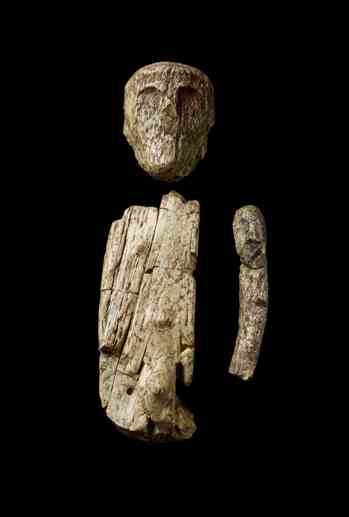
I went to a writing workshop today, run in conjunction with an exhibition at the British Museum called Ice Age Art: Arrival of the Modern Mind. We spent some time looking at the exhibits and absorbing the atmosphere of life in Europe 10 – 40,000 years ago. Then we were invited to write something in response to what we had seen.

I was really struck by the remains of the earliest known puppet/doll – shown in the picture above – and this is what I wrote.

I am the Tellerman. I speak to all things. They speak to me. This is how they speak: I hold Man on my knee. He moves. His arms and legs move. No-one else has a Man. I made him a long time ago. I had a picture of him in my head and I made him: Man, his arms and legs moving on my knee. I hear him speak. He moves. He looks. He knows what all things speak (“large” and “small”, “long fur”, “great tooth”, and “good to eat”).

He walks on my knee. I bend down so he can speak in my ear. I listen to what he says to me: “Hunt – stay home – danger – plenty.” I tell the people. I am their voice. I am their ears. Man is silent during the day. He only speaks at night when the fires are lit. Sometimes Man leaps off my knee and grows big. He jumps onto the wall of the cave. He hunts and he fights. Sometimes he says nothing. He sleeps.

If the people give us food, he tells stories. He knows many stories. He speaks them into my ear and I tell them, He dances on my knee; he jumps onto the wall of the cave. He hunts and he fights.

It is a fabulous exhibition. Do see it if you can. Write something and post it in reply!

Share this:

  • Share on X (Opens in new window) X
  • Share on Facebook (Opens in new window) Facebook
  • Share on LinkedIn (Opens in new window) LinkedIn
Like Loading...

Too old to die young

Posted by geoffmead on March 4, 2013
Posted in: Uncategorized. Tagged: Billy Connolly, elderhood, Last Word. Leave a comment

Billy+Connolly

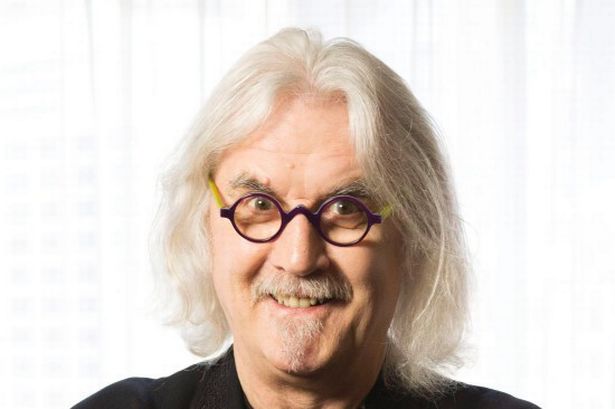
No, the picture is not me. It’s Billy Connolly (although he does seem to be wearing my glasses). I chose it because I’ve been thinking about where I am in this whole elder thing and I recently saw a DVD of Billy’s Too Old to Die Young tour of New Zealand. It was made a few years ago when he was about the same age as I am now (63) and I think the title says it all.

Like Billy in 2004, I’m certainly not young – I’m no longer even middle aged – but neither am I entering my dotage. I am however, “too old to die young”, at least by the standards of Radio 4’s obituary program Last Word which (another sign of my age perhaps) I enjoy listening to. Not once have I heard the presenter Matthew Bannister declare that the life of the deceased (aged 63) was tragically cut short. Three score years and twelve may be a biblical underestimate of what constitutes a full innings these days but 60 something does seem to be considered a reasonable whack. Hmmm.

I guess I’m still caught somewhere in that awkward age between adolescence and death. For a while at least, I’m going to stop worrying about what it means (or might mean) to be an elder, accept the fact that life and death are both pretty unpredictable, and concentrate on living my life as fully as I can and on enjoying it moment by moment.

Incidentally, I really like the way Billy Connolly (now 70) seems to be expressing a richer, more generative and inclusive relationship with the world through his recent travel/performance documentaries: he’s ageing well, growing into a more well-rounded and – to me at least – more interesting person.

Thanks for your inspiration and example, Billy.

[ Reposted from: http://www.elderflowering.org ]

Share this:

  • Share on X (Opens in new window) X
  • Share on Facebook (Opens in new window) Facebook
  • Share on LinkedIn (Opens in new window) LinkedIn
Like Loading...

Finding Ithaka

Posted by geoffmead on February 17, 2013
Posted in: Uncategorized. Tagged: Cavafy, Coming Home to Story, David Whyte, Ithaka, Odyssey. 2 Comments

26IthakaIonianSea

It is more than 20 years since I sailed with a friend in a 35′ yacht to Ithaka, the island Odysseus spent 10 years making his way back to after the 10 years he had already spent fighting on the plains of Troy. Homer’s Odyssey is brilliant evocation of a man’s soul journey at midlife and my voyage was a kind of pilgrimage: a symbolic expression of my yearning to find a life that was truly my own.

My brief visit to Ithaka at the age of 40 presaged the real-life journey I had yet to make: the demons I had yet to face; the sirens I had yet to resist; the wonders I had yet to encounter. I didn’t know how my life would change, just that I was searching for something. I wrote:

Somewhere
on this troubled sea,

there is an island
calling me home.

I will find her:
this one whose longing

touches my soul;
this one whose fate

it is my fate to share;
this one to whom

I will say “Yes”
for the rest of my life.

Odysseus was desperate to return to his kingdom and to his wife Penelope; I didn’t even know what my kingdom was, nor did I know with whom I wanted to spend the rest of my days. I just knew that neither could be found unless I was willing to leave the dry-land certainties of my life – marriage, family and profession – and launch myself into turbulent waters.

Looking back, I think I probably wanted to experience the excitement of the journey as much as – if not more than – I wanted to reach the destination. The modern Greek poet Cavafy famously enjoined us to hope that the voyage to Ithaka would be a long one.

Keep Ithaka always in your mind.
Arriving there is what you are destined for.
But do not hurry the journey at all.
Better if it lasts for years,
so you are old by the time you reach the island,
wealthy with all you have gained on the way,
not expecting Ithaka to make you rich.

For Cavafy, the journey to Ithaka was everything. His inspiring poem is a plea (perhaps to himself) to live life to the full. It has become very popular; I’m even told that it’s frequently read at funerals. It’s a great poem but – like the Odyssey itself – has little to say about life after landing on the longed-for shores of home.

When I wrote Coming Home to Story, I chose the title because it reflected the sense I had of coming home to myself; of newly arriving in my own life. Now, two years after I finished writing it, I realize that I’m not just coming home, I am home. My creative life as a writer/storyteller and my partner Chris Seeley are the island I once heard calling to me; this is Ithaka.

After my initial fears when leaving dry-land behind me, I learned to love the journey. Now, I’m learning to love the juicy life that I have found 20 years later; learning – as David Whyte puts it – to “give up all the other worlds except the one to which you belong.” I’m discovering that, from this place I can say “Yes” not only to another person but to the whole of my life.

Looking out of my kitchen window at the sun glinting on the sea in Lyme Bay this bright Sunday morning, I feel full of gratitude for all that has brought me here.

Home at last.

Share this:

  • Share on X (Opens in new window) X
  • Share on Facebook (Opens in new window) Facebook
  • Share on LinkedIn (Opens in new window) LinkedIn
Like Loading...

Personal & Political

Posted by geoffmead on January 31, 2013
Posted in: Uncategorized. Tagged: Anthony Nanson, Book Review, Laura Simms. Leave a comment

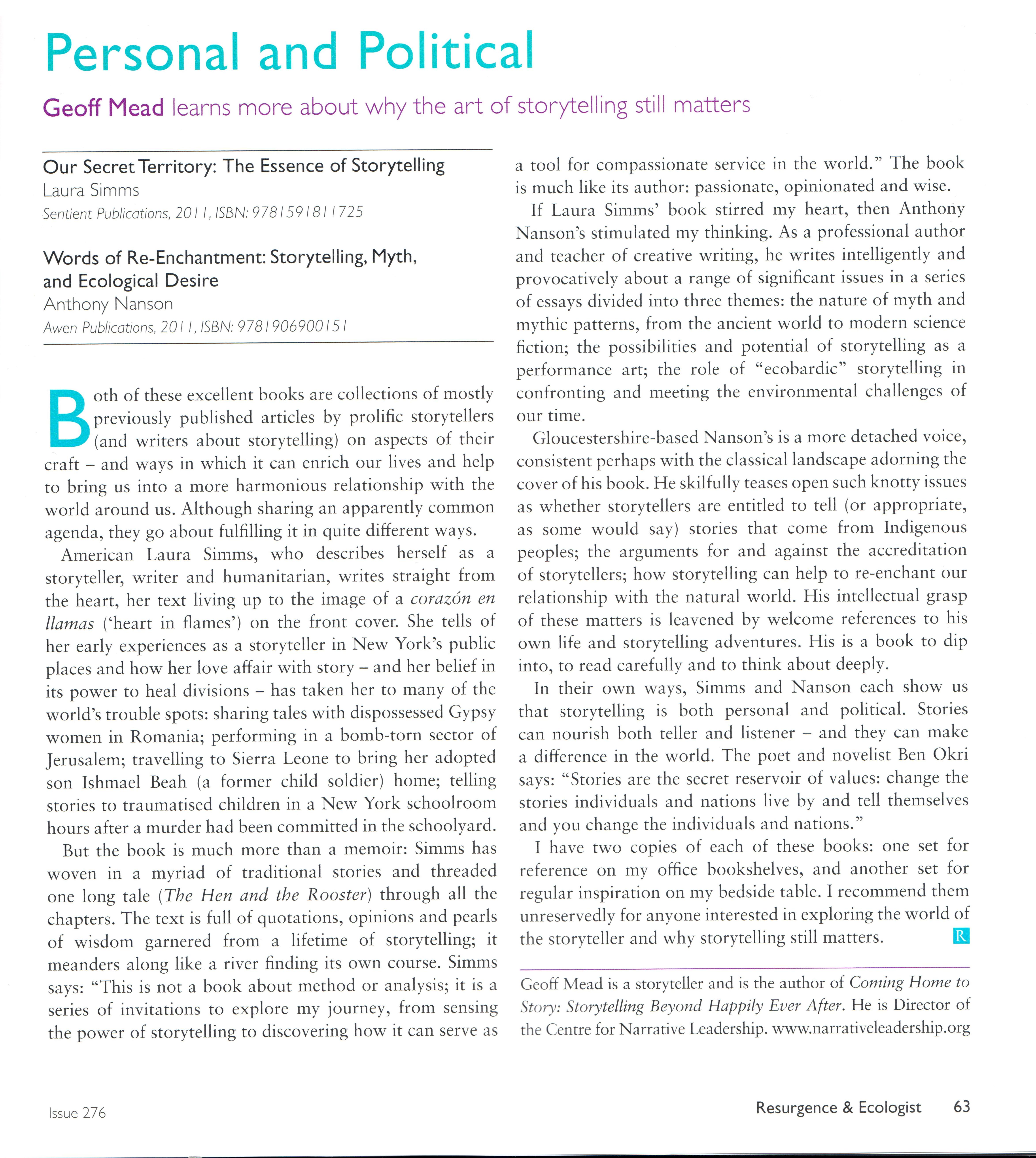
Last year I was invited to write a review for Resurgence & Ecologist Magazine of two new excellent books about storytelling by American storyteller Laura Simms and by Stroud-based Anthony Nanson. It appeared in the January 2013 edition.I hope that readers of this blog might be interested to read it – and the books themselves!

resurgence4

Share this:

  • Share on X (Opens in new window) X
  • Share on Facebook (Opens in new window) Facebook
  • Share on LinkedIn (Opens in new window) LinkedIn
Like Loading...

Cool Customer

Posted by geoffmead on January 20, 2013
Posted in: Uncategorized. Tagged: Heathrow, Orly, snowbound. 2 Comments

snowheathrow

Paris. Orly Airport. 19.25 à Londres. “CANCELLED” it says in big red letters on the departure board. Snow at Heathrow. But I don’t mind too much. I’m on my way home after a successful gig in a French Château telling stories and exploring Narrative Leadership with an international group of Learning and Development Professionals. I travel quite a lot. I’m a cool customer.

By the time I get to the desk, I’ve already phoned my travel agent, booked a seat on the 09.55 next morning and a room at a nearby hotel. I am given my voucher by the airline to pay for all of this, take a few minutes to buy some fine tea from the Mariage Frères concession at the airport then jump onto the shuttle to the hotel. I’m a cool customer alright.

I borrow an electrical adapter from reception and sort out the internet link, enjoy a large Gin and Tonic at the bar and find a table for one in the restaurant. Tartare d’ Avocat followed by Confit de Canard, washed down with a couple of glasses of Château Neuf du Pape. Next morning I tarry for a minute or two in reception to return the adapter. The hotel shuttle drives off without me. But no matter there’ll be another one along soon. Plenty of time to stand around looking cool whilst I take in the snow-covered vistas beyond the car park.

The shuttle arrives at Orly Ouest half an hour later than I had intended but there is still more than an hour until my flight takes off. Time for a quick exchange of texts with Chris (my partner, who is en route to Heathrow from Dakar) and to contemplate breakfast. No; I’ll cruise through security and get breakfast airside. I’m so cool, I’m froid.

The departure board directs me to Salle 31 for passport control and security check. When I get there, two of the four control points are closed and the queue of waiting passengers snakes the length of the terminal.  I am reassured though: a large sign indicates “9 min” to wait. As I’m looking it changes: “16 min”, “20 min”, “Plus de 20 min.” This is slightly worrying as they clearly have no idea how long it’s going to take.

For a seasoned traveller like me, this is a simple matter of queuing strategy. I notice that the line divides in two as it gets closer to the border control booths: one for EU passports and one for all passports. The “Toutes Passeports” line is slightly shorter so, after a painstakingly slow 15 minute shuffle to the point of bifurcation, that’s the one I choose. This soon proves to be a serious mistake.

For some entirely unfathomable reason it takes three times as long to tick a box at our booth. Not only that but another channel runs parallel to ours: “Passeports Diplomatiques.” I hadn’t noticed it at first but now delegations of self-proclaimed diplomats have come out of nowhere and are piling down it. Inspection of our queue’s passports is halted whenever one of them gets to the front, so they can be unctuously ushered ahead of us. I bet half of them have never seen the inside of an embassy. Bastards.

20 minutes pass and I am no closer to the control booth. Come on. Come on! COME ON! Bloody useless French. Bureaucratic nit-picking idiots. Couldn’t organize a piss up in a brewery. I bet they’re enjoying this. In fact, they’re doing on purpose. I know they are. They want me to miss my plane.

10 minutes to boarding time. 5 minutes. Why don’t I just walk up to the front and demand to be seen. Because I’m British and I am constitutionally unable to jump the queue, that’s why. Bugger. Damn. F**k.

Boarding time comes and goes. Eventually my passport is examined and my bags are x-rayed. Inevitably, the alarm sounds as I pass through the metal detector (it’s the clasps on my braces) and I undergo the ritual humiliation of a public body search by a child in uniform. I want to scream at him: “What’s the point of searching me for weapons? The sodding plane has already left.” Instead, I grit my teeth and endure the indignity in silence. After all, what does it matter now?

But what’s this?

Gate D is still closed. BA 333 has not yet left the tarmac. The lounge is full of people drinking coffee and eating croissants, casually waiting to board. There’s time. There’s plenty of time. Time for me to get an espresso. Time for me to calm down. Even time for me to choose a couple of bottles of St Emilion in Duty Free.

I knew all along that it would be alright. I am, after all, a very cool customer.

Share this:

  • Share on X (Opens in new window) X
  • Share on Facebook (Opens in new window) Facebook
  • Share on LinkedIn (Opens in new window) LinkedIn
Like Loading...

A Pair of Hockneys

Posted by geoffmead on January 13, 2013
Posted in: Uncategorized. Tagged: David Hockney, Paul Harnden, trousers. 5 Comments

david hockney painting 'the road to thwing late spring' may 2006

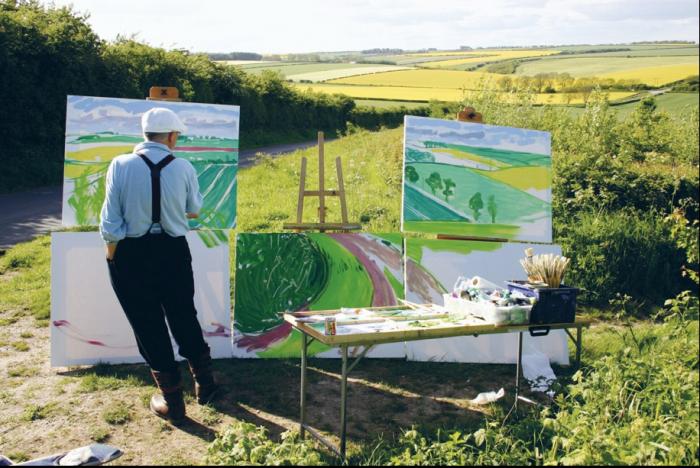
Don’t you just love David Hockney? His vigorous brushwork; his use of colour; his imagination, his audacity, and above all his trousers? Have a good look at them: serviceable tweed, capacious, high waisted, deep-pocketed, button-flyed, and designed for proper suspenders/braces (none of your cheap clip-ons for our David).

In short, they are the kind of trousers that your grandfather might have worn. And his father before him. Not actually the same pair of trousers of course, although quite possibly they would have been durable enough to have lasted several generations.

I confess that I have long lusted after a pair of Hockneys. High and low have I hunted over the years yet still failed to bag a pair of these elusive creatures. Even the redoubtable Snook’s of Bridport was unable to flush out trousers of this ilk. I came to the sorry conclusion that my trophy room was destined to languish Hockney-less until the end of my days. But fret not dear reader for this story has a happy ending.

There I was, stalking the cobbled streets of Le Marais in Paris, just before Christmas looking for a certain magasin (which for security reasons I cannot name) that my partner Chris Seeley had stumbled upon several years previously – one that had then stocked a select range of gentleman’s handmade clothing by English tailor Paul Harnden. Some astute detective work on the internet had revealed the likely location of said magasin and I found it without difficulty.

The interior was much as Chris had described to me although seemingly devoid of gentleman’s handmade clothing. I took out my iphone and went to take a photograph of the distinctive – and rather witty – chandelier hanging from the ceiling to send to her to double check that I was in the right place.

“Non! Non! C’est interdit,” declared Monsieur L’Assistant.

Clearly a precaution to prevent the place being identified by unwanted foreign shoppers, I thought. Undeterred I enquired of the prickly young man if the establishment had any of Mr Harnden’s apparel in stock.

“Certainment,” was his terse reply.

Monsieur L’Assistant led me to a solitary clothes rail tucked out of sight at the back of the shop, presumably to stop casual customers getting over-excited. A sensible precaution because I myself began to tremble as I saw hanging from it 3 long coats, 4 jackets and… a single pair of tweed Hockneys.

“Je suis desolé Monsieur,” he said indicating the paucity of stock.

“Moi aussi,” I replied, noticing that the label on the trousers was M for medium.

The letter M and I have not been on friendly terms in the trouser department for some time now. I gestured to my comfortable waistline, shaking my head sadly.

“They are tailored quite generously,” said Monsieur L’Assistant breaking into perfect English. “Perhaps Monsieur would like to try them on and see for himself?”

I knew it would be futile but I carried them reverently to the curtained changing room where I could at least fondle them in private. To my complete surprise and utter delight they fitted perfectly. M must mean something else in France. Fate had decided. We were meant for each other.

“I’ll take them,” I said.

Monsieur L’Assistant removed them to the counter, folded and wrapped them in embossed tissue paper, and placed them in a bespoke carrier bag (itself so luxurious that had it been charged for, it would have cost more than the clothes I was wearing at the time). Then came the small matter of the bill. I handed over my debit card to the cashier, wondering if it would be up to the job.

“It’s possible that the bank will query it,” I said, tapping in the pin number and praying that it wouldn’t. “It’s an unusual transaction for me to make.”

The card machine whirred, clattered and pinged.

“Your card ‘as been refused, Monsieur. I am very sorry.”

I tried another card. Whirr, clatter, ping. Also refused.

I stood for a few moments puzzling about what to do next, when my mobile phone rang and the synthesized female voice of my bank’s automated fraud prevention service sought to verify my purchase.

“You have just used your debit card?” — “Yes.”

“A family clothing store in Paris?” — “Yes.”

“One pair of trousers?” — “That’s right.”

There was a short pause…

“Medium?” — “Yes.”

A long pause…

“Really?” — “Yes, really.”

A longer pause…

“Medium? Are you quite sure?”

In the end we came to an agreement. I told my synthesized friend quite firmly that my waist size was my business and – rather chastened I thought – she agreed to pay the bill. Debit card now accepted, I returned to the cashier and was soon striding triumphantly out of the shop, clutching my fancy trousers in their fancy carrier bag.

And here they are safely back home. My very own pair of Hockneys.

Don’t you just love them?
GM Hockneys


Share this:

  • Share on X (Opens in new window) X
  • Share on Facebook (Opens in new window) Facebook
  • Share on LinkedIn (Opens in new window) LinkedIn
Like Loading...

Telling the Story

Posted by geoffmead on January 10, 2013
Posted in: Uncategorized. Tagged: Geoff Mead, Telling the Story, video interview. Leave a comment

I’ve started writing another book (this time on storytelling and leadership) which has been commissioned by Wiley/Jossey Bass. The book’s working title is Telling the Story: The Heart and Soul of Successful Leadership. My partner Chris Seeley interviewed me on video recently to ask how it’s going. Thank you Chris for permission to share the video.

Share this:

  • Share on X (Opens in new window) X
  • Share on Facebook (Opens in new window) Facebook
  • Share on LinkedIn (Opens in new window) LinkedIn
Like Loading...

Monkey Traps

Posted by geoffmead on December 28, 2012
Posted in: Uncategorized. Tagged: industrial growth society, John Michael Greer, monkey trap, new year's resolution, The Long Descent. 5 Comments

monkey

I’ve just finished reading The Long Descent: A User’s Guide to the End of the Industrial Age by John Michael Greer. It’s an erudite, well-written and  sobering look at the imminent and inevitable collapse of our systemically unsustainable western way of life. The best we can hope for is to soften the landing by reducing our dependence on the shrinking post-peak reserves of fossil fuels. The irony, as Greer points out, is that although the steps we need to take are pretty obvious (and have been since the 1970s) most of us are desperately clinging on to the idea of progress embedded in the myth of the industrial growth society.

To illustrate this phenomenon, Greer uses the metaphor of the monkey-trap: in parts of India where people still catch monkeys to eat, they put a morsel of food inside a hollowed-out gourd which is staked to the ground. There is a small hole in the gourd, just large enough for the monkey to reach through and grab the bait inside. The monkey clenches its fist round the food and, overcome by greed, cannot remove its hand. If it refuses to release its prize, the monkey is caught, captured and eaten.

It’s easy enough to see how others are caught in this way: how, for example, the U.S (with 5 % of the world’s population) uses 25% of it’s energy resources to support a “take-make-waste” consumerist economy. The U.K. and most of Europe is not so far behind in terms of energy consumption (and is equally fixated on growth-based economic policies) with China and India doing their best to catch up.

But we can hardly blame our politicians who are simply exploiting (and are equally trapped by) our unwillingness to bear the short term consequences of facing long term issues. So, I have been asking myself about my own monkey traps: what outdated, dysfunctional or unnecessary ideas, stories, and possessions am I clinging on to that stop me living a freer, more choiceful and fulfilled life? I’m not so naive as to believe that simply naming them will enable me to let go but I think it’s a necessary first step. Here are a few practical ones for starters:

  • a collection of papers and books (most unreferred to for years) so large that I have to rent an office to contain them
  • a mid-life crisis sports car so impractical that is rarely driven and spends most of the year under wraps in the garage
  • a sea-side flat that provides beautiful living space but which is expensively and inconveniently remote from family and work
  • an attachment to the imagined status of overseas and “high-level” corporate work that eats into my time and creative energy

There are many other monkey traps of course, some less tangible but no less significant, to do with self-image and a privileged sense of entitlement; perhaps also to do with avoiding the sense of guilt that comes from admitting the harm I have caused (both by commission and omission) by the way I have lived and the sense of shame that comes from acknowledging how much of my life energy I have wasted pursuing and propping up a “lifestyle” – life energy that I could have used in simpler, more generative and creative ways.

None of these things are easy to relinquish. Indeed, the very thought of letting some of them go brings on feelings akin to a panic attack, so strong is my emotional investment in them. It’s hard to be certain which are monkey traps and which are genuinely worth hanging onto. So my New Year’s resolution for 2013 is not to dump them lock, stock, and barrel but to sift and sort my way through them carefully, separating out what has real value from what is illusory.

At 63 it’s time to be a bit bolder. I don’t feel like throwing my whole life up into the air but I am committed to finding and honouring what genuinely nourishes and supports me in living a more soulful, loving, sustainable and creative life.

Share this:

  • Share on X (Opens in new window) X
  • Share on Facebook (Opens in new window) Facebook
  • Share on LinkedIn (Opens in new window) LinkedIn
Like Loading...

Finding the Acorn

Posted by geoffmead on December 3, 2012
Posted in: Uncategorized. Tagged: acorn, Biggles, James Hillman, oak, Soul's Code, telos. Leave a comment

loan-oak-tree

I used to tell people that I discovered that I wanted to be a storyteller when I went to an evening of storytelling by Ashley Ramsden and Bernard Kelly at Roffey Park in 1996. But recently, I have realised that as a child there were already inklings of my calling to be a storyteller.

When I was an eight year old pupil at boarding school, I was obsessed with the Biggles stories by Captain W.E. Johns. I loved reading these stories of airborne adventures because they reminded me of my dad who had been a pilot. Indeed, I was so taken by them that I decided to write one myself. I spent my Saturday pocket money on a lined notebook and a new pencil, found a quiet corner and began to write.

It was slow going and I managed a page and a half before stopping to read what I had written. But it was nowhere near as exciting as the books I had read. It didn’t occur to me at the time that the real-life author of Biggles had the advantage of being an adult, just that my effort wasn’t good enough. I cried with frustration and threw the notebook away.

In The Soul’s Code, James Hillman uses the metaphor of the acorn and the oak: the acorn comes into being with the full potential of the oak tree already within itself. Becoming an oak is the acorn’s telos or destiny. Similarly, human beings come into the world latent with purpose though we may fail to recognise it.

As adults, if we are uncertain about our sense of purpose, then childhood – says Hillman – is a good place to look for clues.  He suggests that we ask ourselves the question: “What did I first want to be when I grew up?” The answer that comes back to us is important because it might just reveal the acorn that contains the oak.

My answer, when I reflected on my childhood obsession with Biggles, took a while to reveal its secret: I didn’t want to be a pilot like my father but a maker and teller of stories. So, dear readers, what stories do you have from your childhood that point to your destiny?

Share this:

  • Share on X (Opens in new window) X
  • Share on Facebook (Opens in new window) Facebook
  • Share on LinkedIn (Opens in new window) LinkedIn
Like Loading...

Treasure Hunt

Posted by geoffmead on November 25, 2012
Posted in: Uncategorized. Tagged: Margaret Tarrant, Old Duster, The Faithful Knight. 1 Comment

One Sunday morning not so long ago, I stepped out of my flat in Lyme Regis and walked down the steep hill into town. The day before, I had seen a poster advertising a book sale at the Marine Theatre and I was off to see if there were any old or unusual story books to be had.

I quickly scanned the stalls, discounting the usual book sale ballast: the musty Agatha Christie paperbacks; the ancient National Geographics; the redundant volumes of Encyclopaedia Britannica. Still on the hunt for treasure, I noticed one particular stall that, from a distance, seemed to have a pleasing variety of old hardbacks on display.

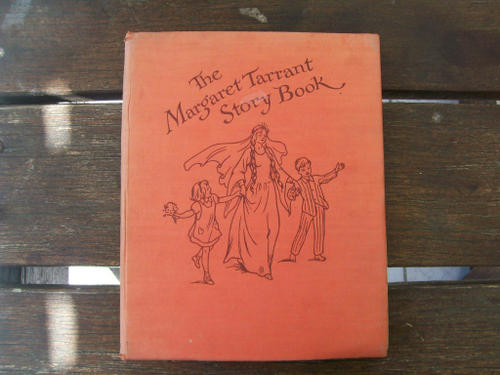
As I approached – even before I could make out the black lettered title on the spine – a tall, dark-red, cloth-bound book caught my eye. There was something familiar about its size and distinctive colour. Surely, it couldn’t be? Could it?

I plucked it eagerly from the shelf and held in my hands a copy of the first story book I had been given as a small child: The Margaret Tarrant Story Book. I opened the covers and looked at the fly sheet: “Published in London, 1947” – just two years before I was born. Treasure indeed and mine for the princely sum of £4.

My childhood copy disappeared many decades ago and I hadn’t given it a thought for years. But when I flicked through the pages, I remembered all of the stories and how much I had loved them when I was five or six. There were two special favourites: Old Duster, the tale of a mouse who went to sea and The Faithful Knight, a story of chivalry and derring-do.

Was this where my love of stories really began, I wonder?

Share this:

  • Share on X (Opens in new window) X
  • Share on Facebook (Opens in new window) Facebook
  • Share on LinkedIn (Opens in new window) LinkedIn
Like Loading...

Posts navigation

← Older Entries
Newer Entries →
  • Recent Posts

    • Do Radio
    • Storytelling to touch the Soul
    • Ship of Fools
    • The Compleat Angler
    • Coming Home to Roost
  • Enter your email address to follow this blog and receive notifications of new posts by email.

Blog at WordPress.com.
Coming Home to Story
Blog at WordPress.com.
  • Subscribe Subscribed
    • Coming Home to Story
    • Join 135 other subscribers
    • Already have a WordPress.com account? Log in now.
    • Coming Home to Story
    • Subscribe Subscribed
    • Sign up
    • Log in
    • Report this content
    • View site in Reader
    • Manage subscriptions
    • Collapse this bar
 

Loading Comments...
 

    %d