Coming Home to Story

Notes from a journeyman writer, storyteller, and narrative consultant

  • About
  • Books
  • Writing
    • Book Launch
    • My PhD: Unlatching the Gate
    • Readers Say
    • Reviews
    • Selected Poems
    • Stories in Our Bones
    • System-world, Life-world
    • The People of the Sea
    • Drafts
  • Consulting
  • Storytelling
    • Testimonials
    • Island Nights
    • The Storyteller’s Tale
    • An Island Odyssey
  • Men and Storytelling
  • Links

The Golden Key

Posted by geoffmead on August 12, 2014
Posted in: Uncategorized. Tagged: Ashley Ramsden, Brothers Grimm, Dawna Markova, depth psychology, Fully Alive, Golden Key, Jung, Ruth Sanderson, unconscious. 2 Comments

Golden-Key_Mossy-finds-key

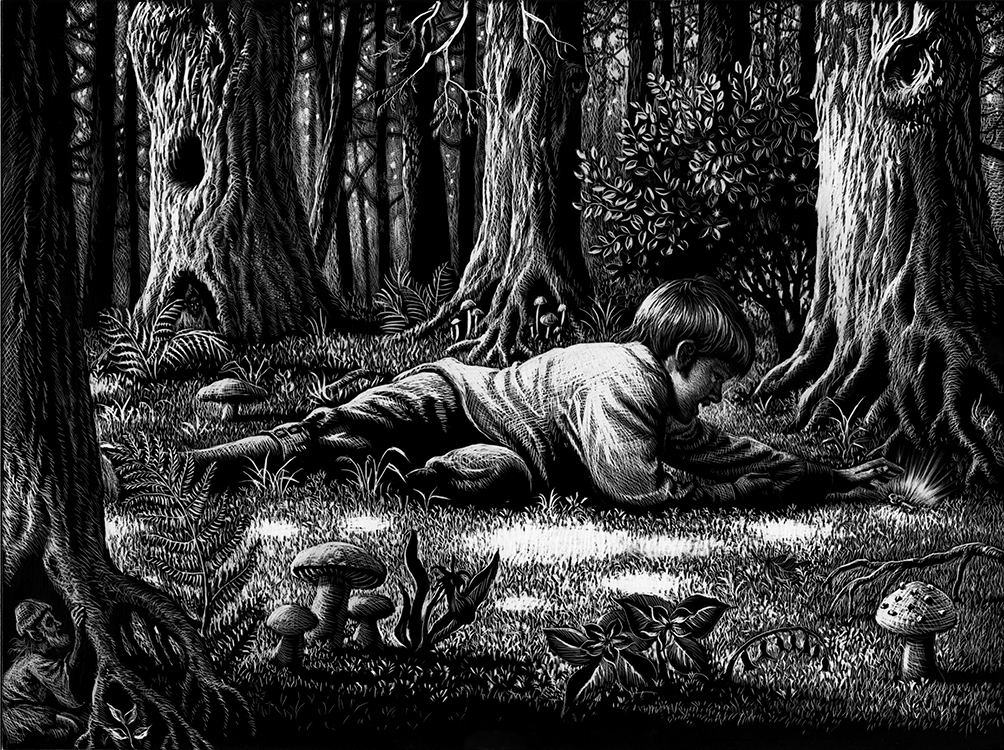
The final story in most editions of Brothers Grimm is a very brief and enigmatic tale from the region of Hesse about a poor boy who finds a golden key and an iron chest. We learn that the key exactly fits the lock, but the story ends before he opens the chest and we are left wondering what – if anything – he will find inside.

On a superficial level, it can feel a bit unsatisfactory, as though the storyteller is playing a trick on us, but deeper consideration of the images and themes can be revealing. Let’s have a look at the story itself. Here is an 1884 translation of the original by Margaret Hunt:

In the winter time, when deep snow lay on the ground, a poor boy was forced to go out on a sledge to fetch wood. When he had gathered it together, and packed it, he wished, as he was so frozen with cold, not to go home at once, but to light a fire and warm himself a little. So he scraped away the snow, and as he was thus clearing the ground, he found a tiny gold key. Hereupon he thought that where the key was, the lock must be also, and dug in the ground and found an iron chest. “If the key does but fit it!” thought he; “no doubt there are precious things in that little box.” He searched, but no keyhole was there. At last he discovered one, but so small that it was hardly visible. He tried it, and the key fitted it exactly. Then he turned it once round, and now we must wait until he has quite unlocked it and opened the lid, and then we shall learn what wonderful things were lying in that box.

The story does not say whether the iron chest contains demons or treasure; it might contain either, both or nothing at all. Perhaps, like Schrödinger’s cat, the very act of opening the chest will determine what is inside. Which prompts a more fundamental question: what does the image of the locked chest represent?

Like all good stories, it has many possible meanings. Personally, I find the idea that the iron chest (buried and locked) is a metaphor for the unconscious self, to be most helpful. To open the chest is to delve into unknown parts of our psyche and ask what hidden aspects of ourselves are now becoming available and what would it take to find and embrace them?

Why would we choose to face these shadows?  Because, as Jung said: “One does not become enlightened by imagining figures of light, but by making the darkness conscious.” Only by making the unconscious conscious can we hope to embark on the journey of becoming who we truly are.

And if we decide that the time has come to unlock this chest and rummage inside, where shall we find the golden key? There are many possibilities: philosophy, therapy, meditation, physical disciplines, artistic and creative expression, vision quests, and rituals, to name but a few. One of the most ancient and accessible paths to wholeness is through exploring stories such as this one.

With this in mind, my long-time colleague and friend Ashley Ramsden has devised a group exercise, in which participants are encouraged to identify with, and then to exchange, particular word-images in a story that catch their imagination. For example, from the Golden Key, I might say: “I am ‘if the key does but fit’ or I am ‘in that little box’ or I am ‘now we must wait.'”

If I listen carefully and compassionately to myself speaking such phrases then I can begin to acknowledge the kernels of truth within them, e.g. about my existential anxiety; my self-limiting beliefs; the ways in which I hold myself back. Your word-images and phrases will be different from mine, but the principle is the same.

The story also offers some powerful metaphorical questions, such as these, that we can use to deepen our inquiries:

•    what represents winter time in our lives?
•    what wood have we been forced to gather?
•    where is home and where do we belong?
•    when have we been frozen with cold?
•    what fires have we lit to warm ourselves?
•    when and how have we cleared the ground?
•    what treasures have we already found?
•    what do we still yearn for in our lives?
•    what do we hope will be in the chest?
•    what do we fear might be in the chest?
•    what keys do we need to open the chest?

I wonder which of these questions strike a chord with you? The important thing is to trust our intuition and stay with the process long enough to get beyond trite or literal responses so that we can learn what this wise story has to teach us.

If we are honest with ourselves, what we learn may be disturbing. When we answer the call of the soul it often leads us in unexpected directions which may not please those around us. “Sometimes,” as Jung said, “you have to do something unforgivable just to be able to go on living.” At such times the price of change may appear too high and we cling on to our existing lives instead like limpets to a rock as the tide goes out.

20 years ago, when I was standing on the cusp of making life-changing decisions and filled with doubt and terror, a friend wrote down and handed me a copy of Dawna Markova’s wonderful poem Fully Alive.

I will not die an unlived life.
I will not live in fear
of falling or catching fire.
I choose to inhabit my days,
to allow my living to open me,
to make me less afraid,
more accessible,
to loosen my heart
until it becomes a wing,
a torch, a promise.
I choose to risk my significance;
to live so that which came to me as seed
goes to the next as blossom
and that which came to me as blossom,
goes on as fruit.

My friend knew that we need all the encouragement and inspiration we can muster in order to fling open the lid of the chest and seize the life that is waiting for us.

[Scratch board illustration by kind permission of artist Ruth Sanderson]

Share this:

  • Share on X (Opens in new window) X
  • Share on Facebook (Opens in new window) Facebook
  • Share on LinkedIn (Opens in new window) LinkedIn
Like Loading...

Grim Reaper

Posted by geoffmead on August 11, 2014
Posted in: Uncategorized. Tagged: Brazilian, Grim Reaper, hairy, Ladyshave, Legs, smooth, Sweetheart. Leave a comment

ladyshave

My sweethearts’s legs are smooth today,
Usually they’re hairy.
She says it’s only natural
But I think they are scary.

In other regions feminine
The story’s just the same,
She says its only natural
And not a cause for shame.

Some go for a Brazilian
And some for even less;
She says she’ll stay a natural
As if I couldn’t guess.

Today the Reaper came to light
(Its loss was her excuse);
She said it isn’t natural
But put it to good use.

My sweethearts’s legs are smooth today
She’s looking quite sublime.
I think she’s supernatural
A woman in her prime.

© 2014 Geoff Mead

Share this:

  • Share on X (Opens in new window) X
  • Share on Facebook (Opens in new window) Facebook
  • Share on LinkedIn (Opens in new window) LinkedIn
Like Loading...

Halcyon Days

Posted by geoffmead on August 8, 2014
Posted in: Uncategorized. Tagged: Aeolus, Alcyone, Ceyx, halcyon days, kingfisher, Metamorphoses, Ovid, perfect summer. Leave a comment

Common_Kingfisher_Alcedo_atthis

Like pretty much everyone else in the UK (except those caught by flash floods) I’ve been enjoying this year’s vintage summer. I’m not sure if the weather was really like this in my 1950s childhood but it’s how I remember it.

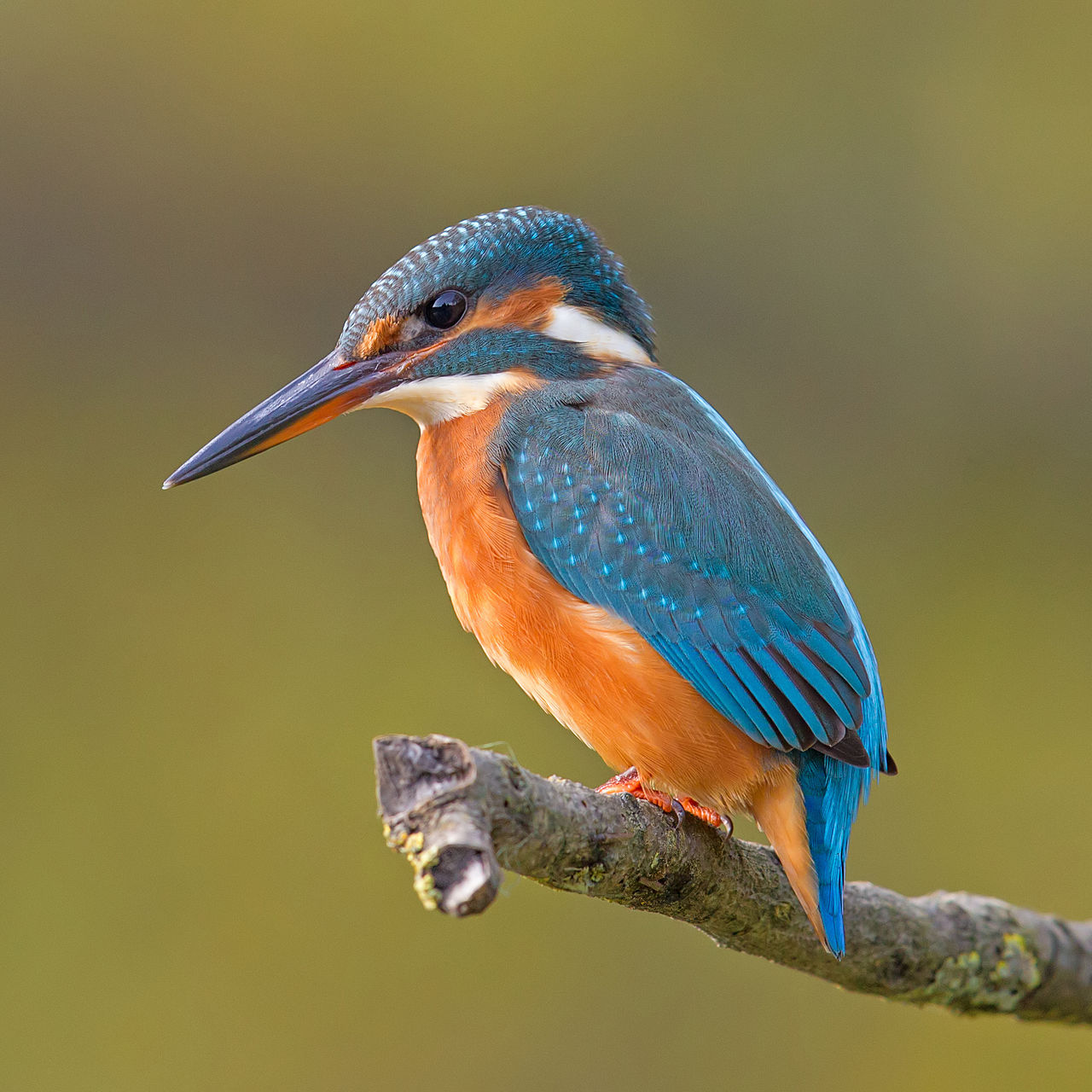
The phrase “halcyon days” came to mind yesterday to describe this summery perfection. I recalled that Halcyon (Alcyone) is the Greek word for kingfisher and I guessed that there would be a story about it’s origin somewhere in the lesser-known regions of Greek mythology. It didn’t take long to find it in Ovid’s Metamorphoses, and a beautiful story it is too.

Alcyone, daughter of Aeolus the God of the Winds, was married to Ceyx the King of Thessaly. Their marriage was blissful and the depth of their love for each other was a wonder, even to the Olympian gods who occasionally peeped into their palace to see for themselves. But hubris, even in the act of love itself, is always dangerous and when they were overheard calling out “O, my Zeus,” and “O, my Hera,” the rulers of Olympus were furious.

One day, Ceyx decided to visit the oracle at Delphi. Alcyone, brought up in the Palace of the Winds, knew how fickle they could be and begged her husband to travel overland. But Ceyx refused, telling her that the journey by sea would be much quicker and that he could not bear to be parted from her longer than necessary: “I swear to you by the light of the morning star, to return to you as long as the fates allow it, before the moon has twice completed her circle.”

The captain and crew prepared the royal ship for its voyage. Alcyone came to the harbour and saw Ceyx off, watching until the mainsail dipped below the horizon before she retired to the palace to await her husband’s return. But Zeus ­– from whom nothing is hidden – chose that night to punish their blasphemous ways.

He caused a tremendous storm to rise up at sea, with thunderbolts and crashing waves that broke the ship in two and cast all aboard into the water. Ceyx himself died with Alcyone’s name on his lips, clinging to a piece of wreckage, praying that the waves would bring his body into her sight so that she might bury him with her own hands.

Meanwhile, Alcyone went about her business unaware of what had befallen her husband. Each day she prayed to Hera that he would return still preferring her to all other women. Her loving devotion stirred the goddess’s heart; that at least she could grant. Hera sent Morpheus to her in a dream, in the likeness of drowned Ceyx, to reveal his fate.

When she awoke, Alcyone knew her beloved Ceyx was dead. She screamed and pulled out her hair in grief; she went down to the shore where they had said farewell and peered out to sea. Some distance out, she saw his body bobbing on the waves. Desperate to be reunited with her husband she ran along a breakwater and leapt off the end. Ovid tells us what happened next:

Though it was amazing that she could do so… she flew, and, beating the soft air on new-found wings, a sorrowing bird, she skimmed the surface of the waves. As she flew, her plaintive voice came from a slender beak, like someone grieving and full of sorrows. When she reached the mute and bloodless corpse, she clasped the dear limbs with her new wings and kissed the cold lips in vain with her hard beak.

Well, perhaps not entirely in vain. Because Ceyx had – after all – returned to her still preferring her to all other women and the gods, taking pity on their plight, changed him into a bird as well. Their love remained and the bond between them was not weakened. As kingfishers, each year they mate and rear their young and each year, as Alcyone broods on her nest, her father Aeolus calms the waves and imprisons the winds to give us all “halcyon days.”


[Photo credit: Andreas Trepte, www.photo-natur.de]

Share this:

  • Share on X (Opens in new window) X
  • Share on Facebook (Opens in new window) Facebook
  • Share on LinkedIn (Opens in new window) LinkedIn
Like Loading...

Erysichthon: A fable for our time?

Posted by geoffmead on August 7, 2014
Posted in: Uncategorized. Tagged: Autolycus, Erysichthon, Greed, Mestra, Odysseus, Sacred Ground. 2 Comments

2a-fresco-of-dolphins

Mestra was nearly 60, though looking at her it was hard to tell her age. Her chestnut hair, streaked with grey, was thick and lustrous; her dark blue eyes were clear and sparkling; the contours of her face – marked with the softest of lines – shifted with every change in the light.

The day was hot and the rippling waves in the bay below scattered the sun’s reflection onto the plastered ceiling and walls of the guest room of the old palace, making the painted dolphins seem to swim in an iridescent sea. She turned to the young man sitting opposite her, his eyes on the horizon, and smiled:

“Odysseus, you’ve done nothing for weeks but sit on that stool and stare out to sea.”

“What else is there to do Grandmother, until my leg heals and I can go home to Ithaka?” said her grandson, stroking his bandaged thigh. “Besides, I love the sea.”

“It must run in the family,” said Mestra. “Poseidon was my first love too; I couldn’t stay out of the water when I was a girl. I was a good swimmer then, almost as good as those dolphins on the wall.” She laughed – a deep chuckle – like the sound of gurgling water. “And if I wasn’t swimming I was lying on the beach, daydreaming about what it would be like to float like a jellyfish or fly like a seagull or dart like a sand eel.”

Odysseus gazed at his grandmother and tried to imagine her as she might have been at his own age. There were family rumours about her – that she had lived a far from ordinary life – but this was his first visit to his grandparent’s realm and he realized that he knew very little about her past.

“Tell me about your life Grandmother,” he said. “I shall be king in Ithaka one day and a king should know his lineage. Tell me your story.”

“Your grandfather has all the stories,” she replied. “He’ll make you laugh. You don’t want to listen to me; my story is too dark for a day like this.”

“Light or dark, it’s all the same to me,” said Odysseus. “I’m curious about the whole world; I want to know everything.”

“If you’re sure,” said Mestra, suddenly serious. “But I don’t think you’ll like it. Not all your ancestors pleased the gods or covered themselves with glory. You asked me to tell you my story but to do that I must tell you the story of my father – your great-grandfather.

“Things began well enough. He was born a prince: the only son of Tropias, king of Thessaly. But his parents spoiled him and he grew up too used to getting his own way. Most young men are selfish but he got more arrogant and demanding with each year that passed. One day he took it into his head to build a banqueting hall for himself and his companions. It would be the most splendid hall ever built, made from the rarest stone and finest timber.

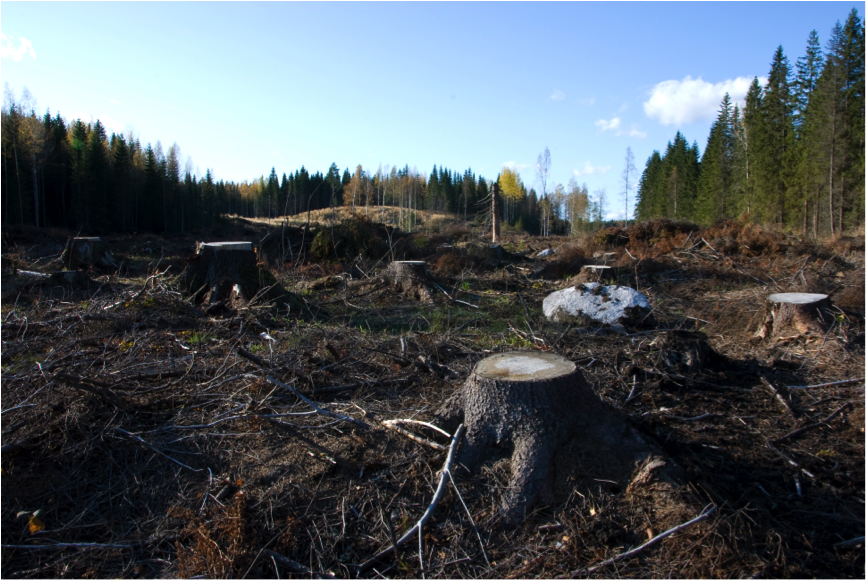
“When it was time to raise the roof, he took 20 woodsmen – armed with double-axes – to a grove of trees. Pine and elm, oak and ash, apple and pear grew so close together that an arrow would scarcely have passed between them. Everyone knew that the grove was sacred to Demeter but that didn’t deter my father. At the centre stood a great oak, strung with garlands and wreaths, towering above the rest. It caught his eye at once. ‘Cut it down,’ he commanded.

Tree cut

“The woodsmen stood back afraid to touch the holy tree. Your grandfather seized an axe and swung the first blow himself. It’s said that the tree shuddered and groaned, and that blood poured out of the wound like the lifeblood that gushes from the throat of a bull sacrificed at the altar. The branches of the oak trembled and every leaf and acorn grew pale. ‘Stop this impious act,’ said one of the woodsmen, braver than the rest. ‘Can’t you see that you are offending the goddess herself?’

“Perhaps, if my father had stopped then, he might have been able to make amends. But that was not his way. ‘Take that for your piety,’ he cried and applied his axe to the protestor’s neck. No-one else dared oppose him and blow by blow they hacked at the shrieking tree until it crashed to the ground.”

Horrified by the images her words had conjured, Mestra fell silent. She touched her forehead with her right hand and cast her eyes up to heaven as if to remind the gods that it was her father who had committed this sacrilege and that she was just the storyteller.

“Then what happened?” prompted Odysseus.

“The gods themselves intervened and from that moment on my father was doomed,” said Mestra. “We are like dry leaves whirling in the wind they create as they pass through our lives. I will tell you what I know and what I have been told by those wiser than myself.

“The men cut the sacred tree into stout lengths of timber and took them back to the palace to complete the new banqueting hall. It was indeed a splendid building; its like had never been seen. But no feast was ever held there, no bards ever sung under its roof, and no guests ever entered its magnificent doors.

“The day after the hall was finished my father woke up with a fierce gnawing hunger that could not be satisfied. He went straight to the palace kitchens and began to eat everything in sight: bread, meat, fish, poultry, pastries, fruit, vegetables, grain, raw offal. He ate and ate and would not, could not, stop. When the kitchen was empty he ate the larder bare; when he had shoveled the contents of the larder down his gullet and drunk the cellar dry of wine, he went out into the yard and set his teeth into the heifer, the donkey and the cat. But the more he ate, the hungrier he became.

“The priestess told my grandmother that Demeter was so infuriated by the desecration of her grove that she sent a nymph to the bare mountain top in Scythia where gaunt Hunger prowls, to bid her visit my father at night, wrap her bony arms around him, put her toothless gums to his mouth and send her stinking breath coursing through his veins. The priestess must have spoken the truth because my father’s appetite could not be satisfied.

“In the weeks and months that followed, entire flocks of sheep and goats were slaughtered; herds of prime cattle put to the knife; whole orchards and vines stripped of their fruit; granaries and storehouses emptied of their contents; hoards of silver, gold, and bronze exchanged for food; the very stones and timbers of the palace itself traded for anything that could be eaten. My father’s banqueting hall was the only royal building left intact; no-one dared to touch it in case they too suffered Demeter’s wrath.

“No amount of food or drink could diminish his titanic craving or nourish his aching body. He became more like a ghost than a man: his flesh withered until his arms and legs were no more than bone and sinew; his ribs rattled when he breathed; his wild eyes stared out of hollow sockets. His parents, friends, servants, even his wife – my mother – deserted him.

“Only I remained and I could hardly bear to see him. I stayed out of his way as much as I could, but when he had chomped his way through every last edible morsel in the kingdom and guzzled the last drop of wine, he called me to him.”

Odysseus stared wide-eyed at his grandmother: “He didn’t try to eat you too did he?”

“No,” said Mestra. “But what he had in mind was almost as bad. He sold me as a slave to a passing merchant to get money to buy more food.”

“Outrageous,” said Odysseus through gritted teeth. “It’s outrageous that one of my ancestors should do such a thing. How did the merchant treat you?”

“Well, you could say that the merchant got more – or rather that he got less – than he bargained for. As soon as we were alone, I started crying out to Poseidon, as if he were my lover. I wriggled my body like a fish; I curled and uncurled like a seahorse; I gulped the air as if I had gills. In short, I made the merchant think that I was quite mad. The girl he had bought disappeared and in her place was a creature of the sea. He let me go and I went home and begged my father to leave me in peace.

“But when I told him how I had escaped, he realized that this trick was too good not to repeat. He sold me again and again and each time I feigned madness to escape: I mooed, tossed my head and stamped my feet and the girl disappeared, changed into a cow; I became a horse, a dog, even a parrot.

“But the little he got from selling me was not enough to keep his cavernous stomach filled. He took to begging at crossroads for leavings and scraps of food. I realized that nothing I could do would save him and I couldn’t bear to watch my father dwindle and die. I was desperate to get away.

“When your grandfather Autolycus came along I allowed myself to be sold one last time. I made no effort to escape; I had had enough and I was happy to go with him. He would probably tell you that he bought me for a handful of silver but the truth is that I liked the look of him. He made me his queen and he’s never given me cause to regret my decision. He’s a decent man, despite his reputation for being a rogue. I think we both got a good bargain.”

“Well I’m certainly glad you found each other,” said Odysseus, “or I wouldn’t be here. But what happened to your father?”

“Word came to us that his half-eaten corpse was found by the crossroads. I can hardly bring myself to speak of it but they say that he died attempting to devour his own body. That was the terrible end meted out by the gods to your great-grandfather Erysichthon – the “earth-tearer” – as a warning to anyone who despoils sacred ground.

“My father’s kingdom has become a wasteland but the banqueting hall still stands, I’m told. It’s stones are covered in ivy and green shoots have sprung from the roof timbers. Demeter is taking back what is hers and should never have been taken from her.”

Ruins

Mestra and her grandson sat quietly for a while, until their reverie was broken by the sound of dogs baying as they neared the palace after the day’s hunt. “Autolycus will soon be home,” Mestra said, to break the spell of the story.

“Are we cursed?” asked Odysseus. “Did Erysichthon’s crime condemn us too? Can a family ever be free of such a thing?”

“My father paid in full for what he did. We are free to live our lives knowing that our fates are our own. The gods will judge us by our own actions, not those of our forbears. We have neither license nor excuse for the choices we make.”

Mestra rose from her stool and walked over to her grandson. She held his head in both hands and kissed his forehead. “I am going outside to greet my husband when he returns,” she said. “Stay here and look at the sea some more. You are healing quickly; soon you will be well enough to sail upon it again and the adventure of your life will truly begin.”

Before Odysseus could reply, she released him from her embrace and strode out of the room. “I won’t disgrace you Grandmother,” he called after her, his eyes returning to the horizon. “I promise you.”


This is one of a growing collection of sideways looks at traditional stories that I am currently writing under the overall title of  The Untold Tales © Geoff Mead 2014
Share this:

  • Share on X (Opens in new window) X
  • Share on Facebook (Opens in new window) Facebook
  • Share on LinkedIn (Opens in new window) LinkedIn
Like Loading...

To have and to hold

Posted by geoffmead on July 28, 2014
Posted in: Uncategorized. Tagged: Lancaster, Merlin Engines, Morgan, Roadster. 3 Comments

Moggie

I should sell her of course.

Most years we do a couple of thousand miles. Some years – like this one – we only manage a few hundred. Truth to tell, most of the time she’s tucked away in a barn. She’s expensive to keep and not the greenest car in the world.

I should sell her but I can’t bring myself to let her go.

RX05 NFN is the third Morgan I have owned (cared for/loved/shared my life with). Hand built to a unique specification 9 years ago in a small family-owned factory in the Malverns, the 3.0 litre V6 Roadster represents everything I love about British engineering at its quirky, soulful best.

It’s cobbled together from bits left over from more sophisticated production cars. It has neither power steering nor sensible suspension; any bump in the road bigger than a cat’s eye threatens to rip out the sump; moving the gear lever an eighth of an inch too far to the left will find reverse rather than first (causing some traffic-light getaways to be less than impressive); and the cockpit is cramped and leaks like a sieve in heavy rain.

I could go on but I won’t because she’s perfect.

A dab on the throttle at almost any speed will press you back into the ox hide seat; a touch of the brakes will slow her down reassuringly quickly; a flick on the steering wheel will magically change lanes or pull her effortlessly round a tight corner. She’s a driver’s car not a family saloon (did I mention no boot?) and she loves the open road. On a sunny day, with the top down and the exhaust crackling and popping with each gear change as you devour the miles, it’s impossible to wipe the smile off your face.

But that’s not why I love her.

My dad flew Lancaster bombers during the war (though ironically he died before he had the chance to take his driving test so he never drove a car). Sometimes, when I strap myself into the driver’s seat, I imagine him climbing into the cockpit beside me, a middle-aged version of his 28 year old former self.

He turns to me with a grin: “Right son,” he says. “Let’s go.”

I turn on the ignition and pretend that I’m firing up the four 27 litre V12 Merlin engines that he was used to. He gives me a thumbs-up and puts his arm around my shoulders. We look ahead, over the long, louvered bonnet. I open up the throttle and we roar off down the road: 70, 80, 90, 100, 110, 120.

“Rotate,” says my phantom passenger. I pull back on the steering wheel and we lift off together into the dreaming skies.

It’s the closest I can get to him and it’s almost enough.

Of course I can’t let her go.

[Picture Credit: Chris Seeley, Pyrenees 2005]

Share this:

  • Share on X (Opens in new window) X
  • Share on Facebook (Opens in new window) Facebook
  • Share on LinkedIn (Opens in new window) LinkedIn
Like Loading...

Lacrimae rerum

Posted by geoffmead on July 23, 2014
Posted in: Uncategorized. Tagged: Aeneid, lacrimae rerum, Peace of Wild Things, re-enchantment, Virgil, Wendell Berry. 1 Comment

Rose

After decades obsessed by Homer, I’ve been dipping into Virgil’s Aeneid and recently came across a wonderfully evocative phrase: sunt lacrimae rerum. Because of the peculiarities of the Latin genitive form rerum (which can be either objective or subjective) applied to the word res – things – we’ll never know whether Virgil was talking about “tears for things” or “tears of things.”

If the former, perhaps he was referring to our sorrow at the state of the world. If the latter, perhaps to a kind of sorrow experienced by the world itself. Subtle poet that he was, he may have meant the phrase to imply both. I like to think so. Why would a rose not weep at the beauty of its own passing; why would a forest not wail when a great tree falls; why would an ocean not cry salt tears when it is emptied of fish? Why would the planet not feel grief at the atrocities inflicted upon it in the name of human prosperity, profit, and growth?

“Because this isn’t Disneyland,” you might say. “Flowers, trees, oceans and rocks do not have human consciousness and cannot possibly experience human emotions.” But my purpose is not to subsume them within our particular form of sentience, it is to acknowledge, respect and wonder at the extraordinary (or perhaps cosmologically very ordinary) variety of life on Earth and all that inter-exists with it.

Virgil himself would almost certainly have sympathised with this point of view. The Greeks and Romans understood that their Gods might as easily inhabit a tree as visit a person: their shared religion derived from earlier beliefs that Nature was both the source and expression of divinity. Human souls shared in the soul of the world.

In succeeding centuries, the monotheistic religions of the book – Judaism, Christianity and Islam – sequestered the divine into a single entity, abstracted from the world, accessible only to human believers. Capable of soaring spiritual achievements, their preoccupation with eternal verities discounted human participation in Nature, leaving much of humankind believing itself to be quite separate from and innately superior to “brute existence.”

Of course, this is a gross over-simplification (though I think it reflects broad historical trends). In any case, I am less interested in intellectual and religious arguments than I am in posing a simple question: what would be the consequences of seeking to live as if the more-than-human world wept and sighed; laughed and gasped with joy; delighted in its own being and welcomed us as fellow souls?

What if we were to collude with Nature to re-enchant this disenchanted world? Might we find a greater respect for each other and for ourselves? Would we experience more fully the wonder and mystery of our embodied existence? Could we even learn to forgo our centuries-old preoccupation with the hereafter and come back joyfully to the miracle of our life – here and now – on Earth?

As Wendell Berry puts it in his well-known poem, The Peace of Wild Things:

When despair for the world grows in me
and I wake in the night at the least sound
in fear of what my life and my children’s lives may be,
I go and lie down where the wood drake
rests in his beauty on the water, and the great heron feeds.
I come into the peace of wild things
who do not tax their lives with forethought
of grief. I come into the presence of still water.
And I feel above me the day-blind stars
waiting with their light. For a time
I rest in the grace of the world, and am free.

Share this:

  • Share on X (Opens in new window) X
  • Share on Facebook (Opens in new window) Facebook
  • Share on LinkedIn (Opens in new window) LinkedIn
Like Loading...

Ahès: Sirène de Bretagne

Posted by geoffmead on July 13, 2014
Posted in: Uncategorized. Tagged: Ahès, Breton Folktales, Dahut-Ahès, Kernev, King Grallon, Lôn Vraz, Pierre Toulhoat, Port-Blanc, Sirène de Bretagne, Ys. Leave a comment

The Testimony of Lôn Vraz

6194461993_cdd98bd30a

It was, by my faith, the same weather as today: a light sea, no breeze, a sky as fine as silk. I was out fishing alone, anchored off Gueltraz – over there to our left. It was dead calm. The sun was beating down.

Towards midday I had a crust to eat. I decided to take a siesta and wait for the tide so I lay down full-length on the deck. I was just going to sleep when all of a sudden, a pretty voice – a delightful woman’s voice – began to sing all around the boat. Never had I heard anything so beautiful. I didn’t understand what she was saying but I could have listened to her until the end of time. It was a song of such sweetness…

Minouric! Minouric! Louric a Minouric.

You cannot imagine how gentle it was and how it caressed the heart. I raised my head and saw hands of white and pink holding the sides of the boat. Then a face appeared, a face the colour of the moon with long hair the colour of the sun. I remembered what I had heard the old ones in the village tell – stories I’d always refused to believe. It was perfidious Ahès – daughter of good King Grallon, transformed into a Morgane when her city sank beneath the sea – leading me to a sleepy death with her siren-song. The boat rocked me like a cradle. I could feel the charm working on me. Somehow I found the strength to mutter a prayer to the Holy Mother:

Our Lady of Port-Blanc, you who to defend your territory, in days long gone by, changed the very rocks into soldiers, save my soul and my body too, if you can!

Still, I was overcome by drowsiness. I dreamt that I was laying on a velvet bed with green curtains waving back and forth before my brow. That was the last thing I can remember. I was picked up – half-drowned – by the Marie-Louise, a lobster boat, sailing out of Cherbourg. As for my boat, which had cost my father a hundred écus, I’d lost it and I’ve never owned another since. Here I stand – Lôn Vraz – just a humble sailor working for any skipper who’ll listen to my story.

Freely translated from Petites Histoires de Sirènes Breton (originally collected by Anatole Le Braz, in Un Coin breton, l’Hermine 1891-1894)

Perfidious Ahès

mermaid-concept-art-from-Pirates-of-the-Caribbean

“La perfide Ahès,” Lôn Vraz called her. “Perfidious Ahès.”

Perfidious: disloyal, treacherous, deceitful, dishonest, base, low. A woman with a reputation. Not someone you’d invite home for tea to meet your parents. How did she get such a bad name? I’ll tell you.

Long ago in Brittany, there lived a powerful war-loving king called Grallon. He had pillaged far and wide and amassed a great fortune. He’d known many women – usually at the point of a sword – but had no wife. One day, when he was out walking alone, he met flame-haired Malgven, Queen of the North. “My husband is old,” she said. “His sword has rusted. Let us kill him and I will be your bride.” Grallon was smitten by her cruel beauty. He had found his match at last.

It was soon done but the people were loyal to their old king. Grallon and Malgven were forced to take ship and flee. They spent so long at sea that Malgven gave birth to their daughter Ahès before they reached dry land. The birth was difficult and it cost Malgven her life. That is how Grallon arrived back in his own country of Kernev with a daughter but no queen. The child grew into a woman. She looked exactly like her mother. Grallon could deny her nothing. Whatever she wanted, she demanded. Whatever she demanded, she got: dresses, jewels, servants, men, palaces, a city by the sea.

Grallon built for her delight, the city of Ys whose shining towers, luxurious gardens and marble halls exceeded even the fabled opulence of ancient Babylon. Low-lying Ys was protected from storms and tides by a gated harbour large enough for a whole fleet of ships to anchor within its stone walls. The gates were the only weak point in the city’s defences, so Grallon kept the keys to their locks securely beneath his own pillow.

In this earthly paradise, Ahès dressed herself in silk gowns; adorned her body with golden ornaments; and feasted on larks tongues and persimmons. She drank fine wines and rare spirits; she dined and danced every evening with the most beautiful young men and women of the city and each night she took a new lover to her bed. Her immodesty and yearning for novel sensations were boundless. Woe betide anyone who refused to join in her libidinous debauchery.

Now, Grallon had three beautiful nieces at court, named Ysol, Ellé, and Milla who were as virtuous as nuns and as pure as driven snow. Their very existence was a rebuke to the lecherous princess. One day Ahès went to see the king: “Father,” she said, offering her forehead for him to kiss. “It grieves me to tell you that your nieces have insulted your daughter.”

“What in the world have they done, my dear?” asked Grallon.

“It’s just too awful, I couldn’t possibly tell you,” sobbed Ahès, summoning hot salt tears as she clung to his neck.

“Poor girl,” said Grallon. “They are yours to punish.” He unwound Ahès’ arms from his shoulders and left the room to seek out and imprison his nieces, which allowed Ahès to creep into his bedroom unobserved and steal the keys to the harbour gates.

Three days earlier, an Indian Prince, whose ship was anchored beyond the harbour wall had promised her diamonds from Golconda, each as big as a hen’s egg, if she would open the gates for his ship. She lusted after the jewels and she saw a chance of ridding Ys of her nauseating cousins. She would give them as slaves to the Prince.

That evening, unkown to the king, she opened the harbour gates, let in the Prince’s ship and brought him ashore for a great feast in her palace, with the promise of another night of oriental passion to follow. They feasted and danced by the light of a thousand candles quite oblivious to the gathering storm far out to sea. The Prince took out three enormous diamonds, flashing like fire, from a bag at his waist and wound them in Ahès’ hair. She laughed like one possessed by demons and presented in return her three virgin cousins, shackled as slaves, for her lover to enjoy. Meanwhile, the distant storm raised huge waves and sent them racing towards the unsuspecting city.

As King Grallon dined alone in his palace, a man wearing a monk’s habit with a white cross on his chest, burst through the door and stood before him. “Grallon,” he said. “You lose your city. Save your soul.”

“If there is danger, I must warn my daughter,” said Grallon.

“Save your soul,” said the man. “It is too late to save hers.”

“My nieces then. Surely we must warn them.”

“Your dear sweet neices,” said the man. “Ysol, Ellé, and Milla. Even they cannot be reached in time. Save your own soul.”

Grallon followed the man out into the night. The storm howled. Waves crashed through the harbour gates and smashed the fleet to matchwood. The sea poured into the streets of the city engulfing everything in its path. Inside her palace, Ahès heard the commotion. “What is this?” she said.

“It is the anger of the Lord,” said the three virgins. “Repent.”

“The ocean is also feasting,” said the Indian Prince with a wild gleam in his eye.

“Good,” said Ahès. “If the ocean comes we’ll drink it!”

At this, the sea poured through the windows and doors of the palace. “Then drink me, King’s daughter,” the water roared. “Drink me.”

Water, water everywhere. But where had it come from? Then Ahès realised the truth. She had been so anxious to get her hands on the diamonds that she had forgotten to shut the harbour gates after she let in the Prince’s ship.

She turned to run but the Prince clasped her in a vice-like grip. His eyes burned like coals and he laughed as the water rose above their heads. It was the devil himself who took Ahès down to her watery fate. She did not drown; a quick death like that would have been too merciful. Instead, the devil transformed her into a Morgane – a siren – condemned for all eternity to be loathed and reviled for luring men to their deaths, she who once lured them to her bed.

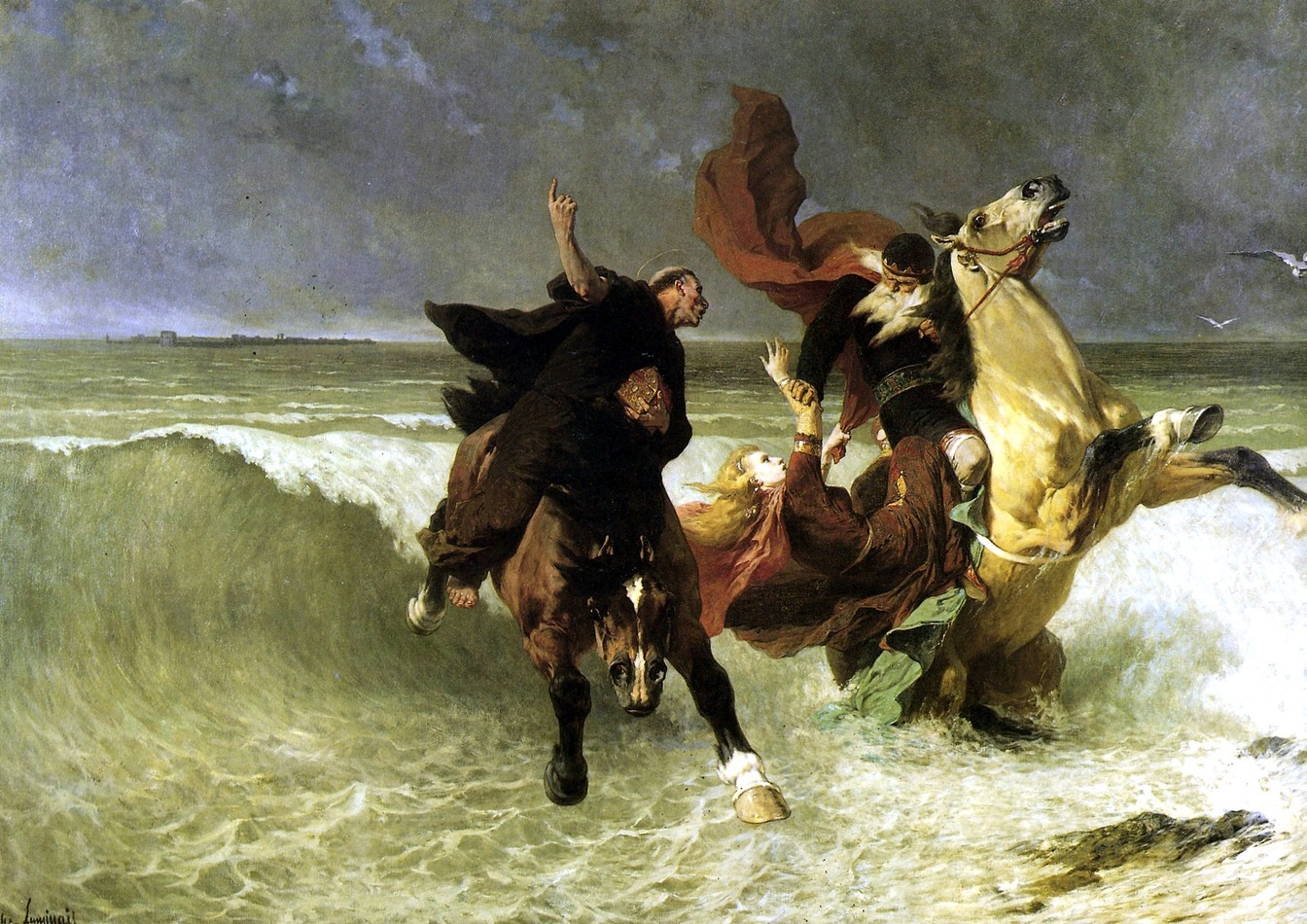
Grallon saw his beloved city of Ys sinking into the sea. He mounted his horse, and rode with the monkish man at his side on a donkey, pursued by the encroaching surf, to high ground far inland. It was morning by the time they reached the peak of the mountain. When Grallon looked back, the sea was calm once more. Ys was gone, sunk beneath the waves. Of the stone towers, golden domes and jagged ramparts that had once stood so proudly there was no trace.

A halo shimmered around the head of the monkish man. Saint Gwennole stood beside the king; he pointed to three white shapes floating on the water: a cloud of vapour, a flower of the earth, and a star of the sky – three angels called Ysol, Ellé, and Milla – the soul of the water, the soul of the earth, and the soul of the air. King Grallon fell to his knees and wept.

Freely adapted from The Ladies of the Night, translated by Erik Stohellou from Paul Feval, Romans enfantins. Paris, E. Ducrocq, 1862

Dahut-Ahès

Other versions of the story also insist that Ahès was punished by a righteous God for her wickedness and tell how, when her father tried to save her, the ocean would not let her go, or that a voice from the sky told him to relinquish her, or that St Gwennole drowned the pagan princess so that God would calm the stormy seas. This 1884 picture The Escape of King Gradlon by Evariste-Vital Luminais (Musee de Quimper) gives you the general idea: good Christian men heroically sacrificing a wicked, loose-haired, pagan woman.

Evariste-Vital_Luminais_-_Fuite_de_Gradlon

What we do know is that these stories originated when the westward expansion of Christendom was hitting up against the pagan kingdoms of northwestern Europe such as Cornouaille (Kernev). Conversion of the local king was always a prime objective and that would certainly explain how an adulterous regicide became known as “Good King Grallon.”

Some say that Dahut-Ahès was a Breton princess/priestess/goddess who symbolised the abundance, fertility and passion of the sea. Like other aspects of the Great Goddess, she and her followers were persecuted by the church and newly-converted Christian rulers for their sensuality and attachment to nature. To escape this persecution it is said, she retreated to the city of Ker-Ys which was hidden under the sea beyond the realm of human knowing until such time as she and her kind would be welcomed in this world once more.

I like to think that it was this manifestation of Ahès that the present-day Breton designer Pierre Toulhoat had in mind when he created this silver brooch, bought for me by my wife Chris Seeley as a memento of our story-hunting trip to Brittany a few years ago.

touhoat mermaid

It’s in the nature of storytelling that all of these stories co-exist: the mermaid-siren; the perfidious princess; the persecuted pagan. They are all good tales to tell but I know which I prefer to believe in. Which, I wonder, do you?


This is one of a growing collection of sideways looks at traditional stories that I am currently writing under the overall title of  The Untold Tales © Geoff Mead 2014
Share this:

  • Share on X (Opens in new window) X
  • Share on Facebook (Opens in new window) Facebook
  • Share on LinkedIn (Opens in new window) LinkedIn
Like Loading...

Red

Posted by geoffmead on July 7, 2014
Posted in: Uncategorized. Tagged: Angela Carter, Brothers Grimm, Clarissa Pinkola Estes, Company of Wolves, El Lobo, Jack Zipes, La Loba, Perrault, Red Riding Hood, Untold Tales. 4 Comments

Wolf Eyes Close Up Wallpaper

“Looks like you’ve been having fun,” said La Loba to her mate as he nudged three unruly cubs aside and flopped onto the forest floor beside her. Traces of congealed blood adhered to his brindled ruff just beyond his reach.

“Here, let me,” she said and reached over to lick his fur clean. “We don’t want El Lobo looking like a hobo.”

“Fun?” said El Lobo, grimacing with pleasure as La Loba’s tongue wormed through his fur and teased his skin. “I wouldn’t exactly call it fun. Exhausting, more like.”

“Really,” breathed La Loba as she nibbled his ear. “Tiring, eh?”

“Taxing,” said El Lobo. “That’s very nice, by the way. You can go on doing that for as long as you like. In fact, we could always, you know…?”

“Pas devant les enfants,” said La Loba. “And certainly not before my bad boy tells me what he’s been up to.” She nipped his ear hard and sat back amongst the cubs. “Come on, ‘fess up and don’t try to fob us off with some old fairy story.”

At the mention of the word story, the cubs pricked up their ears and turned their heads toward El Lobo who stood up, eased his long spine, shook out his coat, and dropped back down on the ground.

“Well,” he said. “It was like this. I was up early this morning, before you little ones and your mother were awake. The sun was not long up and I thought I would stretch my legs and do a little foraging; scout round a bit; see who else might be stirring in the woods.”

El Lobo paused to look into the four pairs of bright amber eyes staring back at him. “But which way to go? Lakeside smelt of goose shit; Oak Tree Ridge was still smoking; Loggers’ Camp might have some food lying around; but I had a hunch that Crone Cabin was the place to go.”

“Why is it called Crone Cabin?” interrupted the youngest of the litter.

“Because it’s where the Old Women live,” said El Lobo. “Whenever there’s an Old Woman in the story, that’s where she lives. Anyway, as I was saying, I had a hunch that was the place to go this morning, so I followed Pine Needle Trail up towards Crone Cabin for a while, hoping to find a morsel or two on the way, when what should I see but a female Person coming towards me on the path? So I stopped and I howled and I growled but the female Person kept on coming. I could see she wasn’t an Old Woman but she wasn’t a Little Girl either.”

“Well, what was she then?” said La Loba.

” I suppose you might call her a Young Woman.”

“Pretty, was she, this Young Woman? said La Loba.

“Pretty?” replied her mate. “It depends on what you mean by pretty. Not as pretty as you, my love. Snub nose, bald face, tiny teeth, no ears to speak of, like the rest of them. Anyway, she was wearing a red hooded-top and carrying a large bag under one arm. She walked right up to me, put the bag down and said: ‘You must be Mr. Wolf. I’ve heard lots about you.’

“So, I said ‘Some people call me Mr. Wolf. What have you heard about me?’

“‘I’ve heard that you like to eat People,’ she said. ‘Especially female People’.”

“‘That’s a lie,’ I told her. ‘An unwarranted exaggeration. I’ve had a couple of unfortunate run-ins with Old Women, but Little Girls wouldn’t be much of a mouthful and I don’t believe I’ve ever met a Young Woman like you.’

“‘That’s a relief,’ she said. ‘Pleased to make your acquaintance Mr. Wolf.’

“And who are you, pray tell?'”

“Pray tell?” said La Loba. “When do you ever say pray tell?”

“I know,” said El Lobo. “Strange isn’t it? The words just came out of my mouth. Anyway, she said ‘My friends call me Red because I always wear this red hoodie.’

“‘That’s a nice name,’ I said. ‘Where are you going, Red?’

“‘I’m going to visit my Grandma,’ she said. ‘She lives in Crone Cabin.’

“‘You’re going the wrong way,’ I said. ‘Turn around and carry on up the path, it’s not very far. Can I help you with your bag? It looks very heavy. What have you got in it?’

“‘A bottle of gin for Grandma plus my toothbrush and stuff for the weekend: fresh pyjamas, clean underwear, that sort of thing and some books that Grandma lent me. I’m fine with the bag, I can carry it myself thank you. Which way did you say to go?’

“She looked confused, so I said that I’d show her the way and walked ahead of her until we reached the Cabin. The door was open and – surprise, surprise – there was no sign of Grandma.”

“Red looked at me ‘You didn’t eat her, did you?'”

El Lobo winked at the cubs. “‘Me?’ I said. ‘Of course not’

“‘Well come in,’ she said. ‘I’m going to light the fire and make a cup of tea.’

“So,  I followed her in and sat by the hearth and looked round as she boiled some water and poured it into a teapot. The place was spotless: furniture polished; bed made up with crisp clean sheets and coverlet turned down; flowery curtains drawn back to let in the light; cupboards full of bottles and jars; apples and pears in the fruit bowl. ‘Grandma can’t have been gone long,’ she said. ‘Would you like a cup of tea?’

“‘I don’t drink tea,’ I said. ‘You’re forgetting who I am.’

“‘Silly me,’ she said. She poured herself a mug of tea, put it on the table, opened her bag, took out a handful of books and piled them beside the steaming mug. ‘Perrault,’ she said. ‘Brothers Grimm. Angela Carter. Clarissa Pinkola Estés. Jack Zipes. I’ve read them all. I should know who you are, shouldn’t I?’

“‘Those names mean nothing to me,’ I said.”

“‘That’s a pity,’ she said. ‘Because our fates might depend on who wrote the story we’re in. Shall we find out?’

“I didn’t really understand what she meant by fate so I decided to go along with her for a while. ‘Alright,’ I said. ‘Let’s.’

“‘O.K.,’ she said. ‘Jump up on the bed. Make yourself comfortable and I’ll explain. But first, let’s put Grandma’s nightshirt and nightcap on you. I don’t want you making the sheets dirty.’

“Before I could think what to say, she’d slipped the nightshirt round my shoulders and covered my head with the night cap. It was quite humiliating, I can tell you. Then she climbed into bed beside me.”

“Then what happened?” blurted the youngest cub, yawning. “I’m bored.”

“Don’t be rude,” said La Loba. “All the same, I’d like to know too. What does happen next, pray tell?”

“‘Exactly what I asked Red , my love. She said it was traditional for her to ask me some questions and I told her to go ahead.’

“‘Why do you have such big ears?’ she said.

“‘So I can hear well,’ I said.

“‘No, she said. ‘You’re supposed to say ‘the better to hear you with, my dear.’ Now, why do you have such big eyes?’

“‘The better to see you with, my dear.’

“‘Why do you have such big hands?’

“‘They’re paws.’

“‘Doesn’t matter. Why do you have such big hands?’

“‘The better to grab you with, my dear.’

“‘Why do you have such big teeth?’

“‘The better to eat you with, my dear.’

“‘Good,’ she said. ‘See how it works?’

“‘Yes,’ I said. ‘I think I’m getting the hang of this. Now what?’

“‘Well, in the oral tradition, I take off all my clothes then I tell you I need to pee and escape out of the window.’

“‘Why would you want to do that?’ I said.

“‘Escape out of the window?’ she asked.

“‘No.’ I said. ‘I meant why would you want to take off all your clothes?

“‘It’s an erotic male fantasy,’ she said. ‘You tell me to take my clothes off one by one and burn them on the fire because I won’t need them.’

“‘Really,’ I said. ‘And you fall for that?’

“‘I told you it was an erotic male fantasy,’ she said.

The bigger cubs giggled. “What does ‘erotic’ mean?” asked the youngest.

“Well. Er.” El Lobo mumbled. “I’m not sure I should tell you.”

“Nonsense. I think it’s good for us all to know what you get up to,” said La Loba. “You saw me nibble your dad’s ear when I groomed him earlier? It made him frisky. That’s what erotic means. Frisky.”

“Oh,” said the youngest cub, pretending to understand.

“Sometimes I nibble and sometimes I nip.” She glared at El Lobo, “And sometimes I bite.”

“A male Person’s erotic fantasy,” continued El Lobo. “So I said to her: ‘Let’s just take that as a given, shall we? People taking their clothes off willy-nilly is all very well in an oral culture but I’m sure those books have more to say.’

“‘Yes,’ she said. ‘Perrault says that you gobble me up. Apparently I deserve it for being wayward and curious.’

“‘That seems a bit cruel,’ I told her.

“‘Cruel, unusual and unconstitutional, I’d say,’ Red replied. ‘But Brothers Grimm send in a woodcutter to rescue me because I’m a weak and feeble woman who can’t look after herself. I don’t know which is worse, to be as dead as a doornail or to be saved from my womanly folly by some burly prat.’

“‘I see your point,’ I said. ‘But surely this woodcutter can’t be such a bad fellow if he risks the wrath of a mighty beast like me to save you?’

“‘Risks the wrath? Risks the wrath!’ she said. ‘He waits until you are asleep, cuts open your belly, releases me and fills you with stones so you fall into a pool and drown.’

“Burly prat. What about the other books?’

“‘Well, there’s Zipes,’ she said. ‘He’s got dozens of versions and according to him they’re mostly allegories for rape.’

“Rape,’ I said. ‘Gods above and gods below, I’ve never raped anyone in my life. I even ask the missus nicely and even then she – you know – decides.’

“What’s rape?” asked the youngest cub.

“Time you were asleep,” said his mother, catching him by the scruff of the neck and pulling him towards a teat where he suckled for a few minutes before nodding off.

El Lobo continued sotto voce. “Red said that Zipes has even got one version where she pulls out a gun and shoots me herself.”

“”You’re not going to do that, are you?’ I said.

“‘Why would I do that?’ she said. “No, I’m not going to shoot you.”

“‘That’s a relief,’ I said. ‘What’s your favourite version?’

“‘Angela Carter,’ she said. ‘The Company of Wolves.’

“‘What happens in that one?’ I said. ‘I don’t get killed do I?’

“‘Oh no,’ she said. ‘I’ll show you what happens.’ She reached over, took the night cap off my head, pulled my night shirt to one side and tugged hard at my chest fur.

“‘Ouch, that hurts,” I said.

“‘Let me pull harder, it’s supposed to come off,’ she said.

“‘What do you mean, come off?’

“‘I know you are a man under all that fur,’ she said. “Angela Carter says you are really a wolf-man; I like the idea of a wolf-man; I think I could love a wolf-man.’

“‘Well, my fur doesn’t come off and I’m not a wolf-man,’ I told her. ‘I’m a wolf. The real thing; Lupo; Le Loup; El Lobo; Canis Lupus.’

“‘Damn and blast,’ she said. ‘That’s Plan A out of the window.’

“‘Do you have a Plan B?’ I asked.

“‘Could I join your pack?’ she said. ‘Clarissa Pinkola Estés says that every woman should run with the wolves.’

“‘Listen Red ,’ I said. ‘Or whatever your name is. I don’t care what Clarissa Pinkola Estés says, you’re not coming near our pack. You’ve just dressed me up in woman’s clothing, strongly implied that you’d  have me killed, and then propositioned me. My life wouldn’t be worth living if I took you home. You’re not going to run anywhere with this wolf. In fact, I know exactly what to do with you… my dear.’

“And what did you do?” asked La Loba.

“You ate her, didn’t you dad?” said the oldest cub. “I saw the blood on your neck when you got back.”

“Ate her? Good gracious no. I took her to the nearest railway station and put her on the first train home. You don’t think I’d eat a Person, do you?”

“Then where did the blood come from, dad?”

“Jack Rabbits,” said El Lobo. “I got lucky on the way back from the station and caught a couple of Jack Rabbits. Your mother will tell you; she tasted it. That was Jack Rabbit blood wasn’t it?”

“If you say so, my love,” said La Loba. “If you say so.”


This is one of a growing collection of sideways looks at traditional stories that I am currently writing under the overall title of  The Untold Tales © Geoff Mead 2014

 

Share this:

  • Share on X (Opens in new window) X
  • Share on Facebook (Opens in new window) Facebook
  • Share on LinkedIn (Opens in new window) LinkedIn
Like Loading...

We will remember them

Posted by geoffmead on June 6, 2014
Posted in: Uncategorized. Tagged: American Cemetery, D Day, St Maire Eglise. Leave a comment

St Maire Eglise

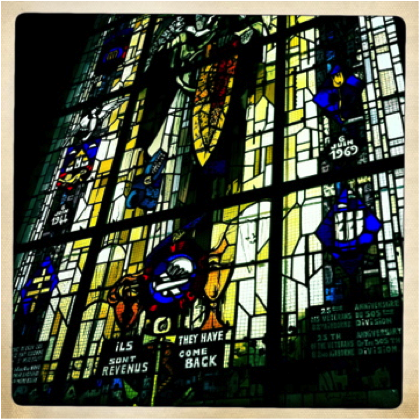
Ils Sont Revenus

“They have come back” – it says
In the tall stained glass window
Of the church at St Maire Eglise.

Some of them waited sixty years
Before they could bear to return
To the friends who had never left.

That is just how long it took them
To scrape a foxhole deep enough
In the scarred ground of memory

To shelter from their own ghosts
And from the unbelieving stares
Of the ones who did not grow old.

There are so few of them left now,
All too soon their souls will return
To greet the boys they left behind.


Utah

Utah Beach

We walked the long sands of the beach
Down to the edge of the breaking waves.
It was a rising tide like the one they rode
When the landing craft came crashing in.

They came in their countless thousands,
Some drowned under the weight of arms
Before they could even reach the enemy,
A causeway of corpses pointing the way.

They died in the minefields and the wire
Cut down by the rattling machine guns
Of the terrified outnumbered defenders
Desperate to hold back the incoming tide.

But still they came from the sea and sky
A righteous armada nothing could stop:
Men and women from a dozen countries
Who fought and died so we don’t have to.

Along the shoreline now are oyster beds,
Steel cages crammed full of gnarly shells
Like so many sarcophagi for the drowned
And all who died for us upon those shores.


American

At the American Cemetery

Ranks of white gravestones:
Angels standing to attention
Protecting wings outspread,
An honour guard for the slain.

Boys who didn’t make it back,
Young men who will never age
Their lives frozen into memory
A handful of letters and a ring.

Some had wives and children,
Some were dating sweethearts
Some had never known a girl,
Everyone some mother’s son.

All rest here in honoured glory
With name and rank inscribed
And those “known but to God”
Comrades in arms for all time.

They lie, as once they marched
In close formation on parade,
Shoulder to shoulder toe to toe
Waiting for the trumpet’s blast.


Poems from Zöetrope © Geoff Mead 2014


Share this:

  • Share on X (Opens in new window) X
  • Share on Facebook (Opens in new window) Facebook
  • Share on LinkedIn (Opens in new window) LinkedIn
Like Loading...

And They Called it Puppy Lo-o-o-ve

Posted by geoffmead on May 18, 2014
Posted in: Uncategorized. Tagged: Dr Paul MacLean, Komodo Dragon, limbic system, Paul Anka, Puppy Love, Triune Brain. Leave a comment

Dragon-Komodo-Komodo-Indo-AR-535


Readers of this blog may have noticed me waxing lyrical about Ted, our Cockerpoo puppy. That’s not him in the picture, of course. That’s a Komodo Dragon. But, back to Ted.

Filming him in slo-mo (see previous blog); asking his opinion about all matters personal and business; looking forward to our walks as the highlight of my day; adjusting my sleep rhythms to match his; having separation anxiety when I leave him to go to work; hearing the dream-boat lyrics to Paul Anka’s Puppy Love going round and round in my head. I’m a goner, alright.

But being a thinking kind of chap, I’ve been wondering why a 64 year old human being should fall in love with a small dog. I’ll come back to the Komodo Dragon later, I promise.

What Ted and I share (apart from a love of vintage wine, a fondness for the later novels of Ursula K Le Guin, and two souls destined to be as one) is a mammalian brain. Therein, I suspect lies the true source of our inter-species love affair.

Mammalian offspring are the most vulnerable and dependent in the natural world; to enable the parental and family bonding without which we would not survive infancy, we have developed a unique capacity for what Daniel Goleman calls emotional intelligence and the rest of us call love. I’ve fallen in love with Ted because I’m programmed for it; the little bugger presses all my buttons because he intuitively knows – from birth – that the key to his survival is his vulnerability. It’s the one strategy available to mammalian young and it’s a matter of life and death.

It was in the 1960s – at about the same time, as it happens, that Paul Anka first serenaded us about the trials and tribulations of young love – that a certain Dr Paul MacLean popularised the idea of the triune brain. He told us that during the long process of evolution, we mammals supplemented our instinctual reptilian intelligence with a new area of the brain called the limbic system, responsible for processing the emotional requirements of live reproduction and nurturing.

Triune Brain

Hence, all human beings – and dogs – provided they are well-enough parented have a profound and immensely subtle command of emotional experience and expression. Later still, said MacLean, we developed a third area of the brain: the cerebral neo-cortex dealing with the “higher” functions of language, abstraction and planning. The neo-cortex is present in all mammals and especially well-developed in primates and big-brained homo sapiens. Not so much in dogs, which is why although Ted knows on which side his bread is buttered, he can’t make toast.

It also explains why it’s hard to love a Komodo Dragon. Poor old reptile, it never even evolved to the second stage of development: no limbic system and zero emotional intelligence. A Komodo’s offspring depend for survival, not on parental love, but on running up trees so they don’t get eaten by mum and dad (who assume that – vulnerable or not – if they move they must be food). For similar reasons, they don’t make very good pets.

Anyway, enough of this distraction. Have I told you about Ted recently? We went walking on the beach at Lyme Regis late yesterday afternoon and he met a delightful hound called Diva. Even though I felt a pang of jealousy, I loved watching them gambol among the seaweed and the lapping waves; the sun shone bright yellow in a clear blue sky; my heart soared like the seagulls overhead…

IMG_1818

https://geoffmead.blog/wp-content/uploads/2014/05/01-puppy-love.mp3

Activate audio file above for full effect.


Share this:

  • Share on X (Opens in new window) X
  • Share on Facebook (Opens in new window) Facebook
  • Share on LinkedIn (Opens in new window) LinkedIn
Like Loading...

Posts navigation

← Older Entries
Newer Entries →
  • Recent Posts

    • Do Radio
    • Storytelling to touch the Soul
    • Ship of Fools
    • The Compleat Angler
    • Coming Home to Roost
  • Enter your email address to follow this blog and receive notifications of new posts by email.

Blog at WordPress.com.
Coming Home to Story
Blog at WordPress.com.
  • Subscribe Subscribed
    • Coming Home to Story
    • Join 135 other subscribers
    • Already have a WordPress.com account? Log in now.
    • Coming Home to Story
    • Subscribe Subscribed
    • Sign up
    • Log in
    • Report this content
    • View site in Reader
    • Manage subscriptions
    • Collapse this bar
 

Loading Comments...
 

    %d