Coming Home to Story

Notes from a journeyman writer, storyteller, and narrative consultant

  • About
  • Books
  • Writing
    • Book Launch
    • My PhD: Unlatching the Gate
    • Readers Say
    • Reviews
    • Selected Poems
    • Stories in Our Bones
    • System-world, Life-world
    • The People of the Sea
    • Drafts
  • Consulting
  • Storytelling
    • Testimonials
    • Island Nights
    • The Storyteller’s Tale
    • An Island Odyssey
  • Men and Storytelling
  • Links

Except thou bless me

Posted by geoffmead on April 2, 2016
Posted in: Uncategorized. 1 Comment

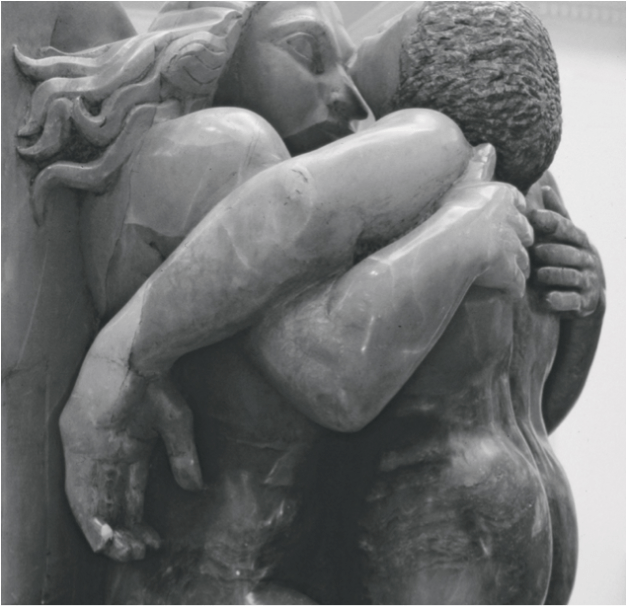
Jacob Big[Jacob Wrestling the Angel: Jacob Epstein]

I recently came across an intriguing biblical phrase. Karen Blixen liked it so much that she quoted it twice in Out of Africa. It’s from the story of Jacob wrestling with the angel (Genesis 32:26). It’s near dawn, the angel has already dislocated Jacob’s hip, but he won’t let go until he receives a blessing:

I will not let thee go, except thou bless me.

I’m not a Christian and I’m certainly not a biblical scholar. But I am fascinated by the resonance of the magisterial language of the King James Version, and by the deep truth – secular as well as sacred – that those words convey about our need for a blessing in order to let go.

Blixen writes poignantly about saying farewell to her farm in Kenya; how she took her leave of the many people, places, and animals that she loved, in a deeply considered and unhurried way. She did not shy away from the exquisite bitter-sweetness of each act of separation.

In a moving passage she tells of putting Rouge, her favourite horse, on the train to his new home in Naivasha: “I stood in the van and felt, for the last time, his silky muzzle against my hands and face. I will not let thee go, Rouge, except thou bless me.” I felt something similar, when I packed up Chris’s paintings, art books, paints and art materials earlier this week, on Easter Monday.

It took me 5 hours to sort through everything, decide what few bits and pieces I would keep, and to fit the rest into the camper van so I could take it to Chris’s niece in Manchester. I knew that Chris had wanted Rosie to have her art stuff and I was glad to honour her intention, though it was painful to see the drawers and bookshelves emptied of so many familiar artifacts.

In the end, Rosie’s excited glee on receiving the materials, and knowing that she would use them for her own inspired artwork, became the blessing that made it possible for me to let them go with a joyful heart.

Finding new homes for Chris’s clothes, books, pictures, teddy bears, and other precious things; taking her ashes to places she loved; renovating and re-arranging Folly Cottage; writing a memoir, poems and these blogs. They are all heartfelt gestures of farewell to my darling girl.

Thou hast blessed me and I let thee go.
Share this:

  • Share on X (Opens in new window) X
  • Share on Facebook (Opens in new window) Facebook
  • Share on LinkedIn (Opens in new window) LinkedIn
Like Loading...

Paschal

Posted by geoffmead on March 26, 2016
Posted in: Uncategorized. 2 Comments

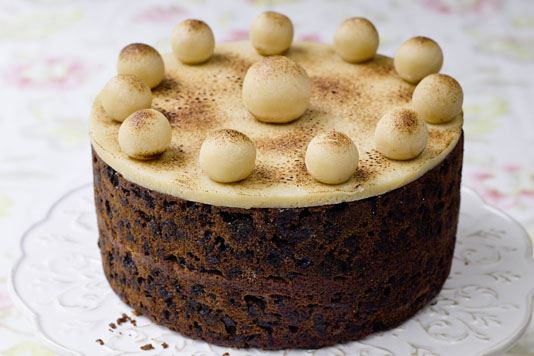
simnelcakeedited

It’s Easter Saturday, traditionally a day for mourning and quiet meditation. I notice the lack of traffic outside in the village and a deep sense of calm in the house this morning. I’m more or less up-to-date with work, there’s nowhere I need to go, and I have time to reflect.

Even though I’m not religious in any orthodox sense, I’m thinking about Chris today and pondering on life and death. I lie in bed and leaf through a favourite book: Time and Myth by theologian John S Dunne. Subtitled A Meditation on Storytelling as an Exploration of Life and Death, it looks beyond the Bible to world literature to consider what it might mean for something to remain after our death.

Dunne examines great stories like Gilgamesh and The Odyssey, and the work of writers such as Dante, Melville, Dostoevsky, Kazantzakis, Camus, Kierkegaard, Freud and Jung, and concludes:

“If something does remain, it is because [wo]man does not merely live and die. It is because [wo]man has a relationship to life and death. If something does remain, it is the life of the spirit.”

That relationship to life and death, says Dunne, is expressed through the stories we construct to give our lives meaning. We cannot change the stories of our life (in the sense that we cannot change what actually happened) but we can change our relationship to those stories.

Chris changed her relationship to the story of her life, when she claimed the identity of Artist. She lives on, not so much through the various products of her art, but through the inspiring example of her commitment to live and die artfully. She showed us what is possible and the knowledge of that possibility and our attempts to embody it, do remain.

So, I’m mourning Chris’s death: her physical absence. But I’m also celebrating her life and what lives on. For me, the most fruitful symbol of Easter is not the sinister, life-sized, wooden cross that has recently appeared in the village churchyard, but the Simnel cake I bought from Hobb’s Bakery in Nailsworth, for the simple reason that Chris loved cake, especially with marzipan.

It’s a kind of sacrament.

Tea and cake.

Share this:

  • Share on X (Opens in new window) X
  • Share on Facebook (Opens in new window) Facebook
  • Share on LinkedIn (Opens in new window) LinkedIn
Like Loading...

Murano

Posted by geoffmead on March 20, 2016
Posted in: Uncategorized. 2 Comments

Show-Me-Italy-Murano-Glass-blowing-Tour

It’s Sunday morning and I’m writing this sitting up in bed in Folly Cottage with a mug of tea on the bedside table and Ted lying across my feet. Above my head, the Murano glass chandelier glints softly and, downstairs, Stephen Kovacevich’s brilliant recording of Beethoven’s ‘Emperor’ Piano Concerto echoes through the house.

The chandelier and the Beethoven both took on a particular significance for me more than 20 years ago when I did my Gestalt training with Petruska Clarkson at Metanoia. I stayed behind for half an hour at the end of a workshop during which she had talked about living creatively, to continue the conversation we’d been having.

The high-ceilinged room in which we were talking had a Murano glass chandelier which always struck me as somehow representing the creative abundance and generosity of Petruska’s hospitality and teaching. As I left, she put the Emperor on the hifi and turned back to her desk to continue her writing (she was a prolific author).

I don’t remember the content of our conversation now, just that moment when something shifted in me. I decided that I would try to live into my own creativity with as much gusto as Petruska. It was a deep and lifelong commitment to honour my own creative potential. I’m neither as talented nor as troubled as Petruska (she was probably bi-polar and took her own life in 2006) but I’ll always be grateful for that soul-stirring glimpse of a creative life.

Chris bought the chandelier as a reminder to both of us to live artfully. When we made our wedding vows, her first vow to me was: I will encourage, support and dare you in your creativity so that you grow fully and magnificently into yourself. She was my greatest cheerleader and champion. Now it’s up to me, alone.

Murano glass and Beethoven.

A good start to the day.

Share this:

  • Share on X (Opens in new window) X
  • Share on Facebook (Opens in new window) Facebook
  • Share on LinkedIn (Opens in new window) LinkedIn
Like Loading...

O Captain! My Captain!

Posted by geoffmead on March 17, 2016
Posted in: Uncategorized. Leave a comment

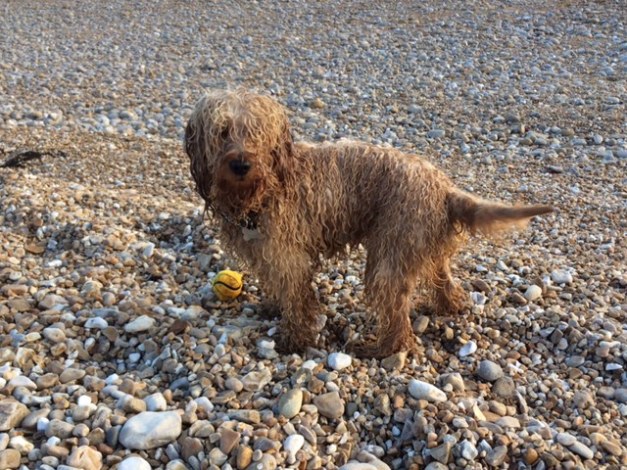
IMG_3042

[With apologies to Walt Whitman]

O Captain! My Captain! our daily walk is done
You gathered every single ball, you didn’t lose but one
We walked the strand, that strip of sand, along the shore careering;
You followed me for many miles, the salty grime adhering.

But O dirt! dirt! dirt!
O the spreading clods of mud,
Where from the bath my Captain flies
Cavorting in the flood.

O Captain! My Captain! rise up and dry your ears;
Rise up—for you the towel is flung—for you the firelight cheers;
For you raw meats and other treats—for you the bowl’s awaiting;
For you they call, your loyal fans, their eager hearts pulsating.

Here Captain! Dear Captain!
O show us please the mud,
As cleanly now, from off your paws
It falls with scarce a thud.

My Captain does not answer, he’s quiet as a log;
My Captain does not say a word, because he is a dog.
His lead is hung up for the night, our daily walk is done;
The walk was good, and so was food, but bath-time was more fun.

Exult, O mutt and wag your tail!
You cannot help the mud,
For you it is the holy grail,
It’s in your doggy blood.

Share this:

  • Share on X (Opens in new window) X
  • Share on Facebook (Opens in new window) Facebook
  • Share on LinkedIn (Opens in new window) LinkedIn
Like Loading...

Asante

Posted by geoffmead on March 16, 2016
Posted in: Uncategorized. 1 Comment

L1090119

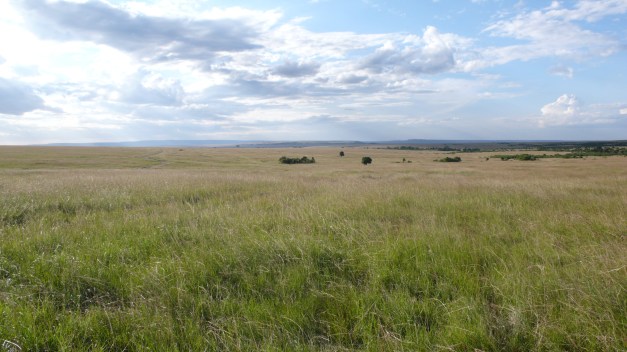
It’s a week since I got back from Kenya; a week of catching up with friends and work; a week of phone calls and emails. None of which have dimmed the vibrant memories of my all-too-brief stay in the Masai Mara. Yesterday, someone asked me: “What did Africa give you?”

He wasn’t asking me to tell him what I’d got from going to Africa but what did Africa herself give me? When I’d thought about it for a while, the answer was clear. The unbroken vistas of savannah and mountains; the brilliance of the night sky; the warmth of the people and the teeming abundance of more-than-human life gave me a different sense of perspective.

I saw that I was both less important than my inflated ego generally cares to admit and more one-with-everything than my individualistic conditioning likes to acknowledge. There were moments when I felt the boundaries between me and other begin to dissolve and I glimpsed my participation in a cosmic story. In the savannah, I had the sense that, as Walt Whitman implies, we are all simply Leaves of Grass.

It was humbling in the very best sense of the word. Though I became smaller, the experience wasn’t diminishing. It would be truer to say that – for a time at least – Africa “right-sized” me.

A wonderful gift, for which I am profoundly grateful.

Thank you.

Asante.


Share this:

  • Share on X (Opens in new window) X
  • Share on Facebook (Opens in new window) Facebook
  • Share on LinkedIn (Opens in new window) LinkedIn
Like Loading...

Njeri

Posted by geoffmead on March 10, 2016
Posted in: Uncategorized. 2 Comments

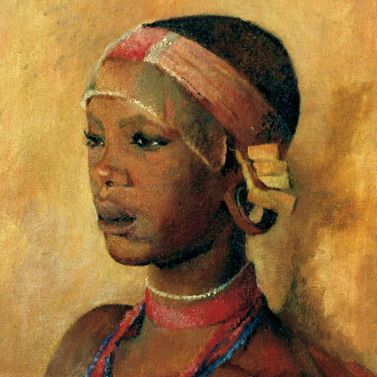
Njeri

After six days on safari in the Masai Mara and Naboisho Conservancy, I got back to Nairobi late last Saturday afternoon. The driver took me to my hotel in the grounds of the Karen Blixen House Museum. Since she lived there (1914-1931) Nairobi has become a sprawling city that has completely engulfed the old coffee plantation.

Mbogani – “the house in the forest” – has been lovingly restored and refurbished with original furniture and artifacts. It’s instantly recognisable from Sydney Pollack’s Out of Africa and it is easy to imagine Meryl Streep and Robert Redford sitting on the verandah in the roles of Karen Blixen and Denys Finch-Hatton. It’s now a major tourist attraction, drawing some 50,000 visitors a year.

I was keen to see the museum, partly because of my fascination with Karen Blixen as a storyteller and writer, and partly because Chris had also visited it during her time in Kenya in 2012. I wanted to stand where she had stood, and see what she had seen, and I did feel very close to her as I wandered around the house and garden.

In the sketchbook Chris made in Kenya, she pasted in a copy of the picture shown above. It’s a portrait of a young Kikuyu woman called Njeri and was painted by Karen Blixen, who was a trained artist, in 1923. The original is now in a Danish museum and a full-sized reproduction hangs on the wall at Mbogani.

Njeri was, by common consent, the most beautiful young woman in the tribe and her bride price the highest ever known to have been asked. The guide told us that it had been 250 goats, plus (and this is the detail that intrigued me) one pot of honey.

I couldn’t get that pot of honey out of my mind and over the next 36 hours as I travelled home to England, I wrote this poem to say farewell to Kenya and to honour Njeri and Chris, both of whom were “pearls of great price” with a sweet tooth and (I like to imagine) a playful love of words.

Njeri

She was her father’s favourite,
Daughter of his old age,
And a great beauty.

So her bride price was very high:
Two hundred and fifty goats
And one pot of honey.

Everyone agreed she was worth it.
Many men tried and failed
To raise the sum.

The goats weren’t the problem;
They could be found.
It was the honey.

Only one man knew how to make
Honey sweet enough
For Njeri’s taste.

While others went to rob the bees
He whispered words of love
To her, instead.

She looked him in the eye and said
I like these sugared words
You pour into my ear.

Your sweet tongue is what I crave
Let my father have the goats,
This honey is for me.

Share this:

  • Share on X (Opens in new window) X
  • Share on Facebook (Opens in new window) Facebook
  • Share on LinkedIn (Opens in new window) LinkedIn
Like Loading...

Nyota

Posted by geoffmead on March 5, 2016
Posted in: Uncategorized. Leave a comment

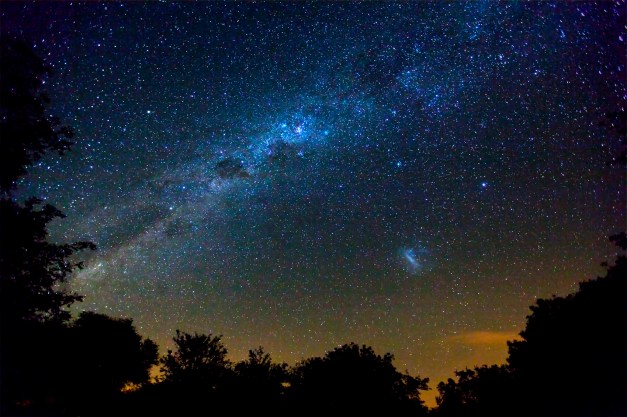
Night Sky

Day 6: Saturday 5 March 2016

Nyota is the Swahili word for star. Yesterday, just when I thought the Masai Mara had given me all of its gifts, I saw the African night sky properly for the first time. Basecamp had been too wooded to have a clear view and the first night at Eagle View was overcast. But last night, the constellations and the Milky Way were crystal clear. Orion hung low overhead, the Pleiades glimmered like a handful of diamonds, and the Great Bear beckoned me homeward.

During the last few months of her life, Chris’s sense of self expanded, from egoic to planetary, and from planetary to cosmic. She believed, as she died, that she was returning to the cosmos, both in a literal sense as the atoms of her body disassociated and in a more mystical sense as her spirit was set free.

I sat by the side of the open fire, tilted my head back and looked through the small pair of binoculars I’d been using all week to spot game. A billion more stars flickered into life, filling the void with light. As I looked up at the cosmos of which we are formed and to which she has returned, I laughed out loud for joy.

After I placed some of Chris’s ashes under an Acacia in the Masai Mara earlier this week, I wrote a poem to say goodbye to the part of her that she expressed through her restless and adventurous travelling. I wasn’t quite sure how to share it but this seems to be the right place. There are a few references in the third stanza that might require some prior explanation.

The character Genly Ai appears in Ursula Le Guin’s Left Hand of Darkness, a favourite science fiction novel of ours. The Hainish were an advanced interplanetary civilisation whose method of making contact with emerging cultures was to send a single unarmed envoy – the mobile ­– supported at a distance by one or more stabiles, who stayed on the Hainish home world.

This method, they found by experience, was much more likely to lead to a mutually respectful and productive relationship than a show of superior force, though it sometimes cost the life of the mobile. Writing this in post-colonial Africa, makes me wonder how things might have been different had European countries been as enlightened as the Hainish. But enough explanation and digression, here is the poem.

Farewell Voyager

How you loved going places!
You’d circled the world many times
Long before we met.

Even when we lived together
It was hard to know where you’d be
From one day to the next.

If we’d been Hainish
I would have been the stabile
And you, a Genly Ai, the mobile one.

Now your body has come to rest,
I do for you what I think you’d want:
I spread your ashes round the globe.

I’m letting go of your mortal remains
And every time I say farewell,
I do not weep. I think of you and smile.

You have not gone, but gone before,
Finding, as you knew you would,
A whole new cosmos to explore.


[ Picture credit Renato Cerisola]

Share this:

  • Share on X (Opens in new window) X
  • Share on Facebook (Opens in new window) Facebook
  • Share on LinkedIn (Opens in new window) LinkedIn
Like Loading...

Naboisho

Posted by geoffmead on March 4, 2016
Posted in: Uncategorized. Leave a comment

IMG_3557

Day 5: Friday 4 March 2016

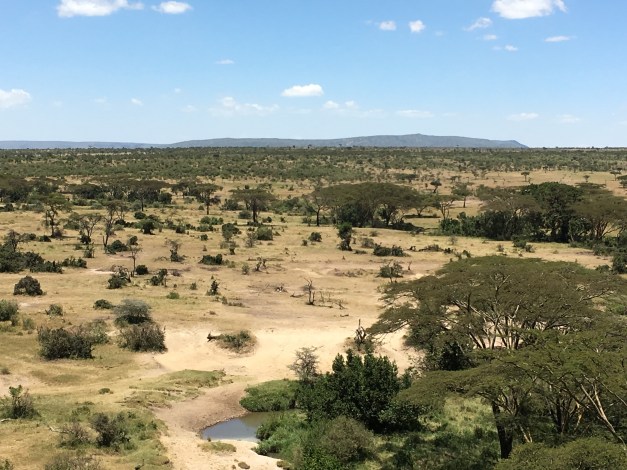
This is my second day at Eagle View in the 50,000 acre Naboisho Conservancy. The picture above shows the view from the balcony. It’s a different kind of habitat than the grassy plains of the Masai Mara and it’s different from the National Park in some other important ways too.

In Maa (the language of the Masai or Maasai) Naboisho means ‘coming together.’ The Conservancy opened in 2010 after several years of negotiation between 500 Masai landowners to create a community-based commercial nature reserve. It is entirely owned and managed by the Masai community, and nature-tourism here has a lighter touch than in the National Park.

Visitors are limited to manageable numbers. That means fewer safari vehicles and less pressure on game. There are strict rules about the number of vehicles that can attend a sighting, and the distance they must keep. Cattle are grazed within the area on a strictly managed basis and the Masai continue to co-exist with the wildlife of the savannah as they have done since time beyond memory.

All the safari guides and many of the other staff at the half dozen low impact camps are Masai. There is a Guide School, supported by the Basecamp Foundation that gives an excellent year-long training, now for women as well as men. It’s been a long haul according to Steve, my Masai guide, but for him and others like him the Conservancy appears to represents their best hope to maintain the essentials of a Masai culture whilst recognising and benefitting from a changing world.

For me, this amalgam is vividly represented by Masai night guards, dressed in traditional costume and armed with spears, sitting round a fire texting their friends and families on their smart phones.

At first sight, the juxtaposition might lead you might think they are just putting on a fancy-dress show for tourists. But don’t be fooled. The camps are unfenced and their company and patrols after dark are all we have to keep us safe from intruding predators.

Lars Lindkvist, the Norwegian President of the Basecamp Foundation has been intimately involved in initiating and setting up the project but it is the Masai community that makes it possible. They have chosen to swim against the tide of individualistic materialism so that all can benefit.

The Naboisho Conservancy is a model for community environmental development from which we could all learn, a rare and successful example of refusing to collude in the seemingly (but not actually) unstoppable tragedy of the commons.

Share this:

  • Share on X (Opens in new window) X
  • Share on Facebook (Opens in new window) Facebook
  • Share on LinkedIn (Opens in new window) LinkedIn
Like Loading...

Tembo

Posted by geoffmead on March 4, 2016
Posted in: Uncategorized. Leave a comment

IMG_3522

Day Four: Thursday 3 March 2016

This morning I moved from Basecamp Masai Mara to Eagle View in the Naboisho Conservancy. The landscape changed from grassland to shrubs and trees. Steve drove me over and will stay as my guide until I leave. I’m delighted about this because he was Chris’s guide in 2012 and his memories of their time together here are very precious. He also happens to be hugely knowledgeable and great company.

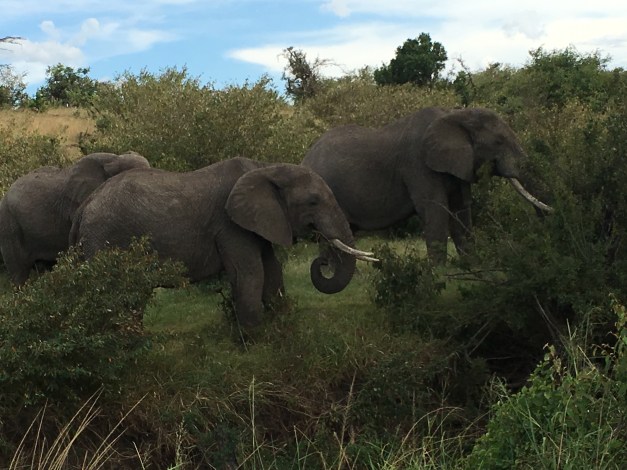
We went out in the trusty Landcruiser for a late afternoon game drive and soon spotted a group of three male elephants (Tembo) making their way along a river bank, eating and drinking as they went. Because we were on the other side of the river, they didn’t feel threatened and we were able to stop our vehicle close by.

IMG_3509

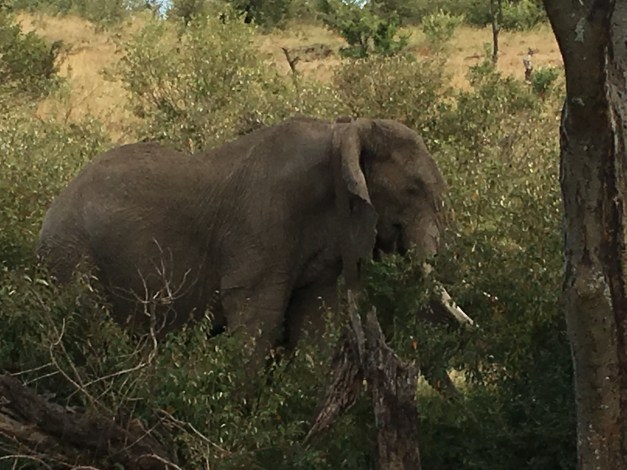
As we were watching them, Steve suddenly pointed out a lioness with three small cubs hiding in a bush. The lead elephant, a massive 30 year old tusker, approached the lions’ hiding place and the cubs darted away into a deeper thicket while their mother stayed behind to defend them if necessary.

“Elephants and lions don’t like each other,” said Steve. “But they won’t fight unless it’s absolutely necessary.” In the end, they avoided a violent confrontation. The lioness stayed in the bushes and the elephant turned away and carried on munching his way downstream, finally stepping into the river to drink.

IMG_3513

It was dark when we eventually got back to Eagle View, and time for a gin and tonic by the open fire followed by dinner under the stars. Much as I love home, it’s not going to be easy to leave this land and return to the smallness of England.

Share this:

  • Share on X (Opens in new window) X
  • Share on Facebook (Opens in new window) Facebook
  • Share on LinkedIn (Opens in new window) LinkedIn
Like Loading...

Mandari

Posted by geoffmead on March 3, 2016
Posted in: Uncategorized. Leave a comment

Mara-River

Day Three: Wednesday 2 March

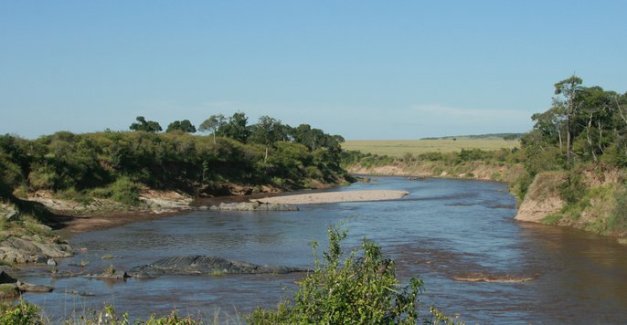
Today, Steve suggested a long drive to the Mara River. It would take all day. “It will be nice for you to have a safari lunch on the savannah,” he said. So we set off after breakfast, just the two of us in the Landcruiser, with a picnic (Mandari) packed into a canvas holdall, plus bottles of water, coke, and beer in the cooler.

Recent early rains have made the grass grow tall in places. Steve explained that the herbivores tend to avoid these areas because the long grass makes it difficult to spot predators. So, for long periods, as we made our way south, it seemed as though he and I were the only creatures on the planet, certainly the only humans. Even the sky was pristinely devoid of vapour trails.

Near the river though, some larger animals including Cape buffalo, zebra, eland, topi, and giraffe, enjoyed the lush vegetation. On the far side of the river a family of elephants seemed to glide across the landscape. How on earth can such huge creatures be so elusive? One minute they were there and when I looked again two minutes later, there was no sign of them.

The river itself was full of hippos keeping cool, sinking below the surface and rising again to show the tops of their heads. On the banks we saw half a dozen enormous crocodiles basking in the sun, still as stones, waiting for the rainy season when they ambush the migrating herds of wildebeest crossing the swollen river.

We took our lunch out in the open under a solitary Bossia or Leopard Tree, so named because their branches offer good perches for leopards to cache their prey. Steve made sure that this tree was uninhabited before we stopped and we got out of the vehicle to eat our picnic.

We were not alone however. A posse of giraffes stood in a semi-circle around us at about 50 metres distance and eyed us intently throughout our meal. I said to Steve: “You know the film Dances with Wolves? Maybe I should be given a Masai name: Dines with Giraffes.” The joke was rather lost on him as he hadn’t heard of the film, but he laughed anyway.

It turns out that a rough Swahili translation of Dines with Giraffes would be Kula Na Twiga. Not quite as dramatic as Dances with Wolves I grant you, but I still rather like the idea.

Share this:

  • Share on X (Opens in new window) X
  • Share on Facebook (Opens in new window) Facebook
  • Share on LinkedIn (Opens in new window) LinkedIn
Like Loading...

Posts navigation

← Older Entries
Newer Entries →
  • Recent Posts

    • Storytelling to touch the Soul
    • Ship of Fools
    • The Compleat Angler
    • Coming Home to Roost
    • Pillow Talk
  • Bear Child £10.99

  • Gone in the Morning £12.99

  • Coming Home to Story £9.99

  • Enter your email address to follow this blog and receive notifications of new posts by email.

  • Archives

    • November 2022
    • July 2022
    • January 2022
    • January 2021
    • December 2020
    • November 2020
    • September 2020
    • August 2020
    • May 2020
    • April 2020
    • February 2020
    • January 2020
    • December 2019
    • November 2019
    • October 2019
    • September 2019
    • July 2019
    • June 2019
    • May 2019
    • April 2019
    • March 2019
    • February 2019
    • January 2019
    • December 2018
    • November 2018
    • October 2018
    • August 2018
    • July 2018
    • June 2018
    • May 2018
    • April 2018
    • March 2018
    • February 2018
    • January 2018
    • December 2017
    • November 2017
    • October 2017
    • August 2017
    • July 2017
    • June 2017
    • May 2017
    • April 2017
    • March 2017
    • February 2017
    • January 2017
    • December 2016
    • November 2016
    • October 2016
    • September 2016
    • August 2016
    • July 2016
    • June 2016
    • May 2016
    • April 2016
    • March 2016
    • February 2016
    • January 2016
    • December 2015
    • November 2015
    • October 2015
    • September 2015
    • August 2015
    • July 2015
    • June 2015
    • May 2015
    • April 2015
    • March 2015
    • February 2015
    • January 2015
    • December 2014
    • November 2014
    • October 2014
    • September 2014
    • August 2014
    • July 2014
    • June 2014
    • May 2014
    • April 2014
    • March 2014
    • February 2014
    • January 2014
    • December 2013
    • October 2013
    • September 2013
    • June 2013
    • May 2013
    • March 2013
    • February 2013
    • January 2013
    • December 2012
    • November 2012
    • September 2012
    • August 2012
    • July 2012
    • June 2012
    • May 2012
    • April 2012
    • March 2012
    • February 2012
    • January 2012
    • December 2011
    • November 2011
Blog at WordPress.com.
Coming Home to Story
Blog at WordPress.com.
  • Subscribe Subscribed
    • Coming Home to Story
    • Join 134 other subscribers
    • Already have a WordPress.com account? Log in now.
    • Coming Home to Story
    • Subscribe Subscribed
    • Sign up
    • Log in
    • Report this content
    • View site in Reader
    • Manage subscriptions
    • Collapse this bar
 

Loading Comments...
 

    %d